
Two U.S. embassy officials who died in an automobile accident in northern Mexico as they returned from the scene of a counter-narcotic operation worked for the Central Intelligence Agency as part of a significantly expanded role in battling narcotics trafficking in the Western Hemisphere, according to two people familiar with the matter.
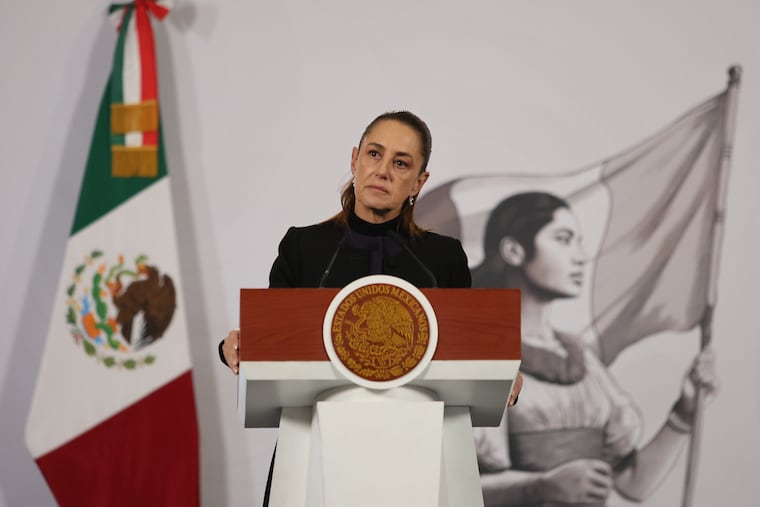
The deadly car crash Sunday in the state of Chihuahua also took the lives of two Mexican officials and prompted Mexican President Claudia Sheinbaum to say she would investigate whether the operation ran afoul of the country’s national security laws.
The CIA declined to comment.
The four died as they were returning from meeting with Mexican officials in the aftermath of the operation to dismantle a clandestine drug lab in a remote area. Chihuahua’s attorney general, César Jáuregui Moreno, told Mexico’s El Universal newspaper that the Americans did not directly participate in the Mexican raid on the lab, which he called “perhaps one of the largest ever located.”
Mexican officials said the car skidded off the road, fell down a ravine, and exploded.
The accident comes amid increasing pressure from President Donald Trump on Mexico to take more action against the cartels, and as the CIA has broadened its counter-narcotics operations in the country and elsewhere in Latin America. While Trump has occasionally threatened unilateral U.S. action against the cartels in Mexico, the CIA and other federal agencies have thus far stressed working in partnership with Mexican authorities.
The people familiar with the matter discussed the spy agency’s role in the events in Chihuahua on the condition of anonymity, because of the issue’s sensitivity.
Under CIA Director John Ratcliffe, the agency has taken a larger, more aggressive role in counternarcotics, one of Trump’s top priorities upon assuming office.
The agency has shared more intelligence with Mexican antidrug units and increased training for local counternarcotics units, current and former U.S. officials said. It has flown unarmed drones over Mexico to help track cartel leaders and locate illicit drug labs.
Intelligence provided by the CIA in February was critical in helping Mexican authorities locate Nemesio Rubén Oseguera Cervantes, the drug kingpin known as “El Mencho,” according to U.S. officials. Oseguera, who headed the Jalisco New Generation cartel, died in the operation as a result of gunshot wounds.
Beyond Mexico, U.S. military forces under Trump have attacked and sunk numerous “fast boats” in the Caribbean and eastern Pacific that the administration says were involved in drug trafficking, killing at least 180 people. It has also launched joint counter-drug operations with Ecuador and in early January executed a daring raid to capture Venezuelan President Nicolás Maduro and his wife. Maduro was transported to New York to face drug trafficking charges. Critics say the attacks on the boats violate international law.
U.S. involvement in Mexico’s drug wars is a politically explosive issue in the country, given what it sees as historical American violations of its sovereignty.
Sheinbaum on Monday said she would demand an explanation after the U.S. and Mexican officials died in the car accident, saying her security cabinet was not informed as required about the collaboration between the United States and the Chihuahua state government.
“There are no joint operations on land or in the air” involving Mexican and U.S. forces, the Mexican president said, according to the Associated Press. Sheinbaum said there is only sharing of information between Mexico’s government and the U.S., carried out within a “well-established” legal framework.
Jáuregui, the attorney general in Chihuahua, said Sheinbaum’s office was not notified because only Mexican agents — about 40 in all — participated in the seizure of the drug lab, which took about three months to plan.
He said the Americans, whose agency affiliation he did not identify, were doing training work “about eight to nine hours away” from the location of the operation against the drug lab. After that operation, they met with personnel from Chihuahua’s state investigation agency, known as AEI, which participated in the raid, Jáuregui told El Universal. The accident occurred hours later, he said.
In a statement on X on Sunday, U.S. Ambassador to Mexico Ronald Johnson said the director of AEI and a member of that agency died in the accident, along with the two staff members of the U.S. Embassy.
“This tragedy is a solemn reminder of the risks faced by Mexican and U.S. officials dedicated to protecting our communities, and it strengthens our determination to continue their mission and advance our shared commitment to security and justice, to protect our people,” Johnson wrote.