
The Justice Department said Friday that it was moving to expand the execution methods used to carry out federal death sentences beyond lethal injections, including by making firing squads and electric chairs available in some cases.
The announcement was the latest in a series of moves President Donald Trump’s administration has taken demonstrating support for the death penalty. Trump has long been an avid supporter of capital punishment, and during his first term, the Justice Department carried out its first federal executions in nearly two decades.
Since Trump’s return to the White House last year, his administration has lifted a moratorium on federal executions and pushed for more death sentences. Trump and other officials have also repeatedly castigated President Joe Biden for commuting the sentences of 37 of the 40 people on federal death row shortly before he left office.
In its announcement Friday, the Justice Department said that in addition to seeking other ways of carrying out death sentences, it was directing federal officials to restore the execution protocol adopted during Trump’s first term, which uses the drug pentobarbital for lethal injections. This protocol — which some death row inmates had challenged in court, saying it would cause them severe suffering — was used to carry out 13 executions during the last year of Trump’s first term.
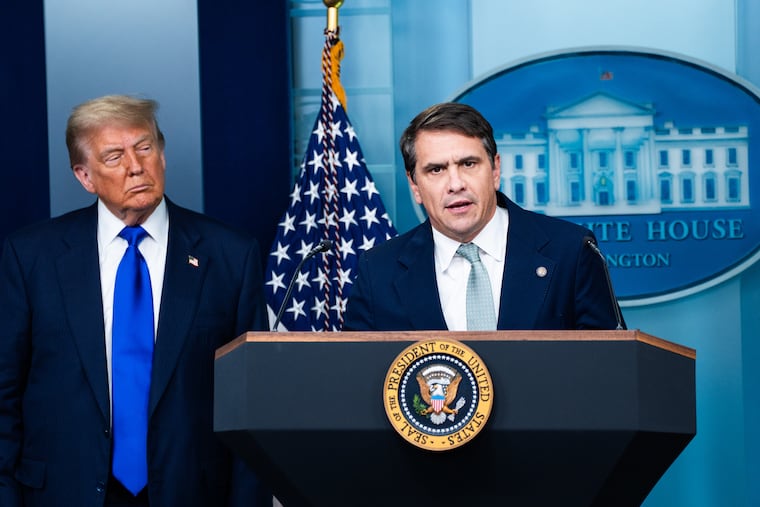
“Under President Trump’s leadership, the Department of Justice is once again enforcing the law and standing with victims,” Todd Blanche, the acting attorney general, said in a statement Friday.
It was not clear whether the announcement about expanded execution methods would have any immediate effect. Federal death row remains nearly empty. And while the Trump administration has authorized seeking the death penalty in dozens of cases, these prosecutions take considerable time, and officials have not won any new federal death sentences since Trump’s second term began.
The Justice Department also on Friday released a 52-page report called “Restoring and Strengthening the Federal Death Penalty,” which is partially focused on criticizing Biden’s commutations and how the Justice Department handled the death penalty during his administration.
During Biden’s term, then-Attorney General Merrick Garland issued a moratorium blocking the Justice Department from carrying out executions. He later concluded that the execution protocol used during Trump’s first term should be rescinded, saying there was uncertainty about whether using pentobarbital to carry out lethal injections was humane.
The Justice Department report defended the use of pentobarbital. Spokespeople for that agency and the Bureau of Prisons did not respond to questions Friday about whether the Trump administration has any pentobarbital on hand.
The moratorium Garland imposed during his tenure paused executions but did not prevent prosecutors from seeking new death sentences. The Biden administration sought and defended death sentences in some instances, including cases that originated during Trump’s first term.
Garland withdrew decisions to seek the death penalty in other cases, and the Justice Department report criticized him on this front, writing that he “undermined the federal death penalty.” Garland did not immediately respond to a request for comment Friday.
In December 2024, weeks before Trump’s second inauguration, Biden commuted the sentences of nearly all federal death row prisoners to life without parole. A group of death penalty opponents had urged Biden to commute federal death sentences before leaving office, expressing fears that Trump would resume executions once he retook the White House.
Biden left three federal death row inmates in place, all of whom had been sentenced during his time as president or vice president: The gunmen convicted of bigotry-fueled massacres in a Pittsburgh synagogue and a Charleston, S.C., church, and the surviving Boston Marathon bomber.
The Trump administration in its report Friday accused Biden-era officials of failing to properly account for the views of victims’ relatives and causing them further harm by failing to give them proper notice ahead of the commutations.
Even before Biden issued his commutations in 2024, federal death row accounted for a relatively small percentage of people with death sentences nationwide. Most people on death rows are held in states, rather than by the federal government, and a Washington Post examination in 2024 found that many of them are likely to die there without being executed.
The number of executions carried out each year has significantly decreased, falling from a modern high of 98 in 1999 to 25 in 2024. That changed last year, with states carrying out 47 executions, the highest total in more than a decade.
The increase was fueled largely by a wave of executions in Florida, which carried out 19, and in Texas, Alabama, and South Carolina, each of which carried out five. Three of South Carolina’s executions were carried out by firing squad.
The last execution by firing squad was in South Carolina in November. Five states allow executions by firing squad, according to the Death Penalty Information Center, which tracks capital punishment.
Lethal injection remains the primary method of execution for states that have the death penalty, but some officials have struggled to obtain the drugs needed to carry out sentences that way, in part due to pharmaceutical companies objecting to their products being used that way. As a result, some states have turned to other methods, including electrocution and nitrogen gas.
The Justice Department’s report on Friday acknowledged that recent history and said the Bureau of Prisons “should follow suit” by adding other methods of execution, specifically pointing to firing squads, electrocution and gas.
Federal death sentences are carried out at the penitentiary in Terre Haute, Indiana, though the new report suggested that this could change amid a push for more execution methods. The report directs the head of the Bureau of Prisons to detail options for possibly relocating federal death row or building another facility in a different state to allow for different methods of execution.
“State-sanctioned killing is not justice,” Sen. Dick Durbin (D., Ill.) said in a statement. “Today, DOJ is turning back the clock by strengthening the barbaric practice of the federal death penalty — a cruel, immoral, and often discriminatory form of punishment.”
While the Justice Department detailed some of its own ambitions for the death penalty, the agency acknowledged that some changes it sought required legislation.
The report suggested backing legislation to let prosecutors seek a second jury if they cannot convince jurors to unanimously vote for death sentences the first time around. The Justice Department also signaled its support for effectively speeding up appeals in an effort to carry out sentences sooner.