
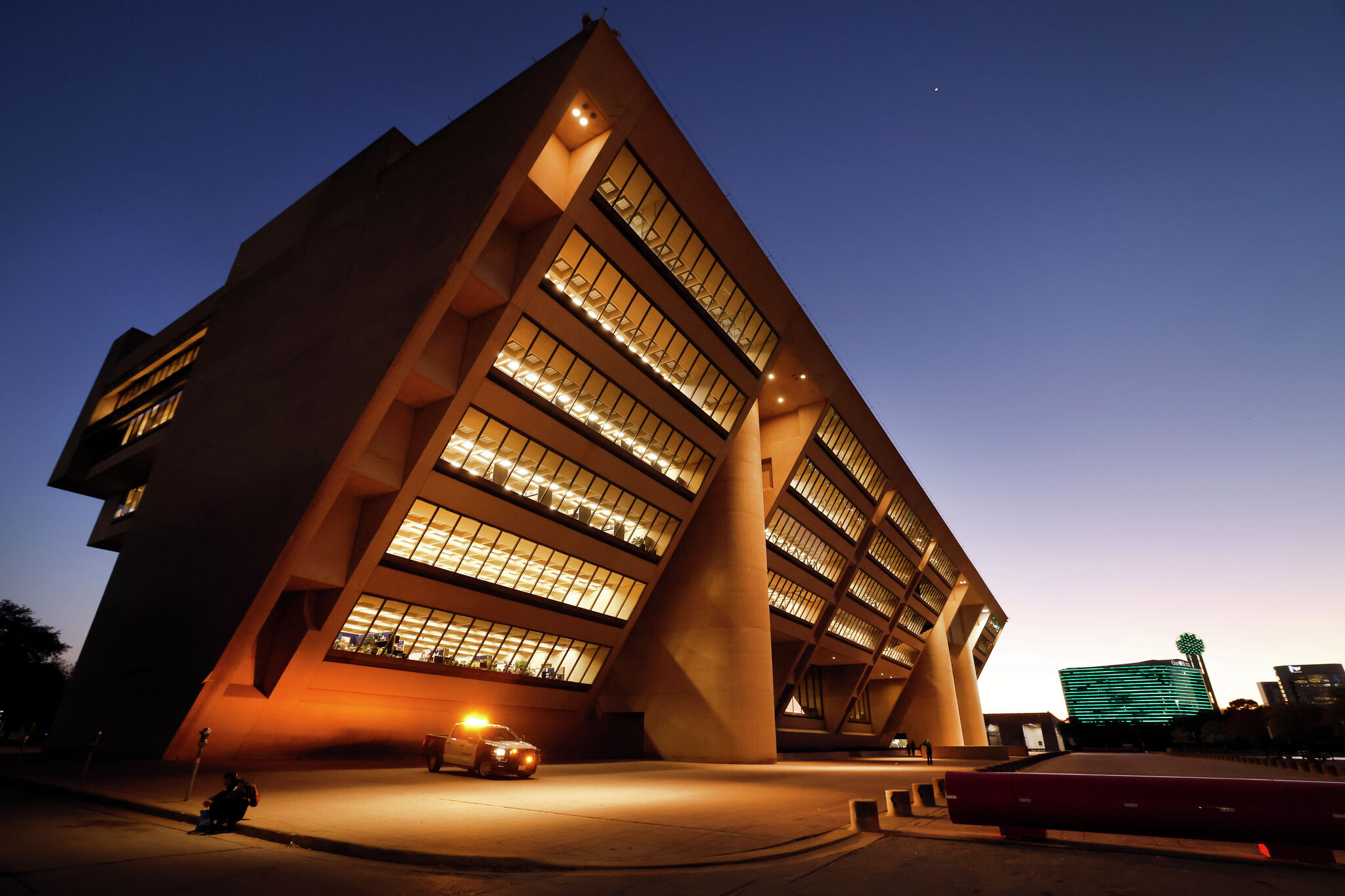
As Dallas leaders and residents consider the future of City Hall, it is important to recognize that the deliberate process designed to guide the best long-term outcome for our city is only partially complete.
Recently, the Dallas City Council took an important step by voting to undertake a comprehensive facilities assessment for repairs of Dallas City Hall. That evaluation, conducted by the globally respected and locally headquartered firms CBRE and AECOM in collaboration with architecture industry leader Corgan, reflects the kind of rigorous, data-driven analysis Dallas deserves.
While that number has understandably generated discussion and even led to some disagreement, it is important to remember what this work represents. It is not a final decision, but a critical step and data point in an informed process.
Yet, there has been criticism of these respected professionals for simply doing their work — criticism that overlooks their expertise and is not warranted. At The Real Estate Council, our focus is not on advocating for a specific outcome, but on ensuring the process is informed, transparent and grounded in solid information.
CBRE, AECOM and Corgan bring deep national and local experience in this type of work, and their review reflects sound and highly credible professional judgment. They were engaged to provide objective insight, and their work ensures that city leaders and the public have a clear understanding of the options ahead.
That level of clarity is essential to making sound decisions for our city, which should be based on all factors, including the cost to taxpayers as well as the well-founded desires to preserve our heritage.
Dallas is a national leader in commercial real estate, setting the pace for growth, investment and innovation across the country. The decisions we make today carry weight far beyond a single project. They influence how we compete, how we attract investment and how we continue to lead on a national stage.
And this conversation is about more than a building. It is about the future of downtown Dallas and how we create stronger connections across our urban core. Dallas City Hall plays an important role in the heart of downtown, and our path forward should be considered in that broader context. Our City Hall should be evaluated not only based on cost, but also on its ability to drive connectivity, economic activity and long-term vibrancy in downtown Dallas.
For decades, TREC has partnered with the City of Dallas to advance initiatives that bring people and places together. A defining example is Klyde Warren Park, which transformed a physical barrier into a thriving space that joins neighborhoods, supports development and enhances our community’s quality of life.
That same mindset should guide decisions moving forward.
Downtown Dallas is seeing significant investment, with more than $8 billion in active development shaping its future. To maximize the impact of this investment, we need to think more broadly about how downtown connects to and supports the neighborhoods around it. That includes strengthening connections from downtown to the West End, The Cedars, Deep Ellum and Uptown Dallas, creating a more accessible experience for residents, workers and visitors alike. The expansion of the Kay Bailey Hutchison Convention Center is one example of how that vision can move forward and strengthen Dallas’s long-term economic future.
Whether Dallas City Hall is modernized or redeveloped, the area should serve as a catalyst for connectivity that strengthens our downtown core and reinforces Dallas as a leader in growth, investment and development.
The decisions ahead about Dallas City Hall will shape Dallas for decades. It is important to trust the process that is already underway, one grounded in expert analysis, public input and thoughtful leadership.
TREC remains committed to working alongside city leaders, partners and the community to help ensure the next chapter for downtown Dallas continues to move our city forward.
Jamee Jolly is president and chief executive of The Real Estate Council.