
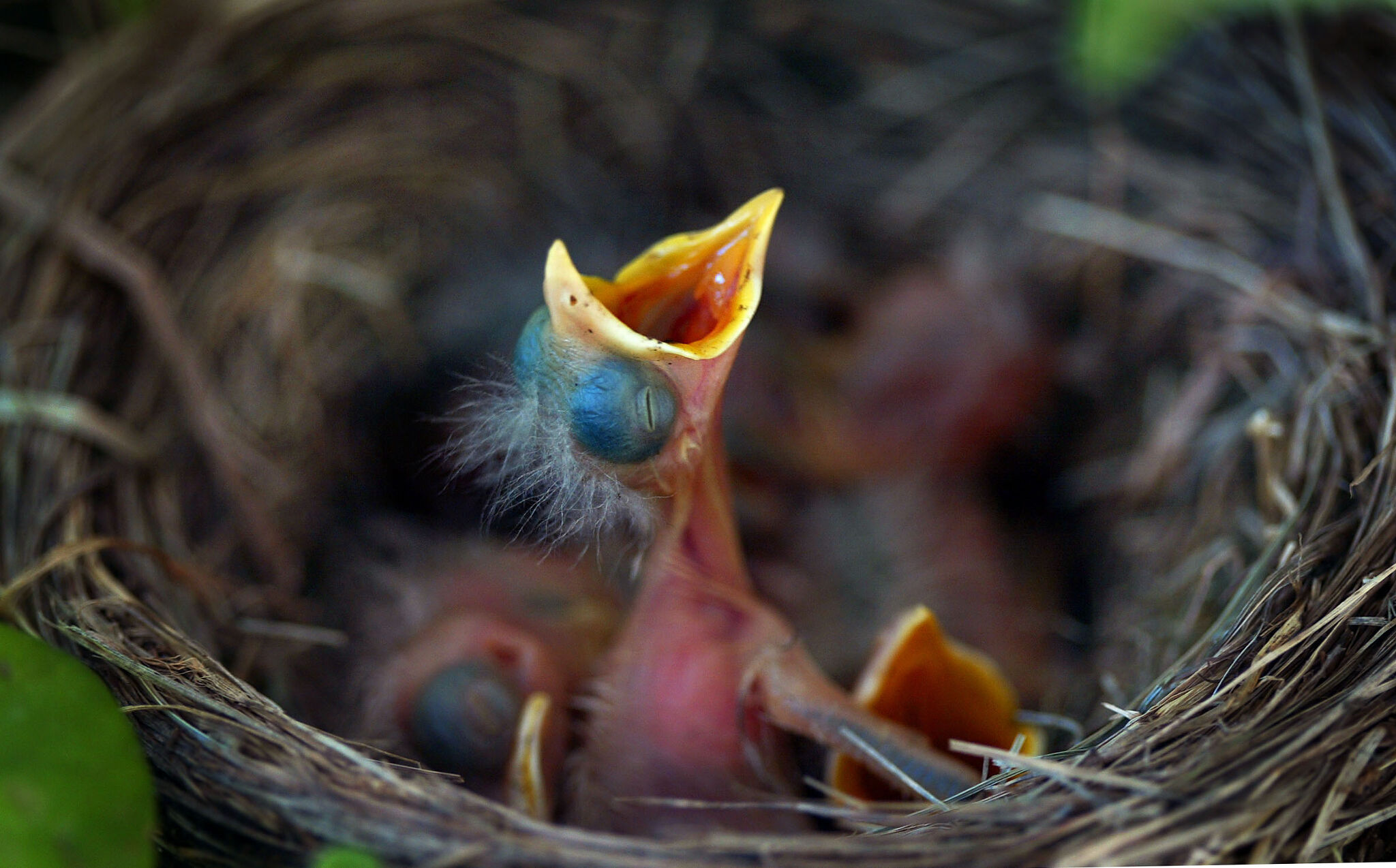
For the past three years, a robin has built a nest in the forsythia bush that stands at the edge of the driveway between my house and my neighbor’s house. I didn’t realize she returned again as I began trimming the thin branches with my hedge trimmer. As the machine buzzed and buzzed, I saw a dark shadow within the thick bush and there she was in this new season sitting on her nest of dry mud and brown tufts of grass: my robin. And she didn’t move despite the frightening noise and seemingly violent hedge clipper.
Later in the week, I dragged my lawn mower from the shed and cut the grass around the forsythia. The machine growled and whirred, and still the robin stayed glued inside the nest.
And when we had, just yesterday, a dramatic downpour of rain mixed with a steady, angry wind, I checked, and there the robin sat, drenched in her nest, stubbornly protecting her eggs.
There are no robins in the yard during the winter. Robins eat worms and insects. Their beaks are not made to crack open the shells of seeds, so they fly to warmer climates in the winter seeking soft food: worms and bugs.
What impresses me most is that robins return hundreds of miles to the same yard or park each spring. The robins you see on your lawn or in your trees are often the same robins from last summer.
I found this out when I was a boy running out into the yard one morning and finding a dead robin on the grass. When I leaned over for a closer look, I saw that the bird had a small, metallic band around one of its legs. When I explained to my father what I found, he suggested we clip the band off the bird’s leg and send it to a place that keeps track of bird migrations.
I don’t remember where we sent it, perhaps to the U.S. Geological Survey Bird Banding Laboratory, which is an agency within the U.S. Department of the Interior.
Within a few weeks, we received an official document telling us the band was attached to the bird’s leg two years earlier in the yard of our neighbor.
The tenacity of nature to protect its young always amazes me, and the ingenuity of navigating home each spring charms me.
My mother died four years ago at the age of 99. She, like that robin in the nest, projected and nurtured me. She made delicious apple pies and often walked with me in the garden to gather daffodils in the spring. She soothed me when I had scarlet fever and when a bumblebee flew up my shirt and stung me again and again. She offered valuable wisdom and advice when my wife and I had children.
For 70 years, I went home to the nest of my mother, the nest she built again and again for a boy and for a man to remember what it felt like to be protected and loved. Each visit felt like spring again. I miss her apple pie.
Have thoughts about this? Send a letter to the editor using our letters form or email letters@dallasnews.com. Letters should be no more than 200 words and include the first and last name of the writer and city of residence.