
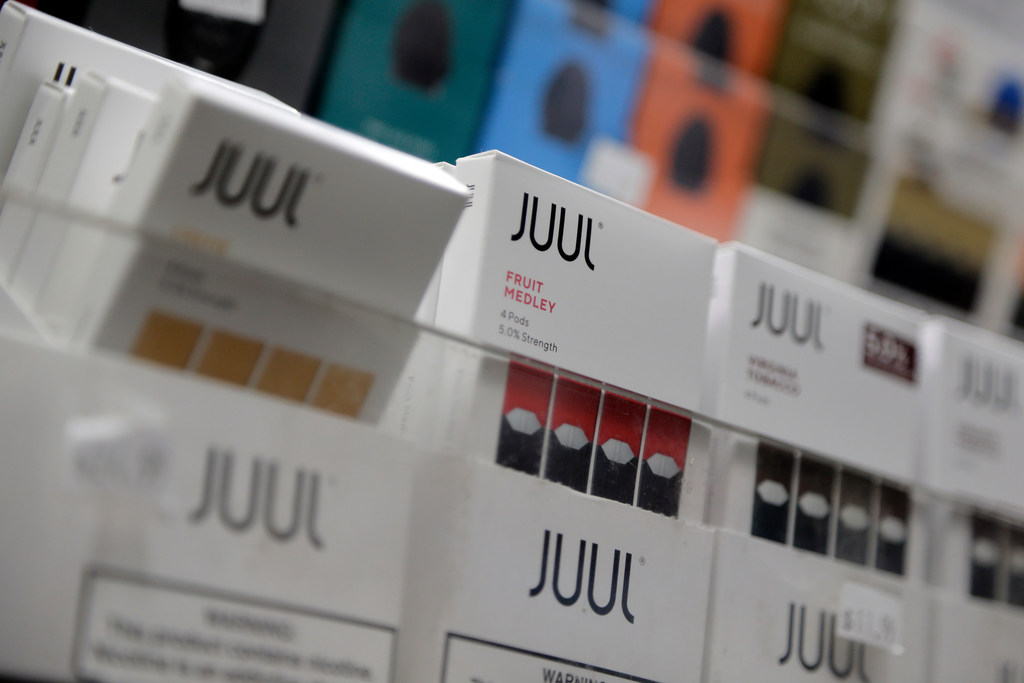
In recent years, teenage e-cigarette use has dropped substantially. This was a welcome departure from just a few years ago when high schoolers across the country were walking the hallways, vape in hand, and charging their Juuls in the USB ports of their school-issued Chromebooks.
In 2019, a national survey found that 27% of high school students reported that they vaped. The percentage of middle and high school students reporting they vape is now down about a third of peak levels from seven years ago.
The decline in teenage vaping has largely been attributed to the ban on flavored products that appeal to young users. Allowing flavored e-cigarettes back onto the shelves is not the right move.
Up until this point, the Food and Drug Administration had only granted permission to e-cigarette companies like Reynolds America, Altria and Juul to sell tobacco or menthol-flavored products. Popular dessert and fruit flavors like mango and blueberry were banned.
But earlier this month, the Trump administration green-lit a new policy that could allow major tobacco and vape companies to begin selling flavored e-cigarettes again.
Even though flavored vapes are supposed to be illegal, some illicit disposable products in candy and fruit flavors can still be found on the shelves of some convenience stores. But allowing legal flavored products back into mainstream stores would only normalize their use and make them even easier for young people to obtain.
We’ve long known that smoking cigarettes is not good for you, and vaping likely isn’t either. Data on the long-term health effects of vaping is limited because the cartridges, which started to become popular in the mid-2010s, haven’t been around for that long. But common sense tells us that inhaling nicotine aerosols into your lungs is probably not very good for you.
If there were any doubt about who stands to benefit from the administration’s reversal on flavored vapes, recent reporting from The New York Times points to major players in the tobacco industry. The backlash inside the administration has been telling. Earlier this week, Marty Makary, the commissioner of the FDA, stepped down. A day later, Rich Danker, spokesperson for Health Secretary Robert F. Kennedy Jr., also resigned, warning that approving flavored e-cigarettes would entice more children into vaping.
And while teenage vaping has been declining, some studies show that young adults — those who were in high school at the peak of the Juuling craze— are still hooked on vapes.
The ban on flavored vapes has worked so far in curtailing more young people from using these products. We can’t afford to have another generation lured into nicotine addiction by packaging and marketing.
Whether it’s flavored vapes, nicotine pouches or sweetened alcoholic drinks in bright-colored cans, companies know exactly what they are doing when they dress up addictive products in flavors that appeal to children and teenagers. Public health policy should not make that job easier.
Have thoughts about this?