
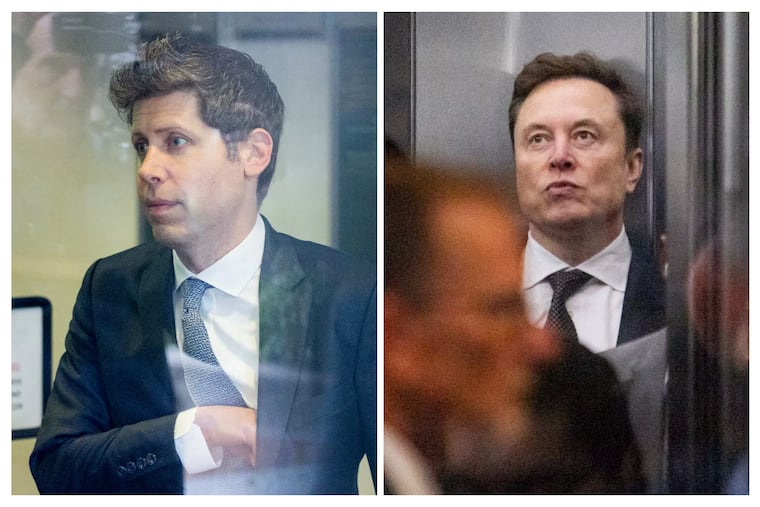
A nine-person jury has found that Elon Musk did not bring his lawsuit against OpenAI and Sam Altman until after the expiration of the three-year statute of limitations.
Musk filed his suit against the $730 billion artificial intelligence startup in the summer of 2024, but the jury found that he was aware of the behavior discussed in his complaint against OpenAI as far back as 2021.
That means that the jury found that OpenAI; Altman, its chief executive; and Greg Brockman, its president, were not liable for the claims Musk brought against the company.
Musk accused OpenAI, Altman, and Brockman of “stealing a charity” by attaching a commercial company to OpenAI’s original nonprofit and taking billions of dollars in investments from Microsoft. He also accused them of unjustly enriching themselves through the nonprofit.
Because of the unusual nature of this case, Judge Yvonne Gonzalez Rogers could still rule against OpenAI and for Musk.
In this closely watched case, the jury is merely an “adviser” to the judge, meaning she can accept or reject its decision as she sees fit. While the jury was deliberating, she listened to arguments from various legal teams on the question of damages and remedies.
Musk has asked for $150 billion in damages and wants Altman to be kicked off OpenAI’s board of directors. He also wants to unwind a move that OpenAI made to become a for-profit company before an initial public offering as early as this year.
If the judge decides to unravel the for-profit company, it could cripple OpenAI as it struggles to keep pace with companies like Google and Anthropic in the AI race.
“The judge is the final decider of fact, law, and damages,” said James Rubinowitz, a trial lawyer who teaches a class on AI litigation at the Cardozo School of Law. “The jury can say whatever they want, and the judge in no way has to adhere to what the jury decides, which is incredibly bizarre and unusual.”
(The New York Times has sued OpenAI and Microsoft, claiming copyright infringement of news content related to AI systems. The two companies have denied the suit’s claims.)
The trial’s outcome had the potential to upend the AI landscape. A win for Musk, who has his own for-profit lab, xAI, would have been a win for OpenAI’s competitors, including industry giants like Google and young companies like Anthropic, as well as international competitors such as China’s DeepSeek.
Musk’s lawsuit faced a high legal bar. The jury had to decide whether Musk brought his suit within several statutes of limitations. His lawyers had to show that he had no way of knowing that OpenAI had breached its founding agreement before Aug. 5, 2021. On the claim that the two executives enriched themselves, that date was Aug. 5, 2022.