
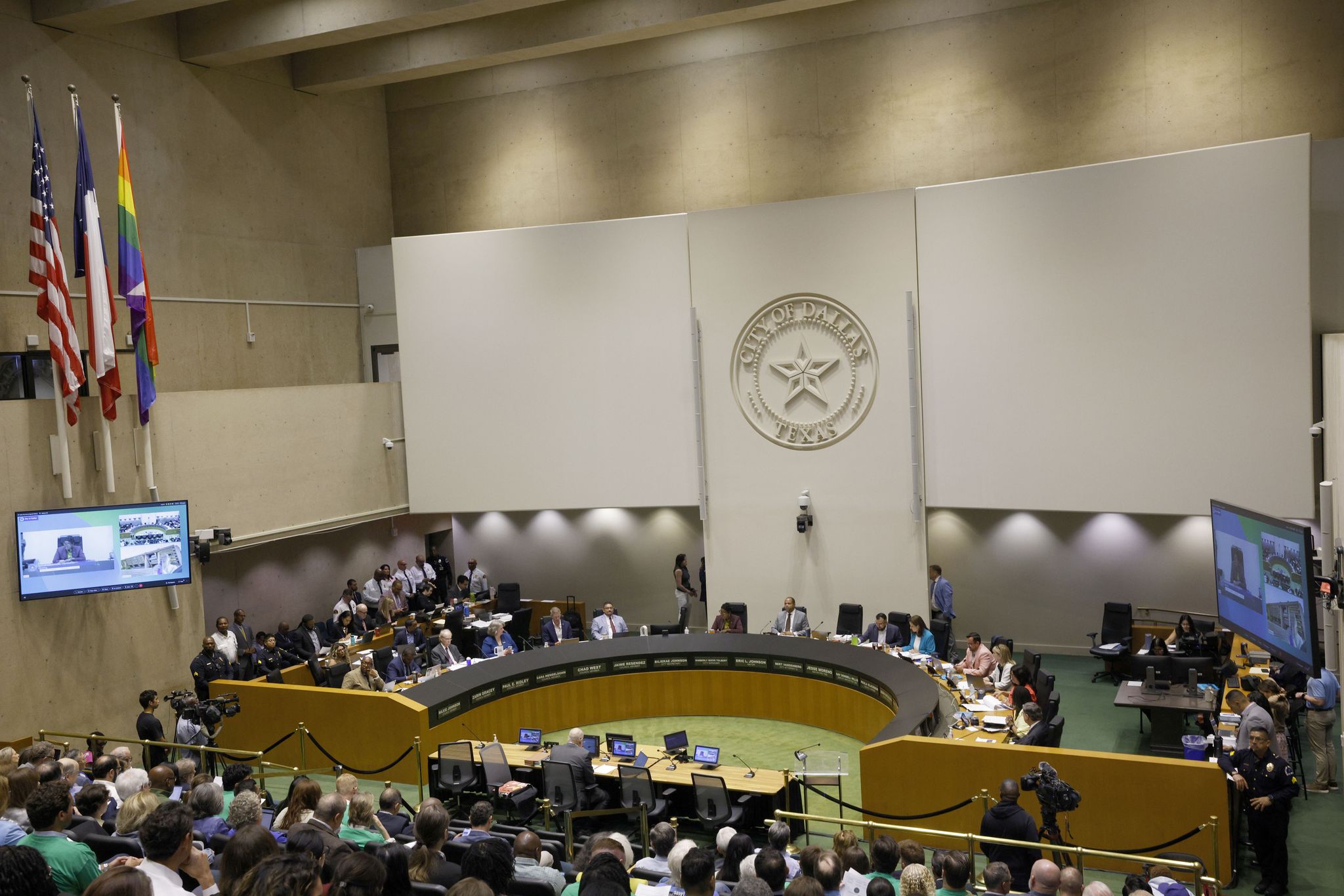
Dallas is bracing for a $51 million shortfall in its next annual budget, and City Hall’s fate could be tied to how the city balances its books.
Lower sales tax collections, population decline and rising costs have only deepened the city’s financial stress at the same time the City Council considers costly options on what to do about City Hall.
After deliberations on renovations last week, Mayor Eric Johnson called for yet another meeting Wednesday to move a step closer to relocating city services from the iconic building.
Two items, if approved, will allow the city to draw federal COVID-19 pandemic relief dollars to negotiate and prepare sites to potentially house emergency and city operations.
Here’s a look back at a pivotal week:
Council members Adam Bazaldua, Paula Blackmon and Cara Mendelsohn sued their own city to stop a meeting, an extraordinary step and a public sign that disagreements over city processes had metastasized. The lawsuit argued the city was trying to rush a decision on City Hall’s future. Mendelsohn withdrew her name from the suit hours before the hearing.
The City Hall dispute unfolded as the mayor and City Manager Kimberly Bizor Tolbert were grappling with anxieties that downtown, the city’s economic engine, was in freefall.
Recent setbacks involving moves by the Dallas Mavericks, Dallas Stars and AT&T are boosting concerns that the region’s center has shifted away from Dallas and is moving north. They’ve also raised questions about the mayor and city manager’s ability to build support for major initiatives, including the mayor’s push to leave the government building.
Even as the council prepared to make major decisions involving City Hall, uncertainty gripped a basic question: how many votes are actually required to approve moving out? Council members and city officials appeared to have different interpretations, with some saying it requires a supermajority and others disagreeing whether that means 10 or 12 votes.
State District Judge Eric Moyé sided with the council members and blocked meeting items that would’ve authorized relocation and redevelopment. He said the city’s public notice was vague and not aligned with the Texas Open Meetings Act. The council was allowed to consider a phased repair plan, the only agenda item that met state law.
The council rejected a repair plan and circumvented the judge’s order by approving a plan to pursue options for moving out of the building. A majority voted against renovation and repairs, choosing instead to direct staff to return with additional options for the site. Council members said any final decision about City Hall will still have to come back for a vote, but the denial signaled skepticism toward spending hundreds of millions of dollars to stay put.