
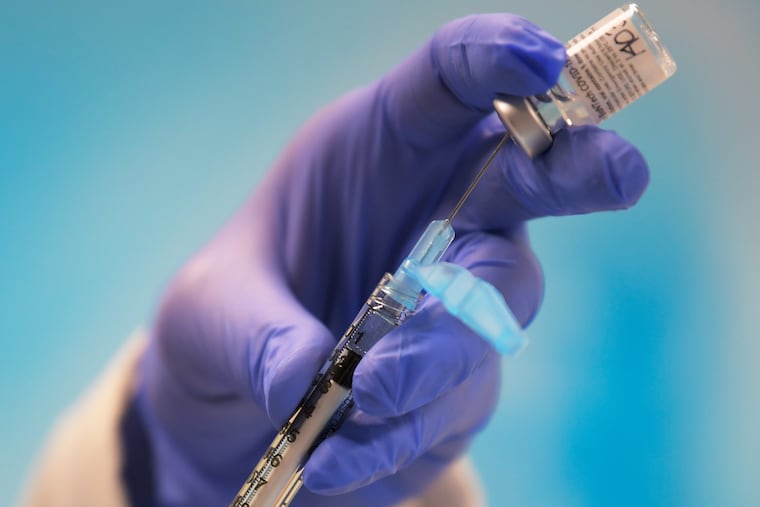
If you haven’t given much thought to covid-19 lately, that’s understandable. The impact of the coronavirus has “substantially diminished” since the early pandemic years, said William Schaffner, a professor of infectious diseases at the Vanderbilt University Medical Center. As a result, “people are perhaps less attentive to covid.”
That’s probably due in part to the fact that most people have had some prior protective exposure to covid-19, either through vaccination, infection or both. But covid-19 “hasn’t gone away,” said Schaffner. “It’s still apt to produce serious illness.”
Previous years have seen increases of covid-19 activity in late summer as well as winter, and cases are starting to ramp up this year, especially in certain parts of the country, said Thomas Russo, chief of infectious disease in the department of medicine at the Jacobs School of Medicine and Biomedical Sciences at the University at Buffalo. “Covid-19 is certainly coming,” he said.
Vaccination remains the best way to decrease the likelihood of severe outcomes from the virus, as well as protect those around you who might be at higher risk.
In late August, the Food and Drug Administration approved updated covid-19 vaccine formulations that target the variants currently circulating around the country. But there hasn’t been new federal guidance this year on who should get the vaccine. Last year’s recommendations have been thrown into legal limbo after a federal judge ruled that Health Secretary Robert F. Kennedy Jr. improperly reconstituted an influential advisory panel. Instead, major medical groups have banded together to release their own recommendations.
Here, answers to questions you may have about getting the covid-19 vaccine this year.
Who should get a covid shot
The FDA approved the updated covid-19 vaccines for people with at least one underlying condition placing them at higher risk for severe covid-19 — such as people with cancer, a chronic disease (like diabetes or HIV) or a weakened immune system — as well as all adults age 65 and older.
This differs from what major medical societies have said previously and are now recommending. The American Academy of Pediatrics, the American Academy of Family Physicians and the American College of Obstetricians and Gynecologists suggest the vaccines for most people, including healthy adults ages 18 to 64 and healthy children ages 2 to 18, if their parents want them to get one.
While many experts stress that anyone can and should get a covid-19 vaccine, “the risk of developing severe disease is variable depending on the individual,” said Russo, meaning vaccination is especially critical for higher risk groups. Those include people age 65 and older, children under 2 years old, children between the ages of 2 and 18 years in certain high-risk groups, people with underlying conditions and those who are immunocompromised, and pregnant women.
What healthy people should know
If you’re an adult under 65 and don’t have an underlying health condition, you may think you don’t need an updated covid-19 vaccine. But healthy people can still be hospitalized because of covid-19 or have severe outcomes. “The other thing that the vaccine does is it helps prevent long covid, and that could be a devastating problem,” said John Swartzberg, a clinical professor emeritus in the division of infectious diseases and vaccinology at the University of California’s School of Public Health.
A healthy person may also live, work or be around someone at high risk of severe disease. “Getting vaccination would be beneficial because you’re less likely to be infected, or if you do get infected, you’re going to shed lower levels of the virus,” said Russo, “so you’ll be indirectly protecting those individuals.”
Schaffner added that medical professional societies will continue to recommend comprehensive covid-19 vaccination for nearly everyone, including adults age 19 to 64 who are otherwise healthy. “Vaccine acceptance of both covid and flu vaccines slipped last year, and we are hoping to reverse that trend this year.”
How effective is the updated vaccine?
The FDA recommended that the newest formulation target the XFG variant, which currently has the widest circulation.
As for how effective this newest formulation will be? “We never really know how well it’s going to perform until it’s been used by millions and millions of people,” said Schaffner. However, preliminary data suggests it should be “very active” against this XFG strain, noted Swartzberg.
Like the flu shot, covid-19 vaccines are updated annually after monitoring of the circulating variants in the United States. While there’s no guarantee you won’t get sick at all, you can feel reassured that the vaccine helps prevent severe disease, said Schaffner.
A study published in JAMA last year found that the 2024-2025 vaccine formulation offered 45.1 percent effectiveness against emergency department visits and 57.5 percent effectiveness against hospitalization or death.
More recently, a study on the effectiveness of the 2025-2026 covid-19 vaccines found that the Pfizer and Moderna vaccines provided between 48.3 percent and 59.3 percent protection against hospitalization for adults over age 65.
In addition to reducing the severity of covid-19 infection, the vaccine may prevent you from getting infected. That same 2025 JAMA study found that the 2024-2025 covid-19 vaccine provided 44.7 percent protection against infection four weeks after vaccination. This was similar to the level of protection provided by the previous formulation, the authors said.
The best time to get a covid shot
It takes a week or two to develop maximum antibody levels from a covid-19 booster, said Russo, and a little longer if you’ve never been vaccinated before. “Ideally, you want to get that close to the winter respiratory virus season when we see a lot of cases and your likelihood of getting infected increases,” he said.
Medical experts generally recommend covid-19 vaccination toward the end of September and during October. “Then the protection will be sufficient to stretch out through most of the winter,” said Schaffner.
It’s safe to get your annual flu vaccine at the same time as your covid-19 shot.
Where you can get a covid-19 vaccine
“Year in and year out, the substantial majority of covid vaccines have been given out in pharmacies,” said Schaffner. Doctor’s offices or health clinics can also supply covid-19 vaccines, though you might want to confirm that your provider has them in stock, he said.
Children, however, are “somewhat of a unique case,” noted Russo, “because depending on the age of the child and the state, the pharmacist can’t vaccinate them.” Some states have age restrictions for covid-19 vaccines: Maine, for example, allows pharmacists to vaccinate anyone ages 3 and up against covid-19, while you must be at least 18 to get a covid-19 vaccine from a pharmacist in Iowa.
If your child can’t get vaccinated at a pharmacy, you may need to ask their pediatrician.
Many insurers have indicated that they will continue to cover covid-19 vaccinations, said Schaffner, though check with your insurance provider to be sure. You can also use the HHS.gov Health Center Finder to look up federally funded health centers near you that don’t require insurance and may offer sliding fees based on income. However, there have been questions about when covid shots will be available that are typically offered through a federal program providing vaccines to children who are uninsured, underinsured or on Medicaid.
Like last year, “there will be confusion about who ought to receive covid vaccines this fall” and whether they will be covered by your health insurance company, said Schaffner. “That was the case last year, and we hope that it will work that way again this fall and winter.”