
Developer Brian O’Neill, who is trying to build a data center campus in Upper Merion Township and another facility on the outskirts of Conshohocken, has set his sights on another nearby property.
Last month, O’Neill submitted a conditional use application to West Conshohocken Borough for a proposed three-story data center on a vacant property. Data centers handle the cloud-storage and computing needs of increasingly sophisticated AI tools.
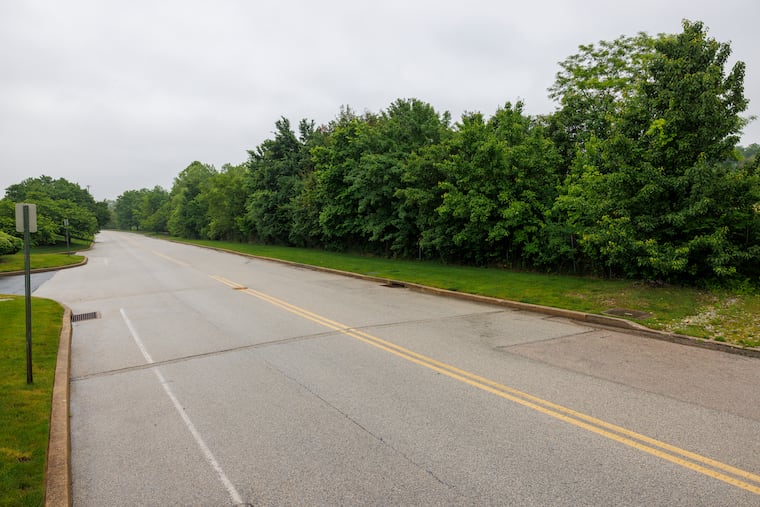
The 60-acre West Conshohocken site is on Front Street, according to Montgomery County property data, and borders Upper Merion Township and I-476. O’Neill owns the land, which previously operated as a quarry, a cement plant, and a Montgomery County solid-waste disposal site, the application says.
“This is at the early stages of the borough’s land development and conditional use review process,” West Conshohocken Borough Manager Doug Borgerson said, adding that public meetings or hearings on the application will be publicly advertised as legally required.
Meanwhile, across the borough line, O’Neill is continuing his fight to build a 4.6 million-square-foot data center campus in Upper Merion Township, despite a unanimous rejection by the township supervisors over the summer.
O’Neill’s withdrawal of specific zoning appeals — which led to the cancellation of a public zoning hearing board meeting that had been scheduled for this week — does not equate to a withdrawal of the broader legal appeals of the supervisors’ rejection, said Marc Kaplin, an attorney for O’Neill.
“The appeals of the rejection are ongoing,” Kaplin said.
» READ MORE: What’s it like living in the shadow of an AI data center? These Vineland residents know.
Across the Schuylkill River, O’Neill and his team are making their case for another 2 million-square-foot data center before the Plymouth Township Zoning Hearing Board. That proposed facility would be on the site of the closed Cleveland-Cliffs steel mill on Conshohocken Road.
The latest special meeting of the Plymouth Township Zoning Hearing Board was held last week. The quasi-judicial proceeding was the second procedural meeting about the plans and included testimony from O’Neill and his attorney Edmund J. Campbell. It did not include public comment. Township officials have said public comment will occur after all the evidence is presented.
At last week’s meeting, Montgomery County was granted party status as the owner of Ivy Rock Quarry across the street from the proposed data center. That means county officials can now present evidence, call their own witnesses, and cross-examine other witnesses.
The data center is expected to be the subject of several Plymouth Township Zoning Hearing Board meetings, with the next one scheduled for November.
O’Neill is requesting a special exception to Plymouth Township’s zoning ordinance to allow for a data center in the municipality’s heavy industrial zone, which permits warehouses and laboratories. O’Neill has argued that data centers should be included among those uses.
In West Conshohocken, data centers are permitted in the borough’s heavy industrial zone under certain conditions, according to a data center ordinance that officials passed earlier this year. O’Neill’s Front Street property is in the heavy industrial zone.
However, according to the borough’s data center ordinance, a data center developer must show that their facility will meet specific parameters related to light and noise pollution, landscaping, power generation, and other factors.
» READ MORE: Human reporters explain why AI data centers are so controversial in the Philly suburbs and beyond
O’Neill has said his data centers would emit little light and noise, operate on a closed-loop system that requires no outside water, provide their own power, and be an economic engine for Montgomery County. He released an economic impact study saying the Upper Merion project alone would result in more than 10,000 jobs during construction, more than 700 permanent jobs, and more than $55 million a year in local tax revenue.
In Upper Merion and Plymouth Townships, many neighbors near the longtime developer’s proposed data centers have rallied against the plans, expressing concerns about pollution, light, noise, electricity prices, property values, and quality of life.
The developer has declined to specify who would operate the centers, though he indicated the facilities would fuel AI-powered biotech to complement his existing life-sciences complex, Discovery Labs.