
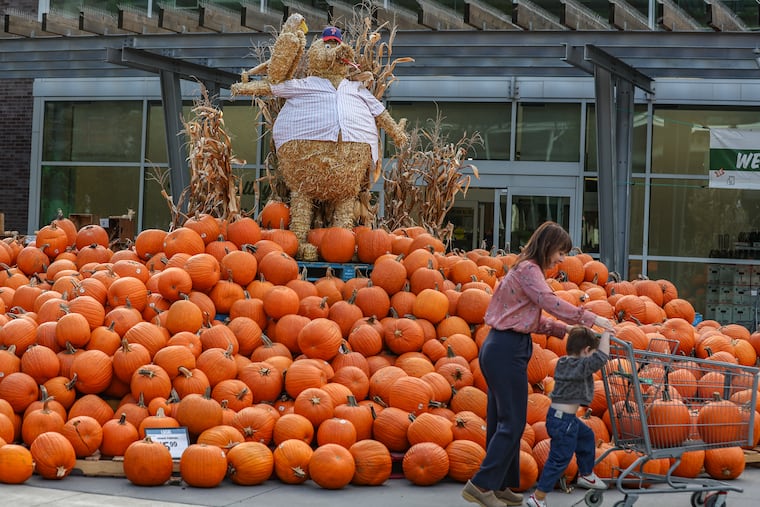
Halloween is officially over. Now it’s time to dust off the cobwebs, pack away the costumes, and polish off the last of the candy. But what about those pesky — possibly putrid — pumpkins?
Nearly 1.5 billion pounds of pumpkins were grown nationwide last year, with about 105 million pounds coming from Pennsylvania alone, according to the latest statistics from the U.S. Department of Agriculture.
Most of those pumpkins end up in U.S. landfills. There, those ghoulish gourds decompose, releasing scary amounts of the greenhouse gas methane and creating an ecological nightmare, said Erin Kinley, state coordinator for the Penn State Extension master gardener program.
“Methane gas contributes to climate change even more so than carbon dioxide,” Kinley said. “So the more pumpkins we can keep out of the landfill, the better.”
Here is what experts say you should do with your jack-o’-lanterns now that the trick-or-treaters have gone.
» READ MORE: Guide to composting in Philadelphia: where to go, what to compost, and more
Composting carved pumpkins
The Philadelphia Department of Sanitation recommends people self-compost their pumpkins or utilize a free food composting service, a spokesperson said.
Carved, gutted, and clean pumpkins can be thrown in backyard composting bins or piles. With the best composting practices — like introducing air to encourage good bacteria — the decaying pumpkins produce less methane emissions than they would in landfills, Kinley said.
There is no limit to how rotten a pumpkin can be before it is thrown into compost, according to Kinley, but pumpkins that have been coated with nonbiodegradable materials, like some paints or petroleum jelly, cannot be composted. Philadelphians can leave those out for trash pickup, the sanitation department said.
For those without an at-home composting option, there is a network of community programs throughout the city, and some suburban communities have adopted the practice as a waste management strategy.
People can schedule a time to drop off pumpkins at Bennett Compost’s Crescentville facility for a fee. Bennett Compost will host a free compost event on Nov. 7 at W.B. Saul High School, or you can crush your own pumpkin for compost at the Spring Gardens Annual Pumpkin Smash in the city’s Spring Garden section on Nov. 14.
Feed the wildlife
Kinley suggested turning pumpkins into wildlife feeders by filling the carcasses with birdseed.
However, “if you know you have a rat problem in your neighborhood, you might want to think twice about that,” Kinley warned city dwellers. She suggested putting the pumpkin in a tree, away from rats or mice.
The intact gourds can be left in backyards for squirrels or birds to enjoy. And, as the pumpkins putrefy, they will release nutrients and vitamins, enriching the soil, according to the Philadelphia Horticultural Society.
And if you haven’t already given it a face, you can also feed yourself: Small squashes, like sugar pumpkins, can be cooked or baked, Kinley suggested.
» READ MORE: Healthy recipes using pumpkins