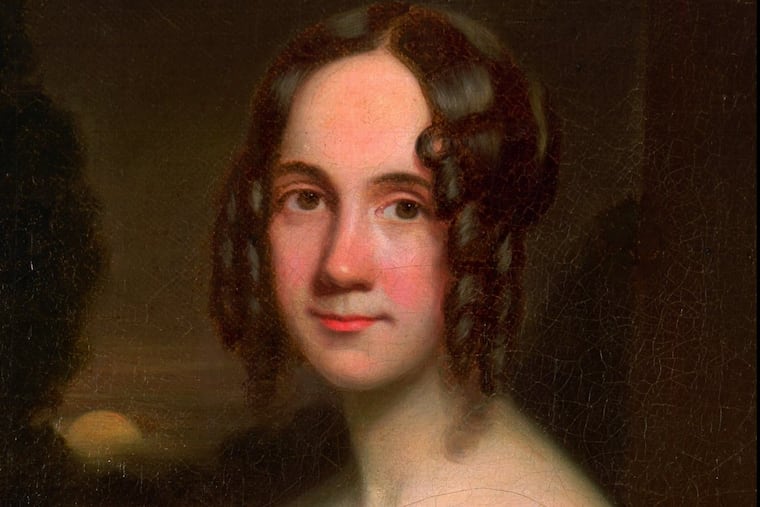
Thanksgiving has a lot of fathers. History, however, counts a single mother.
It was a middle-aged widow with five children who, amid the slaughter of the Civil War, mobilized unprecedented social and political power in pursuit of a new national holiday.
And she did it from Philadelphia.
‘Lady Editor’
But she started in New England.
Not far from where the Pilgrims parked the Mayflower, Sarah Josepha Hale was raised by a Revolutionary War veteran and a homeschool teacher.
Her childhood was defined by togetherness at Thanksgiving, and equal education for boys and girls.
In the 1820s, she published an antislavery novel that caught the attention of a prominent magazine publisher, and by 1841, the 53-year-old New Englander was named “Lady Editor” of Godey’s Lady’s Book, a widely read women’s magazine based in Philadelphia.
Shortly after taking the job, she became a Philadelphian.
And as tensions between North and South escalated, Hale started writing.
Power broker
Described by one biographer as “the most influential woman in America” during the second half of the 19th century, Hale gained influence and social and political capital using the tools of a magazine editor: mobilizing a large network and deploying a force-of-nature writing voice.
“We believe our Thanksgiving Day, if fixed and perpetuated, will be a great and sanctifying promoter of this national spirit,” she wrote.
Her dogged, 30-year pursuit of the holiday, including scores of columns, earned Hale many allies. But she was only getting so far with the publication’s female-targeted demographic.
She needed manpower.
Wielding handwritten letters like repeating rifles, Hale lobbied governors, representatives, and senators to join her holiday crusade.
And in the mid-1800s, the holiday was a mess. It was celebrated mostly in the Northern states, and there was no consensus month or fixed day of the week.
So the goal with the national holiday push was to set a date that would apply nationwide.
Hale could not get governors to agree on a date, so she decided a presidential proclamation was the better route.
In 1863, she sent a handwritten letter to President Abraham Lincoln.
And the timing was just right. The president, only two months removed from the Union’s dramatic and pivotal victory in Gettysburg, was looking for ways to foster healing and reunion.
Weeks later, Lincoln designated the last Thursday of November as our Thanksgiving.
On Nov. 26, 1863, Hale, and the nation, had her day.