KYIV, Ukraine — Press freedom in Ukraine has suffered a double blow in recent days. President Volodymyr Zelensky introduced restrictions on media coverage of Russian attacks on critical infrastructure, and the country’s leading newspaper said it had come under an intense government pressure campaign while investigating one of the president’s closest allies.
Zelensky signed a decree Saturday directing the government to “take urgent measures to prohibit the media from covering information about the consequences of destruction and the timelines for restoring critical infrastructure facilities.” The decree also bans reporting on the construction of protective structures at the sites.
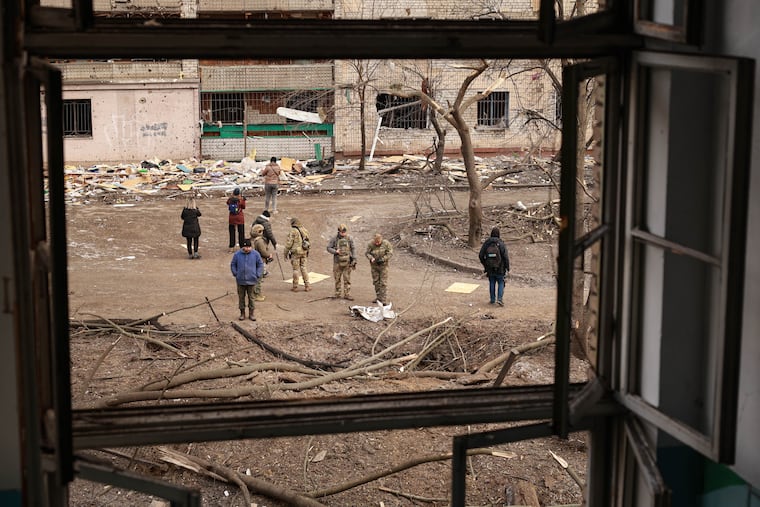
Kyiv often uses the term critical infrastructure to describe power plants, industrial sites, and bridges, all of which Moscow has relentlessly attacked in order to make life miserable for Ukrainians. The decree refers to an effort to strengthen the protection of critical sites before winter, which suggests that publicizing information about the facilities could help Russia target them.
It is unclear how Ukraine will enforce the restrictions, what legal consequences reporters could face for violating them, and what the decree will accomplish. Energy companies and government officials already limit access to power plants, and their public statements after strikes typically omit details that could identify the site’s location or indicate the extent of the damage.
But the decree has revived fears that the Ukrainian government is using its wartime powers to stifle coverage of a sensitive subject. Officials have in the past been accused of failing to prepare adequately for winter attacks and of siphoning off money meant for protective structures. Several opposition lawmakers and former officials have criticized the new measure as a restriction on free speech and an effort to hide the government’s failings.
Dmytro Lytvyn, an adviser to Zelensky, said that the cabinet of ministers, the domestic intelligence agency, and other government agencies would determine what exactly fell under the restriction. They did not respond to requests for comment.
Lytvyn acknowledged in remarks to reporters Saturday that enforcing such a ban could prove difficult because much of the detailed information about attacks on critical infrastructure circulates through anonymous social media channels.
The measure partly mirrors an effort in Russia to criminalize articles and social media posts about the aftermath of Ukrainian strikes and other attacks, as Ukraine has intensified its long-range campaign inside Russia in recent months. Three bills were registered to that effect last week in Russia’s lower house of parliament that proposed fines and jail time for offenders.
Press freedom in Ukraine remains far greater than in Russia, where any news coverage of the war at all that goes beyond government-approved sources has been criminalized. While journalists in Ukraine face routine wartime restrictions on revealing sensitive military information that could tip off the enemy, such as the location of assault units or air-defense systems, they are free to investigate and criticize government officials.
Still, groups monitoring press freedoms have raised alarms for years over growing government pressures on the news media that they say go well beyond the country’s needs for military operational secrecy.
Most television news in Ukraine is broadcast through a government-approved program that was initially created to counter Russian disinformation. The program has itself been accused over time of becoming a vehicle for state propaganda that paints a rosy picture of the war and limits airtime for Zelensky’s opponents.
This summer, Ukrainian police searched the home of a part-owner of Babel, a prominent news outlet, shortly after it published an investigation documenting the abuse of conscripted men during training and the noncombat deaths of 25 soldiers. The search was denounced by civil society groups as possibly “aimed at halting investigations of significant public interest.”
On Friday, Ukrainska Pravda, the country’s leading newspaper, published a column that accused David Arakhamia, a lawmaker and close ally of Zelensky, and the domestic intelligence services of pressuring journalists for the paper who were investigating Arakhamia.
Sevgil Musaieva, the outlet’s editor-in-chief, authored the piece and wrote that the pressure campaign included the use of anonymous social media channels to smear the newspaper, surveillance of the journalists and their relatives, and an inquiry by a lawmaker from Zelensky’s party into the newspaper’s finances.
Ukrainska Pravda, which has published several investigations into corruption schemes involving members of Zelensky’s inner circle, is routinely left off the list of outlets invited to the president’s news briefings.
This article originally appeared in the New York Times.