
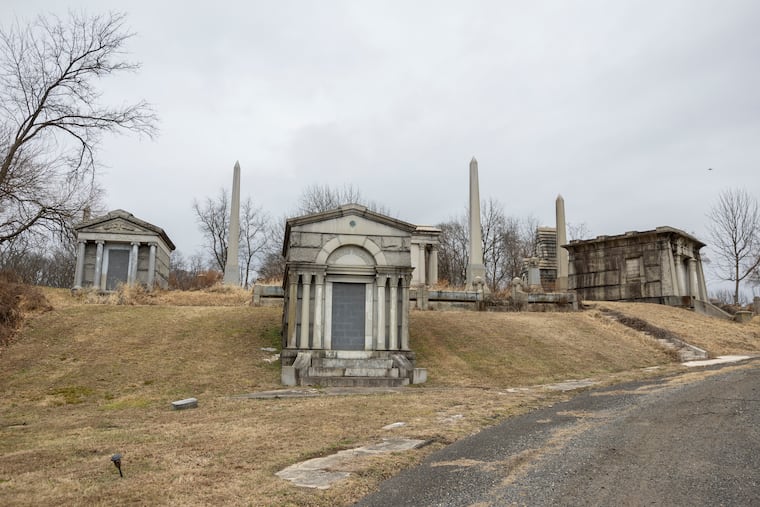
A week after authorities arrested Jonathan Christian Gerlach on charges of stealing human remains from Mount Moriah Cemetery, the consequences of the case continue to unfold — from a small police department fielding frantic pleas from families to a coroner’s office now responsible for safeguarding more than 100 unidentified bones and body parts.
Since the arrest, the Yeadon Police Department has been inundated with calls and emails from relatives fearful that the graves of their loved ones were disturbed, Police Chief Henry Giammarco said. The remains recovered during the investigation — including skulls, bones and other human fragments — were seized from Gerlach’s basement and from a separate storage unit, both in Ephrata, and are now in the custody of the Lancaster County Coroner’s Office.
Gerlach is accused of systematically removing skulls and bones from graves at Mount Moriah, a sprawling historic cemetery that spans Philadelphia and Yeadon Borough. The case has drawn national attention, prompting widespread media coverage and intensifying concern among families with relatives buried at the cemetery.
As of Wednesday afternoon, Giammarco said, his department had received more than 200 calls and emails from people across Pennsylvania and from as far away as Montreal and Hawaii, many asking whether authorities could confirm whether specific graves had been disturbed or whether their loved ones’ remains were among those recovered.
Inside the coroner’s office, the remains have been cataloged and placed in secure storage, said Coroner Stephen Diamantoni. They will remain there until Gerlach’s criminal case is resolved.
Diamantoni said his office does not plan to attempt to identify the remains — a task he described as virtually impossible given their age, condition and the circumstances in which they were recovered.
When the bones were seized from Gerlach’s home and storage unit, Diamantoni said, they were not labeled or organized in any way that would indicate where they came from or whom they belonged to. In many cases, he said, remains from different individuals were mixed together, a condition known as commingling, “on a scale that I’ve never encountered.”
Compounding the challenge, some of the remains are believed to be hundreds of years old, Diamantoni said, and are in advanced states of decay. Even under ideal conditions, identifying such remains would be difficult. In this case, he said, it would be “a herculean task” to attempt to match the bones to specific burial sites — let alone to determine whose remains they were.
Even if that were somehow possible, Diamantoni said, identifying a living family member would present another nearly insurmountable hurdle, given the age of the remains.
Back in Yeadon, Giammarco said he has tried to provide as much clarity as possible to families reaching out in distress. While the investigation is ongoing, he said, authorities have identified thefts only from mausoleums and underground vaults — structures that are larger and deeper than standard graves and are constructed differently. He spent much of the weekend returning calls and responding to emails, he said, hoping to ease fears.
“If it would have been my family,” Giammarco said, “I would have wanted someone to contact me.”
Delaware County District Attorney Tanner Rouse, whose office is prosecuting Gerlach, said on Wednesday the investigation into the crimes was ongoing.