
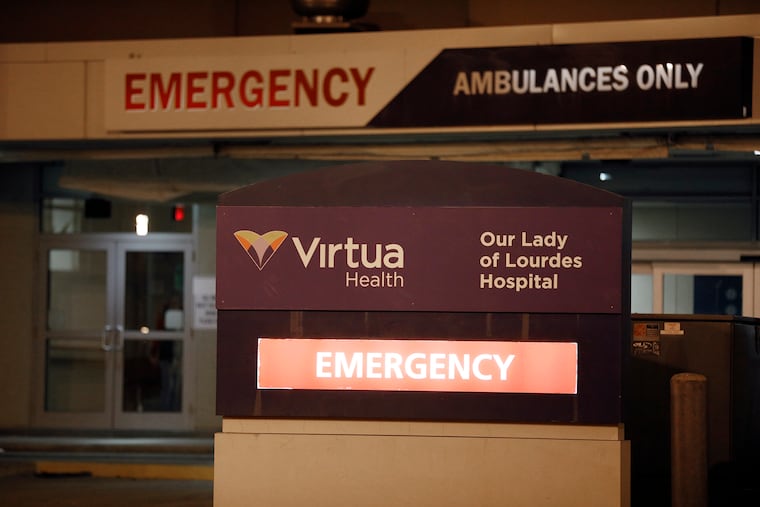
The president of a major New Jersey organ donation nonprofit told a subordinate at a Camden hospital to continue procuring organs from a patient thought to be dead — after that person “reanimated” during the organ recovery process, federal lawmakers have alleged.
Instead, hospital staff at Virtua Our Lady of Lourdes Hospital intervened to stop the procedure, members of the House of Committee on Ways and Means said in a letter sent Wednesday.
The committee, which has been investigating malpractice among organ donation nonprofits, said it was investigating allegations that the New Jersey Organ and Tissue Sharing Network, or NJ Sharing Network, engaged in a number of questionable practices.
The letter said whistleblowers accused the organization of disposing of organs meant for research, pressuring families to donate organs from patients who had revoked their organ donor status, and skipping over patients on a waiting list for donated organs.
The committee said that, in some cases, NJ Sharing Network could be violating federal law.
NJ Sharing Network and Virtua Health did not immediately return requests for comment Thursday.
The House’s probe into NJ Sharing Network’s practices comes after years of scrutiny for the nation’s organ donation system and amid investigations into several other organ donation organizations by the committee. The Washington Post reported that as early as 2022, Senate investigators found 70 people had died after organ donation organizations failed to screen donated organs for cancer and other diseases.
This year, the federal Department of Health and Human Services said it had found evidence that an organ donation organization in Kentucky, West Virginia and Ohio had initiated organ procurement procedures on at least 28 patients who may not have been dead.
In September, the Post reported, a former NJ Sharing Network staffer named Patrek Chase filed a lawsuit against the nonprofit and two other organ donation organizations, alleging that they had collected organs that weren’t appropriate for transplants in order to pull in more Medicaid reimbursements.
The House committee wrote in its letter that the organ procurement case at Our Lady of Lourdes took place in summer 2025, about two weeks before the committee informed NJ Sharing Network it was investigating allegations of malpractice at the organization.
The patient was on “life-sustaining” therapy, the committee wrote, and NJ Sharing Network asked the person’s family for consent to remove their organs for donation. Though pronounced dead before the “organ recovery process” began, the patient “reanimated” during the process, the committee wrote.
The committee did not specify at what point the person reanimated, what signs of life they showed, or whether the patient was injured during the process.
The NJ Sharing Network administrator on call contacted the nonprofit’s president, Carolyn Welsh, and asked what to do, the committee wrote.
The committee said it had “obtained information” that Welsh told her staff to go ahead with the organ recovery process. Hospital staff, however, stepped in and stopped the process, the committee said — though, afterward, Welsh’s staff kept pressuring hospital staff to continue.
Whistleblowers also told the committee that emails linked to the donation case were deleted and that the donor’s record may have been tampered with, the committee wrote.
Citing public records from federal health agencies, the committee said that, about a quarter of the time, NJ Sharing Network allocated organs for transplant “out of sequence” — skipping over people on waiting lists for organ transplants, and doing so more often than some peer organizations.
Sometimes, allocating organs out of sequence is necessary, the committee wrote, such as when an organ is reaching the maximum amount of time that it can be preserved outside a person’s body and must be implanted as soon as possible. But a staffer at the New Jersey organization allegedly sent organs to “friends in the industry” at a list of “aggressive centers,” the committee wrote.
It was unclear what was meant by “aggressive centers.”
The committee said that it had received information that skirting typical allocation procedures for just one case meant that “several individuals” waiting for organs had died, several had been removed from the organ wait list because their medical conditions worsened, and more than 100 people who were skipped over are still on the list.
The committee said that it was also concerned NJ Sharing Network had kept information from them after an earlier request for documents. They asked for more documents and communications from the organization and requested interviews with more than two dozen staff.