
Earlier this week, the United States Congress voted to reopen the federal government. Yet for more than 470,000 residents of Philadelphia, the timeline for restoring full SNAP (Supplemental Nutrition Assistance Program) benefits remains uncertain.
Food insecurity is a tragic reality for roughly one in four children living in Philadelphia.
As a pediatrician, I witness its effects firsthand. I regularly speak with parents who struggle not only to find healthy options, but simply to secure enough food to feed their families. Sharing information about local food banks and pantries has become a routine part of these conversations.
While the precariousness of SNAP benefits continues even as the government shutdown has ended, I am deeply concerned about the growing food insecurity facing children across the city. Among this population, I am particularly worried about children with autism, who are at even greater risk for food insecurity.
Many children with autism tolerate only a limited range of food because the textures, smells, or appearances of unfamiliar foods can be overwhelming.
Autism spectrum disorder is a neurodevelopmental condition often accompanied by sensory over-responsiveness, which can lead to significant food aversion and extreme selectivity. Many children with autism tolerate only a limited range of foods — sometimes as few as five to 10 — because the textures, smells, or appearances of unfamiliar foods can be overwhelming.
Many challenges
Families raising children with both autism and intellectual disabilities are estimated to face twice the risk of food insecurity, driven in part by financial strain, childcare challenges, and reduced employment opportunities.
A national pulse survey conducted during the COVID-19 pandemic found that, amid widespread disruptions to support systems, families of children with autism were nearly four times more likely to experience food insecurity than the general population.
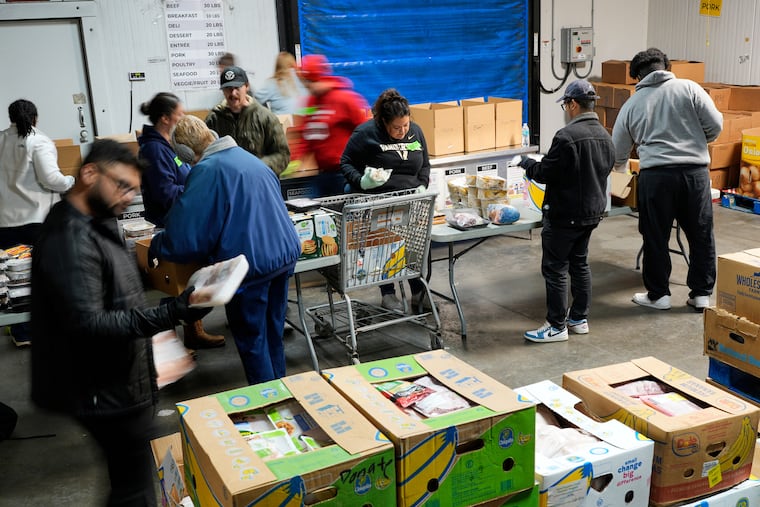
While SNAP benefits remain uncertain, I am directing more families toward the extraordinary efforts of food banks and community pantries across Philadelphia.
These organizations, however, were designed to supplement food supplies — not to replace the sustained support that federal nutrition programs provide. Many, despite increased donations, are now facing unprecedented demand.
While I am grateful for that important work, I face understandable pushback from some families when I direct them toward Philadelphia’s food pantries. I have had heartbreaking conversations with parents who are scared about their ability to meet their child’s specialized dietary needs:
“They gave me food, but my kid won’t eat the noodles, bread, and beans they gave us. I’ll figure something out — I have to.”
“I have to pick out specific things for my kid. He’s incredibly picky and won’t eat outside of his regular foods. You’re not finding Eggo waffles at a food bank.”
A call to action
These are not isolated anecdotes. They illustrate a broader challenge that deserves public attention: the intersection of food insecurity, disability, and systemic gaps in support.
My intention is not only to express gratitude for the vital work of local food assistance organizations, but also to highlight the additional barriers facing families of children with autism.
Philadelphia’s schools already struggle to meet the educational and behavioral needs of these children. Their families often experience additional economic burden including lower household incomes and heightened employment instability due to caregiving responsibilities — factors that compound the effects of a prolonged SNAP interruption.
The government’s reopening offers hope, but procedural hurdles remain before SNAP benefits will return to families in need. Meanwhile, my call to action is to avoid passivity and find a way to help.
Food insecurity is not always visible.
It hides in the shadows of stigma and sometimes shame. I urge those who can, to support local food pantries with their time, resources, or donations. I encourage you to pick up the phone and call your elected representatives to demand swift restoration of SNAP benefits
Finally, if you happen to know a family raising a child with autism, consider reaching out with compassion and asking, “Is there a way I can help?”
Sometimes, this small human action of solidarity may just keep a child from missing their next meal.
Nishant Pandya is a general pediatrician in Philadelphia.