
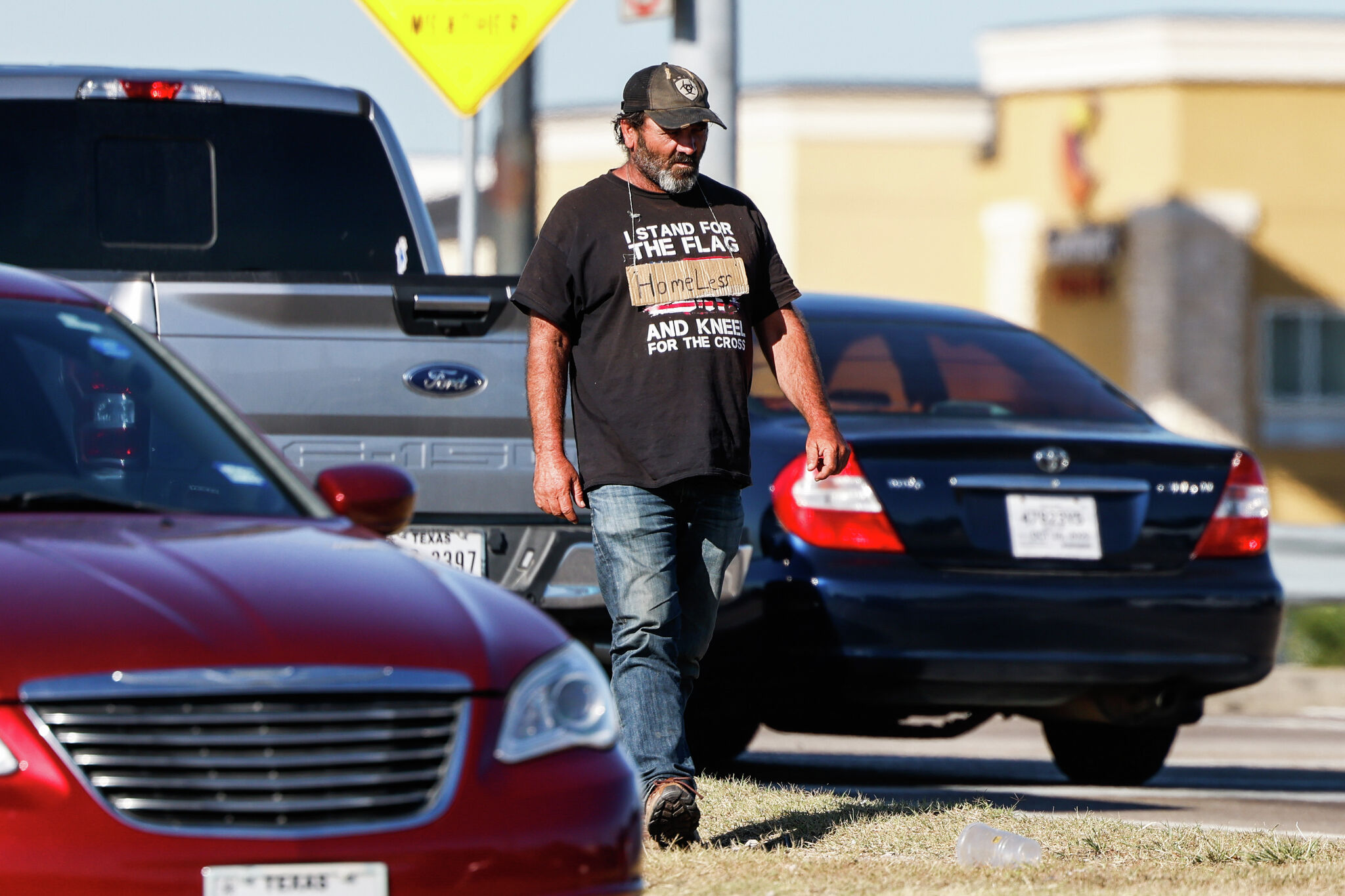
Late last year, a federal judge confirmed that the city of Dallas has the authority to prohibit people from standing or walking on road medians. The legal victory gives police another tool to help remove panhandlers from busy intersections, major thoroughfares and service roads. We hope officers lean on the ordinance to prevent the chaos and clutter that sometimes crop up dangerously close to traffic.
The positive outcome was somewhat unexpected because cities often struggle to defend themselves in lawsuits that accuse them of curbing constitutional rights, as this one did. A team of civil rights advocates brought the lawsuit on behalf of two homeless people, an academic who researches homelessness and a political activist. The plaintiffs argued that the ordinance, which the Dallas City Council passed in 2022, infringed on their First Amendment right to free speech, which they said includes asking passersby on the street for money. It criminalized poverty, the plaintiffs charged.
Over the years, Dallas had tried public education campaigns that encouraged residents to give to homeless service organizations rather than directly to panhandlers, but that hadn’t solved the pedestrian-in-the-roadway problem.
Panhandlers continued standing in medians and sometimes walking into traffic seeking money from drivers. During a 2022 City Council meeting, council member Gay Donnell Willis said she had called 911 multiple times to report pedestrians in medians who appeared intoxicated or in crisis. Most City Council members felt that the ordinance was needed to keep everyone safe.
The federal judge found that the median ordinance does not unduly infringe on the plaintiffs’ rights. It does not ban speech based on its content, nor does it target specific groups of people. It simply defines small zones where pedestrians are not allowed. With few exceptions, no one is permitted to stand or walk in medians narrower than 6 feet, or in designated “clear zones,” such as shoulders or bike or auxiliary lanes.
The judge noted residents can still exercise their free speech rights in many other places.
We expect that officials won’t use this authority to immediately issue citations or arrest people in medians. Informing people of the rules and urging them to move to a safer location is a better strategy.
If neither a request nor an order works, and the person has no outstanding warrants, calling in a crisis intervention team might be best. Enforcement should push alleged violators toward services, not jail.
Have thoughts about this? Send a letter to the editor using our letters form or email letters@dallasnews.com. Letters should be no more than 200 words and include the first and last name of the writer and city of residence.