
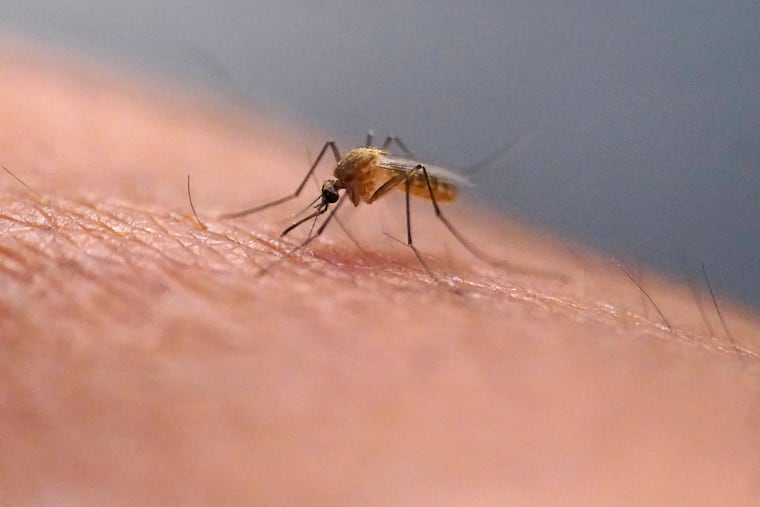
Philadelphia health officials confirmed the city’s first four human cases of West Nile virus for the year Friday, and asked residents to take some simple actions to help stop the disease’s spread.
“We all have a role in preventing the spread of West Nile Virus,” said Health Commissioner Palak Raval-Nelson in a statement. “And it’s easy to do: Wear mosquito repellent and dump out standing water.”
Spread by bites from infected mosquitoes, West Nile virus is a neurologic infection that often presents no symptoms in people, health officials said. However, it can result in a fever and flu-like symptoms in about 20% of cases, and rarely may cause swellings of the brain and spinal cord.
Officials said that people aged 50 and older have the highest risk of developing severe disease. Those experiencing symptoms such as unexplained fatigue, weakness, and headaches should contact their doctor. There is no specific treatment or vaccine for West Nile virus, though rest, fluids, and pain medication can ease symptoms.
Health officials did not provide further information about the human cases of the disease it had identified.
West Nile virus is common in Pennsylvania, and has been detected in mosquitoes in a majority of the state’s 67 counties, according to the state Department of Environmental Protection’s website. Two human cases of the ailment were previously identified in Allegheny County, city health officials said.
Mosquitoes breed in standing water, and their spread can be lessened by periodically emptying any container outdoors — such as flower pots, bird baths, and buckets — that may become a breeding site. Additionally, health officials recommended that residents clear clogged rain gutters and aerate ornamental ponds, among other steps.
Residents, officials said, should also wear insect repellent when outdoors, wear long-sleeved shirts and long pants when possible, and limit outdoor activity at dawn, dusk, and the early evening.
The health department’s Vector Control Services program, meanwhile, works to keep the spread of mosquitoes down by treating public areas and storm drains with insecticide. This summer, workers have treated more than 50,000 storm drains with larvicide to keep mosquitoes from breeding, officials said.
Mosquito-related complaints can be reported to the health department’s mosquito hotline at 215-685-9000.