
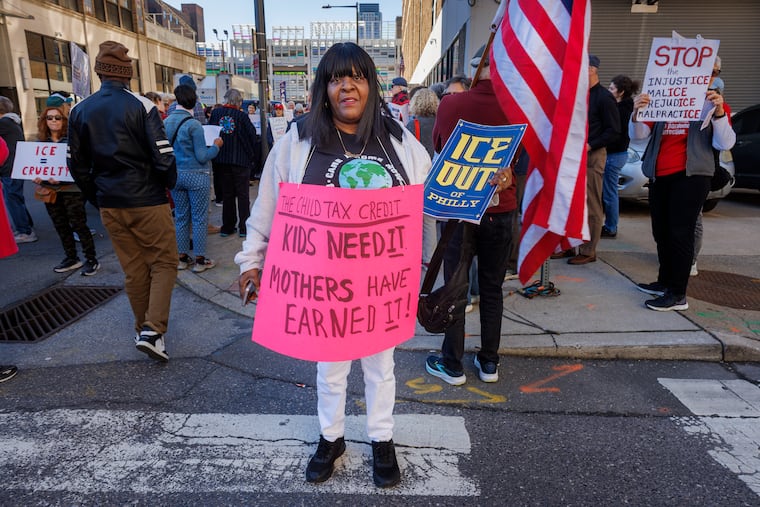
Carolyn Hill is an old-fashioned kind of grandmother who keeps a well-stocked kitchen and is big on cooking healthy, traditional meals for her family. On Sundays, she prepared soul food dinners complete with Southern favorites such as meat loaf, fried chicken, macaroni and cheese, cabbage, rice, and yams.
But that’s harder for Hill to do now that she gets less from the Supplemental Nutrition Assistance Program, informally known as food stamps. To pay for the ingredients for this past Sunday dinner, Hill had to accept help from a cousin: “I had the meat but she said, ‘Here go out and get the other stuff,’” recounted Hill, who is 68.
She had little choice but to accept assistance since her benefits have dropped sharply in recent months. She estimated that her monthly benefit of around $850 in 2024 fell to $571 late last year.
Then, in January, her monthly allotment dropped even further, to $559. Hill is not sure exactly why but fears that it’s because one of her grandchildren is 18, graduated from high school in January, and hasn’t yet landed a real job. Under a host of new regulations, imposed as part of the Trump administration’s so-called One Big Beautiful Bill Act, childless, able-bodied adults between the ages of 18 and 54 are now required to work 20 hours per week, attend school/training, or volunteer to be eligible for SNAP benefits.
Last month, President Donald Trump bragged during his State of the Union address about SNAP cutbacks saying, “in one year, we have lifted 2.4 million Americans, a record, off of food stamps.” In reality, recipients weren’t “lifted” off of food stamps — they are being kicked out of a program that’s helping keep millions of Americans from going hungry.
Meanwhile, grocery costs are way up.
“Eggs is darn near $5 a dozen,” Hill pointed out. “Beef is high as I don’t know what.” Often, she has to choose between paying a bill or eating. Food usually wins out.
“I’ve still got two other children,” Hill told me. “They aren’t babies. I can’t just go buy a can of soup or something to fill them up with.”
She enjoys cooking healthy meals for her family. “I’m not the type of person that gives a child Oodles of Noodles unless they say they want some noodles. I’m in that kitchen cooking full-course meals. I shop three times a month.”
Hill bargain shops at Walmart, Aldi, and Cousins to stretch her dollars. She drags her grocery cart onto buses and travels around the city to collect food at giveaways. It’s a lot but she doesn’t let that stop her from providing for the grandchildren in her custody ages 12, 14, and 18.
The Philadelphia Unemployment Project is helping local recipients cope with the changes in SNAP eligibility. It is running a social media ad contest and giving out $500 prizes to winners to help spread the word.
“With food prices the way they are these days, every dollar helps,” said Adam Goldman, who directs the program.
The work of Goldman’s group and others is admirable, but people should be able to rely on the government, too. However, Trump would rather provide tax breaks to high earners than make every effort possible to ensure that poor grandmothers like Hill keep healthy food on their tables.
Hill, who used to do factory and restaurant work, hasn’t been employed since 2008. A resident of the Hunting Park section of North Philly, she gets by on disability payments and devotes most of her time to cooking and caring for her family. “That’s how my grandmom and them was,” Hill recalled. “You would go over there and my grandmom would say, ‘Come here and eat some of these big old cookies I made.’”
When I caught up with her on Monday she was participating in an International Women’s Day rally in Center City protesting SNAP cuts, among other things. Since she relies on a cane, I worried about her ability to keep up with the marchers.
But then, I noticed that she had brought along her 14-year-old granddaughter. I figured that if the grandmother’s back started hurting, she could lean on her. Hill wound up hopping into a support vehicle that trailed the marchers.
But the option was there. Since the beginning of time, humans have survived tough times and food insecurity by leaning on each other. We will need more of that going forward, especially as long as affordability continues to be such a big issue and Trump remains in office.