
In October 2011, Charles Grugan gave away his Air Jordans. The 33-year-old was barefoot when his father picked him up from prison, where he’d been incarcerated on drug charges. “Someone else needed them more,” he told his father as he got in the car. Within a week, Charles’ vital organs would belong to others, as well.
Shortly after Charles’ release, Eileen Grugan returned home to find her son unconscious and dialed 911. The overdose-reversing medication Narcan was not yet widely available, so the responding officer, Tredyffrin Township’s Officer (now Cpl.) Richard Gasparo immediately started CPR, continuing for a superhuman 25 minutes, before finally returning a weak pulse.
I learned of Charles’ story in May 2017. Back then, I was wholly unfamiliar with drugs and drug use, so when I met with Mrs. Grugan and Officer Gasparo, he explained the clues to opioid overdose. Near Charles were a lighter and a spoon (which he’d presumably used to cook opioid powder into a liquid that he injected). Gasparo also explained how the opioids operated as swift, extreme relaxants in Charles’ circulatory system, causing all his muscles — including lung muscles which control breathing — to become too sedated to contract.
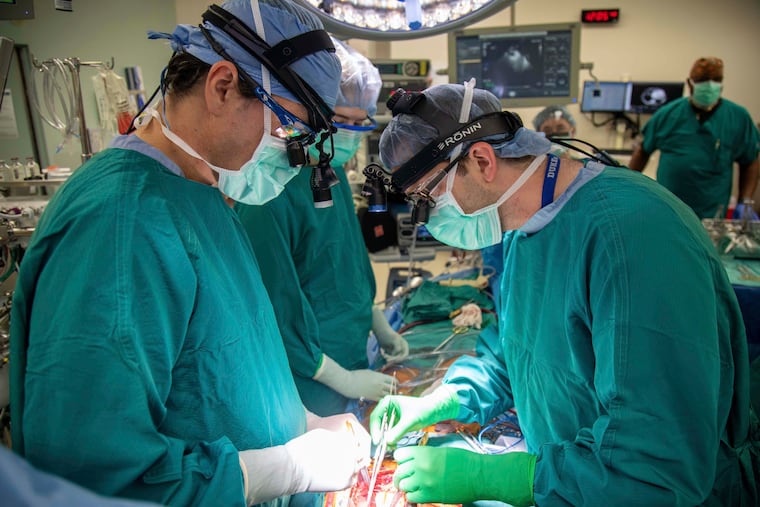
An ambulance rushed Charles to Paoli Hospital, but his brain had been deprived of oxygen. Doctors determined he would never regain consciousness, so he was hooked to life support until his family made the excruciating choice to remove it. Thereafter, his organs — his heart, his kidneys, and his liver — were delivered to four patients via Philadelphia’s Gift of Life, an organization founded more than 50 years ago by renowned physicians Clyde Barker and Aaron Bannett.
I’d wanted to report a story about how one person’s donation multiplies, extending more than one life.
April is National Donate Life Month. Right now, more than 100,000 people in the United States are registered to receive a transplant, a number far exceeding availability. Thousands will die in 2026, waiting. Meanwhile, in 2025 alone, the Gift of Life facilitated nearly 2,000 transplants, coordinating more donors and organs for transplant than any other organ procurement organization.
I’d wanted to report a story about how one person’s donation multiplies, extending more than one life. Following Charles’ heart within another’s chest, I believed, could increase organ donation awareness and also potentially ease the stigma that families with a loved one in addiction face.
At the time of his death, thousands of young Americans, succumbing to overdoses, were supplying a miracle for others. Between 2000 and 2017, the number of overdose death donations increased by 17%, based on data analyzed from the scientific registry of transplant recipients. And between 2000 and 2018, 7,313 overdose deaths resulted in 19,897 donor organ transplants — with outcomes indistinguishable from transplants from non-overdose deaths, according to a national registry study published in the Annals of Internal Medicine.
» READ MORE: I learned about the organ donation crisis when my kidneys failed | Opinion
But the people who received Charles’ organs declined to speak with me, so I shelved my reporting.
Exactly one year later, my loved one returned from work and began to wilt as he stood before me — his muscles rapidly relaxing. He wasn’t fainting; this wasn’t a sudden seizure, but a progressive unloosening of his 6-foot-3 frame, as if his bones had become rubber. I rushed to break his fall. We were on the second story of a house on a dirt road, in a remote county, with poor cell service, no police department, far from hospitals.
Because of my reporting on Charles, I knew what was happening, even without the lighter and spoon. So I fought — slapping, shaking, pinching, anything to prevent the opioids from dragging him into total unconsciousness.
Back when I had sat down with Charles’ mother and the officer who revived him, I was doing a job; reporting on strangers for a mostly unknowable audience. At least that’s what I thought. Ultimately, my newsgathering served two people: me and the person I tried to keep from dying on the bathroom floor.
Charles’ heart first beat in his mother’s womb in the summer of 1977, and now occupies a third body. Via the organ donation form he filled out on his Pennsylvania driver’s license, and through his family’s donation consent — and combined with Eileen Grugan’s outreach on behalf of the Gift of Life, which, in turn, increased awareness — more organs have been preserved and shared than Charles’ mortal body contained, keeping countless people alive.
Regardless of wherever his heart beats today, in May 2018 at my house, it saved one person more. I want his story to keep reverberating, to reach whoever needs to hear it. So that anyone’s unfathomable loss might sustain another’s beloved. So that Charles Grugan’s generosity never dies.
Julia Shipley is an arts and culture correspondent for The Inquirer.