

Tiana Boradnax (right) hugs her mother-in-law, Audrey Jones, during an interfaith prayer circle held for her husband, James Broadnax, a death row inmate scheduled to be executed on April 30, outside of the Frank Crowley Courts Building in Dallas, TX, Tuesday, April 21, 2026.
Juan Figueroa/The Dallas Morning News
At 19 years old, James Broadnax participated in a merciless, arbitrary crime that took the lives of two loved and innocent men. In taped interviews that would trail his life like a shadow, he boasted about it from jail. He asked the state to kill him; not because he was remorseful, but because his past had been so agonizing, he had no desire to find out if the future would hold more or less of the same.

At 37 years old, Broadnax believes he’s transformed on death row, where he teaches classes on peacekeeping and mentors youth to keep them off the path to incarceration. He’s found God, gotten married and asked for forgiveness. He wants to do so much with his life, that a friend in his unit said if it came down to it, and only one of them could get clemency, he’d pick Broadnax every time.
Article continues below this ad

Tiana Broadnax holds her phone to the microphone as her husband, James Broadnax, a death row inmate scheduled to be executed on April 30, speaks during an interfaith prayer circle held for him outside of the Frank Crowley Courts Building in Dallas, TX, Tuesday, April 21, 2026. James’ mother, Audrey Jones, holds one end of a banner that reads, “END TEXAS EXECUTIONS.”
Juan Figueroa/The Dallas Morning NewsFor years, county, state and federal courts have ruled that neither Broadnax’s evolution nor his claims of an unfair trial are grounds for absolution. So on Thursday evening, Broadnax is scheduled to be executed by lethal injection in Huntsville, where the Texas prison system houses its death chamber.
Much of Broadnax’s family believes his death would be a grave injustice, while those closest to the victims – with one unforeseen exception – hope to see a long delayed sentence finally carried out.
Article continues below this ad
‘How a child was formed’
Broadnax grew up in Texarkana, an East Texas city fixed in a verdant region known as the Piney Woods.
Court documents describe a childhood rife with violence and despair. Broadnax’s father wasn’t a part of his life, and his mother struggled with severe substance abuse, made worse by a series of volatile relationships. They survived on food stamps and lived in homes where electricity was routinely shut off.
Article continues below this ad
Family friends and relatives testified at his trial that Broadnax was always hungry, never smiled and often had visible injuries. He was smoking marijuana by the time he turned 9.
Broadnax was repeatedly sent to live with his grandmother in Arkansas, the documents say, his memories of her ingrained in his skin. Broadnax said she loathed him for being the only biracial kid in an otherwise Black family.

Audrey Jones, mother of James Broadnax, a death row inmate scheduled to be executed on April 30, speaks during an interfaith prayer circle held for her husband, outside of the Frank Crowley Courts Building in Dallas, TX, Tuesday, April 21, 2026. Tiara Cooper (center), with In Defense of Black Lives Dallas, and Tiana Broadnax, James Broadnax’s wife, listen.
Juan Figueroa/The Dallas Morning NewsBroadnax recalled being locked out of the house for hours in summer heat. After one visit, his stepfather reported that it seemed as if Broadnax hadn’t bathed in weeks. A dead roach was found in his ear.
Article continues below this ad
By the end of his teenage years, Broadnax had lived in a dozen different places and attended five different schools.
While Broadnax dropped out after the 11th grade, he later enrolled in GED classes, walking four to five miles each way to attend them. Later, he tried to join the Job Corps to pursue architecture, but he needed his birth certificate.
It was never found.
“This history does not excuse Mr. Broadnax’s mistakes. But it matters,” his lawyers wrote in one of his appeals. “Scripture teaches that judgment must be informed by truth, and truth requires confronting how a child was formed before he ever became a man.”
Article continues below this ad
‘We all die before our time’
In June 2008, when Broadnax and his cousin Demarius Cummings were both 19, they set out to rob two music producers outside their Garland recording studio. By the time they left, Stephen Swan and Matthew Butler were dead, and the cousins had claimed only $2 and a 1995 Ford.
Jamie Cole, Butler’s wife of three years at the time of the shooting, remembers Butler as a playful man, known to approach life with a joke or game within reach. She said they met at church, their days spent having fun and singing worship songs together. They had two kids together, a girl and a boy.
Article continues below this ad
Butler owned the studio where he died. Having been diagnosed with bipolar disorder in his teens, Cole said Butler would have dayslong depressive episodes that made it hard for him to hold down a job. He’d always loved music, and knew owning a recording studio would give him the flexibility he so badly needed.

Matthew Butler’s business card and a luggage tag photographed in Dallas, Monday, April 27, 2026. Butler and Stephen Swan were killed outside of the Zion Gate Records in Garland on June 19, 2008.
Juan Figueroa/The Dallas Morning NewsThe studio became not only a saving grace but a hangout among his friends, including Swan, who eventually joined the business as its engineer. Cole said Swan was a tall, lanky and, at times, awkward guy, but he was generous; always eager to help.
Butler once told Cole that if anything happened to him, she should marry Swan.
Article continues below this ad
“He’s a good guy,” Butler would say. “He’ll take care of you.”
Cole said Butler, 28, and Swan, 26, would take turns writing and recording one another’s songs.
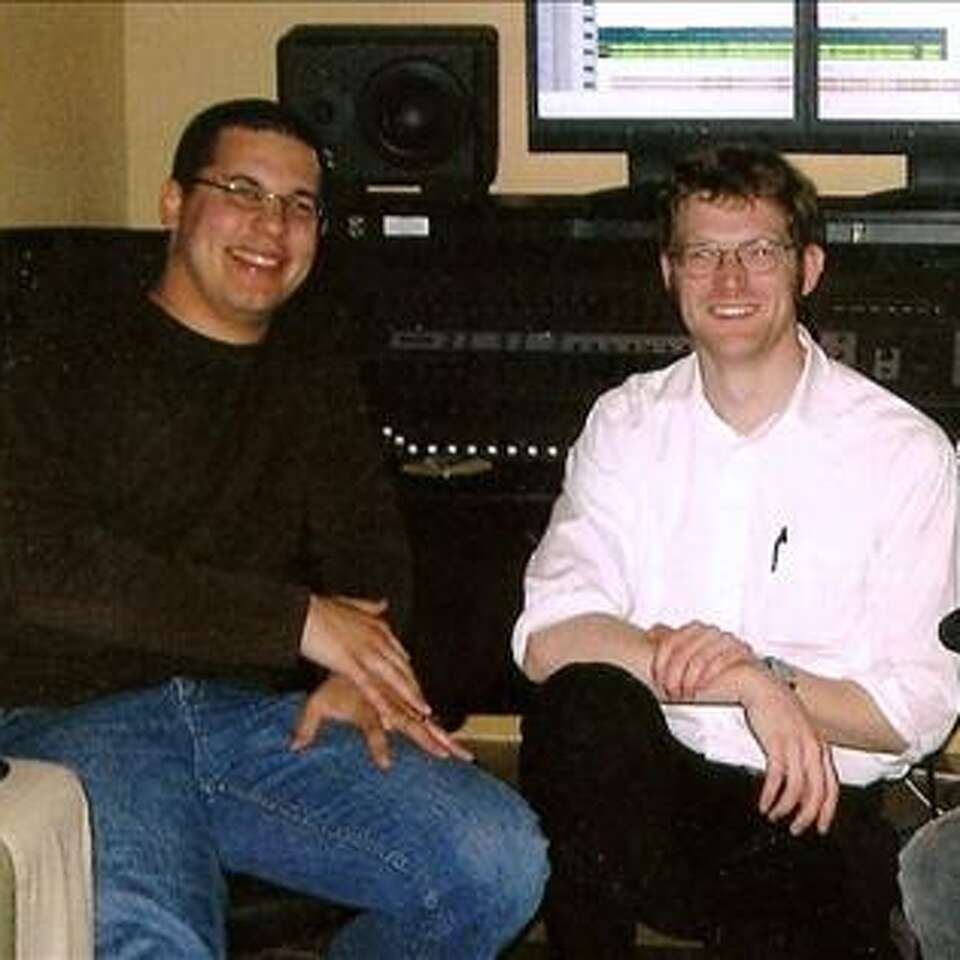
Matthew Butler, right, and Stephen Swan, left, pictured in Zion Gate Records after it opened in 2007.
The morning after the murders, Cole recalled going into the studio to find all of the equipment was still on. She pressed the space bar on the computer to see if anything would play.
Article continues below this ad
She wept as their voices came through the speakers, singing, We all die before our time.
‘I should be in his place’
In August 2009, a Dallas County jury gave Broadnax what he said he wanted, condemning him to die. Cummings, who was tried as his accomplice, was sentenced to life without parole.
This March, faced with an imminent end to his cousin’s life, Cummings decided it was time to clear his conscience. In a signed declaration, Cummings explained the reason only his DNA was found on the murder weapon was because he was responsible for the shooting.
Article continues below this ad
“I need to get it out ’cause it’s destroying me,” Cummings said in a video submitted with Broadnax’s clemency petition. “I feel like I should be in his place.”
Cummings said he asked Broadnax to take the blame, believing no court would send a 19-year-old with nothing more than a marijuana charge on his record to his death.
The state’s highest criminal court rejected the declaration, stating even if it were true, it wouldn’t change Broadnax’s fate. “His own lies — if that’s what they are — do not give rise to a due process violation,” one judge wrote. “He has just suffered the consequences of his own voluntary conduct.”
“It’s what happened,” Cummings said. “Y’all can choose to accept it or not but the truth of the matter is I was the shooter. And if they kill bro, they’ll be making a mistake, a real big mistake.”
Article continues below this ad

James Broadnax, 37, is scheduled to be executed by lethal injection Thursday in Huntsville.
On the day of the sentencing, Butler’s mother left a comment on her son’s obituary, writing that she had prayed for such a conclusion since the moment she lost him.
In a letter years later, Stephen’s mother, Jean Swan, asked the court to set an execution date. She wrote that her family had already waited too long for the justice they’d been promised, and that many of her relatives had passed before they could see it for themselves.
Broadnax has now spent 17 years on death row, where he spends 22 hours a day in solitary confinement. In court filings, his lawyers said he writes poetry and teaches other inmates art therapy, chess and creative writing to help them cope with their solitude.
Article continues below this ad
He was one of 28 men selected for the row’s faith-based program, its intensive curriculum focused on moral development, accountability and personal growth.
“I wish I could show them my soul so they could see just how sorry I am,” Broadnax said of Butler and Swan’s families when he asked the state’s parole board for mercy. “I wish it would have never happened. And if I could take it back I would.
“I’m just really hoping and wishing and praying that they could find it in their heart to forgive me.”
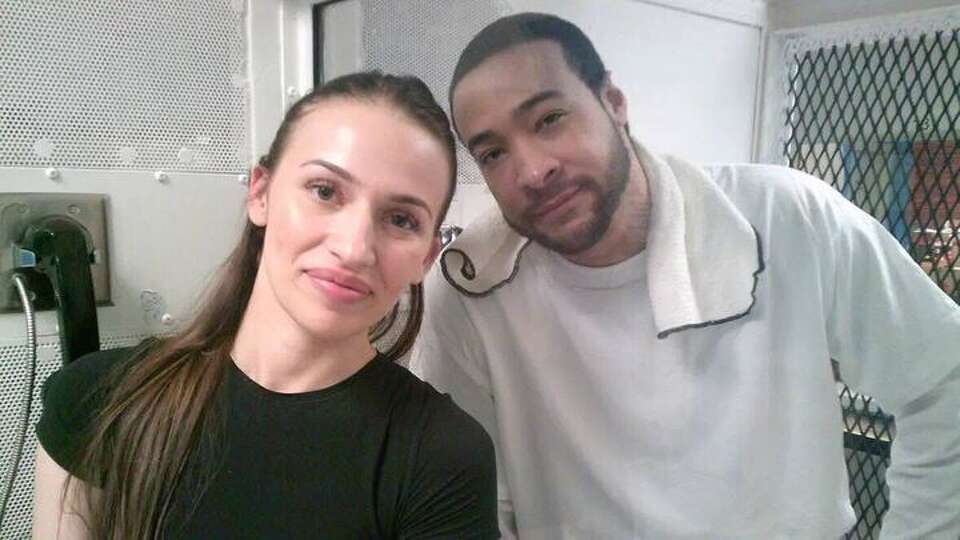
Tiana Krasniqi and James Broadnax pose for a photo in the Allan B. Polunsky Unit in Livingston, Texas.
When asked about Broadnax earlier this month, Cole said she harbors no ill will or resentment.
Article continues below this ad
While Cole lost her husband, the father of her children, she knows her life was far from the only one shattered by that enduring summer night.
Whether or not the execution should be carried out, Cole said, is only for God to decide. But if death is the price Broadnax must pay for the choices he made on earth, Cole prays the afterlife will give him something this one could not.

By signing up, you agree to our Terms Of Use and acknowledge that your information will be used as described in our Privacy Policy.
Mercy, undue.
Article continues below this ad
Staff writer Elissa Jorgensen contributed to this report.