
Labor rights activist Dolores Huerta revealed she was among women and girls who say they were sexually abused by César Chavez, the long-admired Latino icon, while he led the United Farm Workers union.
The stunning allegations against Chavez, who died more than three decades ago, drew immediate calls to change events and memorials honoring the man who in the 1960s brought to light the struggles of field workers.
In a statement released Wednesday, Huerta said she stayed silent for 60 years out of concern that her words would hurt the farmworker movement.
Huerta described two sexual encounters with Chavez, one where she was “manipulated and pressured” and another where she was “forced against my will.”
“I carried this secret for as long as I did because building the movement and securing farmworker rights was my life’s work. The formation of a union was the only vehicle to accomplish and secure those rights and I wasn’t going to let César or anyone else get in the way.”
Earlier Wednesday, an investigation by the New York Times found that Chavez groomed and sexually abused young girls who worked in the movement, including Huerta, who was in her 30s at the time.
Huerta said that both sexual encounters with Chavez led to pregnancies, which she kept secret, and that she arranged for the children to be raised by other families. “No one knew the full truth about how they were conceived until just a few weeks ago,” she said in her statement.
Huerta said she did not know that Chavez hurt other women and condemned his actions but stressed that the farmworker movement is bigger than one person.
“César’s actions do not reflect the values of our community and our movement,” Huerta said in her statement. “The farmworker movement has always been bigger and far more important than any one individual. César’s actions do not diminish the permanent improvements achieved for farmworkers with the help of thousands of people. We must continue to engage and support our community, which needs advocacy and activism now more than ever.”
Amid the revelations, Latino leaders and community groups are weighing the impact of his actions on the labor rights movement.
Latino civil rights advocates emphasized that the farmworker movement was not just Chavez but thousands of other individuals who came together to fight for justice.
Voto Latino leaders said in a statement that no matter his legacy or historical framing, Chavez’s actions are inexcusable. Similarly, LULAC released a statement condemning any form of sexual violence, stating that “no individual, regardless of stature or legacy, is above accountability.”
While the news of these allegations is devastating to the Latino community, Voto Latino said, it does not erase the work done by the thousands of women and men who built the farmworker movement.
“The women who organized, marched, and sacrificed alongside farmworkers carried this movement on their backs,” Voto Latino said. “Dolores Huerta — a fighter, a giant of the labor movement, and someone who is among the survivors of this abuse — helped build everything this movement stands for.”
U.S. Rep. Teresa Leger Fernández (D., N.M.), chair of the Democratic Women’s Caucus, issued a statement Wednesday saying she was heartbroken and deeply disturbed by the stories of women who say they were abused as girls by Chavez and what she described as a painful account of what Huerta endured.
Leger Fernández said the farmworker and civil rights movements were built by countless people, including women and families who sacrificed for a better future.
“Honoring that legacy means facing painful truths and continuing the work for justice with honesty and humanity,” she said. “A movement rooted in justice must address all injustice.”
The United Farm Workers union had already distanced itself from annual celebrations of its founder, calling the allegations troubling.
In a statement Tuesday, the union said allegations of “abuse of young women or minors” were concerning enough to urge people around the country to participate in immigration justice events or acts of service instead of the typical events in March to commemorate Chavez’s legacy.
Days before the allegations were detailed, several César Chavez celebrations in San Francisco, Texas, and Chavez’s home state of Arizona were canceled. Organizers of canceled events did not immediately respond to requests for comment.
Born in Yuma, Ariz., Chavez grew up in a Mexican American family that traveled around California picking lettuce, grapes, cotton, and other seasonal crops. He died in California in 1993 at age 66.
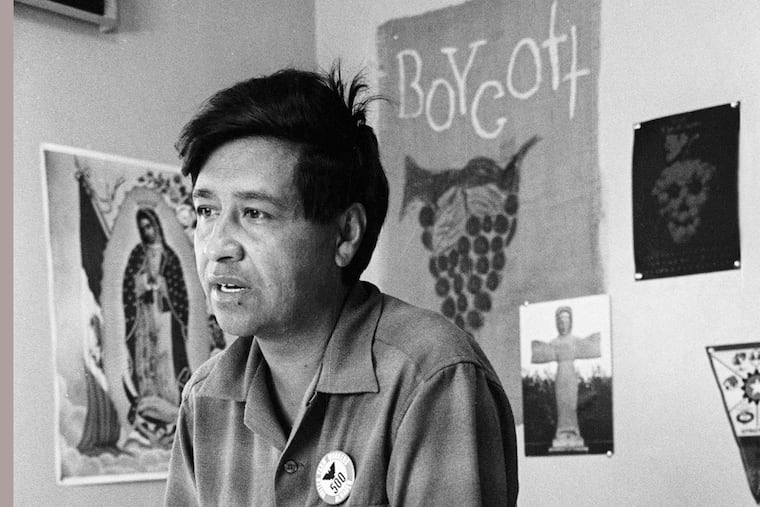
Chavez is known nationally for his early organizing in the fields, a hunger strike, a grape boycott, and eventual victory in getting growers to negotiate with farmworkers for better wages and working conditions.
In 1962, Chavez and Huerta cofounded the National Farm Workers Association, which became the United Farm Workers of America.