
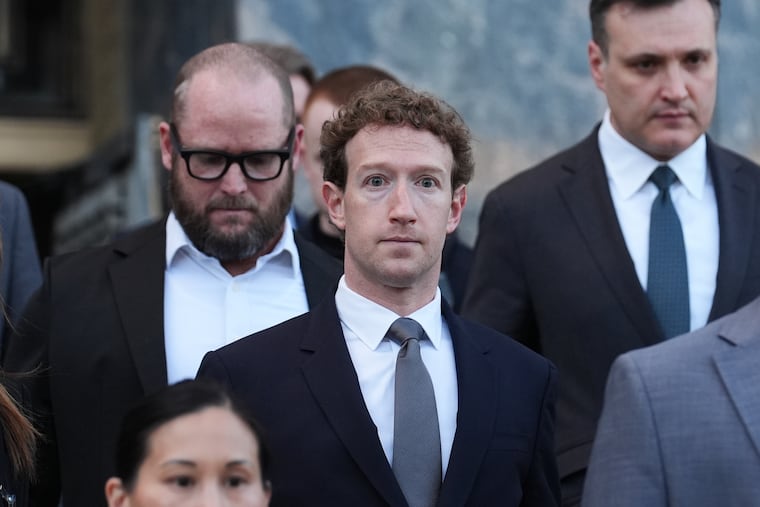
One block from the Los Angeles courthouse where Mark Zuckerberg testified in February, families gathered around the Lost Screen Memorial: 50 illuminated phones, each bearing the face of a child their families say social media killed.
Inside the courtroom, the unsealed documents were unsparing: “We’re basically pushers,” one Meta employee wrote. A 2018 internal memo laid out the strategy: “If we wanna win big with teens, we must bring them in as tweens.”
Internal research found that teens described Instagram in terms of what the documents called an “addict’s narrative” — compulsive behavior they knew was harmful but felt powerless to stop. Meta’s own engineers proposed fixes, warning internally that “our product exploits weaknesses in human psychology to promote product engagement and time spent.”
Executives chose profits instead.
In December 2021, 10-year-old Nylah Anderson of Chester died after TikTok’s algorithm recommended a “Blackout Challenge” on her “For You” page. In August 2024, the U.S. Third Circuit Court of Appeals ruled that this was not protected speech. The court determined that TikTok’s act of serving that video to a 10-year-old was an expressive act. That ruling cracked Section 230, the legal shield platforms had used for two decades to avoid accountability.
Thirteen-year-old Levi Maciejewski of Cumberland County never made it to a courtroom. He died by suicide in August 2024, two days after opening an Instagram account and being extorted by a predator through Instagram’s “Accounts You May Follow” feature.
Internal Meta audits from 2022, cited in his family’s wrongful death lawsuit, found that same feature was recommending accounts engaged in “inappropriate interactions” to 1.4 million minors. Meta’s own documents from 2015 estimated that approximately 4 million users under the age of 13 were already on Instagram — roughly 30% of all 10- to 12-year-olds in the U.S. — despite that age being prohibited.
» READ MORE: Generation Z is the loneliest generation, and social media is to blame | Opinion
Anyone who worked with children during the adoption of the smartphone watched their minds deteriorate. When I started teaching in 2009, students socialized, made eye contact, were able to focus. By the end of that decade, they arrived sleep-deprived and anxious, reaching for their phones at every opportunity.
Lunch rooms and hallways were quieter, earbuds in, eyes locked on screens. Teachers, like parents, were being asked to compete against a billion-dollar engineering operation. We weren’t losing because of personal failings. We were losing because we were outmatched by a trillion-dollar campaign to harvest attention.
Big Tech is making the same argument the tobacco industry made for 50 years about smokers who couldn’t quit. Plaintiff KGM — known in court as Kaley — testified this month that she began using YouTube at age 6 and Instagram at age 9, with no barriers to stop her. Instagram was the first thing she opened every morning and the last thing she looked at before sleep. Not getting enough likes left her feeling “insecure” or “ugly.” Asked whether she felt that way before social media, she said: “No, I didn’t.” By age 10, she was cutting herself.
Meta’s lawyers argued her struggles came from a difficult home life. Kaley answered them directly: most of the arguments with her mother were about the phone. She is 20 now. She told the jury her life would have been “unequivocally better” without these platforms.
Kaley is not an outlier. For an entire generation, physical activity, academic performance, and time spent with friends are all down. Depression, self-harm, and suicide are all up. The average teen spends nearly five hours a day on social media alone. Three-quarters of U.K. children spend less time outdoors than prison inmates.
The average teen spends nearly five hours a day on social media alone. Three-quarters of U.K. children spend less time outdoors than prison inmates.
In the years that social media became ubiquitous, the suicide rate for 10 to 14-year-olds tripled. We don’t stand at the edge of a lake watching children drown and demand more longitudinal studies to figure out the cause. We see the harm. We act.
The tobacco parallel is more than rhetorical; it provides the applicable legal and moral framework for addressing Big Tech. We do not let tobacco companies advertise to children. We do not allow stores to sell to them. We require warning labels. None of that required settling every clinical debate. It required a political decision that some harms to children are unacceptable regardless of whether we can precisely quantify them.
In February, West Virginia’s attorney general sued Apple after the company’s own internal communications described iCloud as “the greatest platform for distributing child porn.” Meta is on trial in Los Angeles. For the first time, tech executives are producing documents under court order, with legal penalties attached. For the first time, the “we didn’t know” defense is colliding with internal evidence that they did. The legal reckoning is not coming. It is here.
The Kids Online Safety Act, which would require platforms to prioritize children’s safety over engagement, passed the Senate 91-3 in 2024. Last week, the House Energy and Commerce Committee responded — not with that bill, but with a weakened substitute called the KIDS Act, advancing it to the House floor 28-24, along party lines.
Big Tech spent over $60 million on federal lobbying in 2024.
The House substitute is a retreat dressed as progress: it omits the “duty of care” language that would require companies to design products with children’s safety in mind, sets a federal safety floor lower than existing state protections, and, most damaging, would preempt stronger state laws — potentially nullifying thousands of pending lawsuits, including the cases in Los Angeles that are finally forcing these documents into the open.
Big Tech spent over $60 million on federal lobbying in 2024. The bill tells you exactly where that money went.
In Pennsylvania, legislators have made progress. Senate Bill 1014 — a bell-to-bell cellphone ban in public and private schools — passed the state Senate 46-1 last month, with Gov. Josh Shapiro’s endorsement already secured. As one parent leading the effort put it: “Teachers, kids, and parents have been tasked with managing the unmanageable. It’s time to recognize that our current approach isn’t working.”
» READ MORE: Social media has killed adolescence | Opinion
The House should finish the job. But even a unanimous phone ban is a seven-hour policy competing against platforms that spend billions optimizing addiction across the other 17 hours of a child’s day. Keeping phones out of classrooms is a start.
Keeping companies from engineering compulsion in the first place is the actual problem — and that requires a federal duty of care with teeth, and political leaders who care about children more than cashing their checks.
Nylah Anderson was 10 years old. Levi Maciejewski was 13. Their tragedies helped start the battle against these companies. The House has a bill on its desk.
Act — before another Pennsylvania child’s face joins those 50 phones outside the courthouse.
AJ Ernst worked as a teacher and administrator in Philadelphia for 13 years and holds a doctoral degree in educational leadership from the University of Pennsylvania’s Graduate School of Education.