
This week’s Shackamaxon looks at the ways Philadelphia has learned, and failed to learn, from our peer cities.
Look south, not north
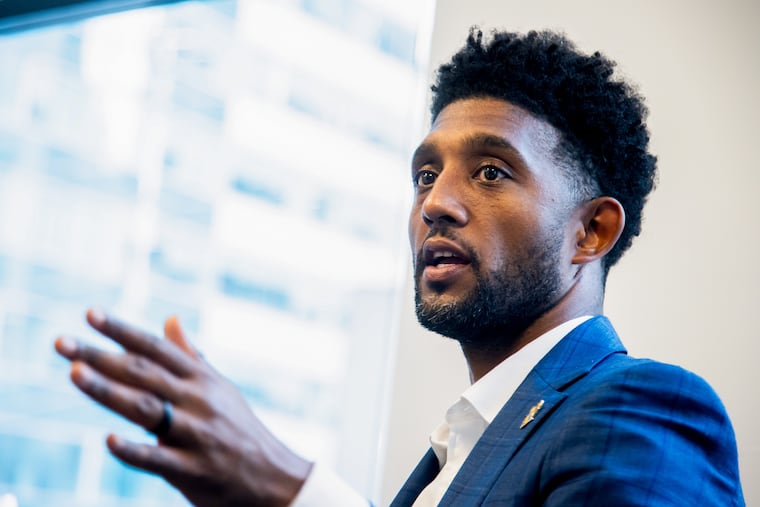
Across social media platforms, there are calls for Philadelphia to elect our version of New York City Mayor Zohran Mamdani. Even 9th District Councilmember Anthony Phillips, often a strong ally of Mayor Cherelle L. Parker, cited the charismatic politician from the Big Apple during a City Council hearing. Phillips exhorted Free Library leadership to embrace Mamdani’s strong emphasis on communications. But during an interview with Bloomberg News’ Odd Lots podcast, it was Baltimore Mayor Brandon Scott who impressed me as a potential model for our own city’s leaders.
After all, Scott’s Baltimore has much more in common with Philadelphia than Mamdani’s New York. Gun violence, a lack of economic opportunity, a struggling school system filled with underutilized buildings, these are issues our two cities share.
Scott talked convincingly about Baltimore’s efforts to reduce gun violence. In another parallel with Philadelphia, that city saw alarming rates of violence during the pandemic, only to see record-low deaths soon after. Scott credited a balanced, targeted approach. Citing the seven times he himself was detained without cause growing up in Charm City, Scott, who is Black, said it was essential to avoid the kind of heavy-handed — and often racialized — tactics that were long routine in big city police departments.
That’s not to say Baltimore has forsaken the stick in favor of the carrot. Targeted interventions promise access to resources — and consequences for bad behavior.
Adam Geer, Philadelphia’s director of public safety, told me that our city’s program is very similar to Baltimore’s. At-risk youth are visited by a team that could include a homicide detective, a social worker, and a mother who has lost a child to gun violence. While many have pointed out that the decline in gun violence is a national trend, it is also true that cities that have embraced this kind of comprehensive, targeted, and humane intervention have led the way.
Geer, like Commissioner Kevin J. Bethel, is one of the quiet heroes of modern Philadelphia. As of Thursday, the city had registered 42 homicides for the year. That number was 177 in 2021. But even more exciting than that decline is the prospect of permanently changing the way we fight crime.
Unsolicited land bank withdrawals
One area where Philadelphia struggles to keep up with our Chesapeake neighbor is in dealing with vacancy. Philadelphia created a land bank to disburse city-owned empty lots, but micromanagement from City Council has complicated the process.
Essentially, most of Council will only allow land sales to move forward if selling it was their idea in the first place. Outside of Council President Kenyatta Johnson, members have been unwilling to support so-called unsolicited bids. This is exactly the kind of hyper-discretionary decision-making the city should be trying to leave behind. It also makes it unlikely the city will make serious progress in reducing the number of vacant homes and lots, which is in the tens of thousands.
Mayor Scott’s Baltimore, however, is focused on bringing that number down. In his policy decisions, he has connected the network of vacant properties with decades of redlining and disinvestment. His Reframe Baltimore program has led to a decrease in the number of vacant properties by 3,500, over a fifth of the total. He’s balanced his understanding of the historic inequity in the housing market with an understanding that Baltimore needs to fill these empty spaces, for the benefit of both City Hall and the neighborhoods that host them.
Despite being two wildly different issues, Scott’s values on housing and criminal justice are remarkably similar. Historic injustices are acknowledged and accounted for, but the pathway forward is clear and data and research-driven. Philadelphia talks a big game when it comes to following the data. In practice, Council members too often allow their colleagues to govern based on assumptions.
Self-inflicted budget woes
With reelection season looming, it is not surprising City Council doesn’t seem enthusiastic about the mayor’s proposed ride-share tax. Especially since passing it wouldn’t provide enough revenue to avert the proposed closure of 17 schools. While Philadelphia has fought its way to fiscal stability, the fact remains that the tax burden on residents is high, and many of our public services are underfunded anyway.
As former Council member and mayoral contender Allan Domb has written in Philadelphia Magazine, there’s a way out of this cycle: growing the city’s tax base.
Domb’s op-ed cites the toll of the city’s business and wage taxes, which have been a challenge for decades. That’s a stance I and other local editorial writers have backed for years. But there’s a way to grow businesses here without giving up any tax dollars — make it easier to start and operate one.
Like with housing, Council members often spend more time haggling over how to divvy up the pot rather than investigating ways to grow it. Restrictive overlays, counterproductive curfews, steering city property to friends and allies, and other poor choices restrain the growth of our tax base and make it inevitable that mayors will keep coming back asking for more money and more cuts.
If Council wants to avoid future tax asks, it should stop embracing policies that make them a necessity.
Regional growth
Sadly, economic stagnation is not just a Philadelphia issue; it is a Pennsylvania one. A report from ADP, the payroll processing platform, put the region near the bottom of the list for cities with good job prospects for recent college graduates.
For ages, a lack of job opportunities has been one of the top reasons people have left Philadelphia. Research from economist Raj Chetty has shown that while the region’s economy has experienced mild gains, these gains have not been felt in residents’ quality of life. Instead, we lag all of the metro areas Chetty studied in terms of economic mobility. This was true for the region’s poorest, but also for many who were born into middle-class or affluent households. Money is simply leaking out of our pockets.
A new initiative, involving input from the Pew Charitable Trusts, the Brookings Institution, and the Chamber of Commerce, aims to reverse this. Their research suggests that our area has missed the opportunity to create around 100,000 middle-class jobs.
Their goal is to increase employment in what economists call “tradable industries.” That’s jargon for jobs that bring in customers (and their money) from outside the region, rather than simply circulating money from one Philadelphian to another. Specifically, they want to grow jobs in business services, precision manufacturing, and biomedical engineering and production. These industries were chosen because of existing strengths in related fields.
This approach emulates similar initiatives in cities like Minneapolis, Kansas City, Mo., and Detroit. Convincing local policymakers to undergo an attitude adjustment may be the key to ensuring it succeeds here.