
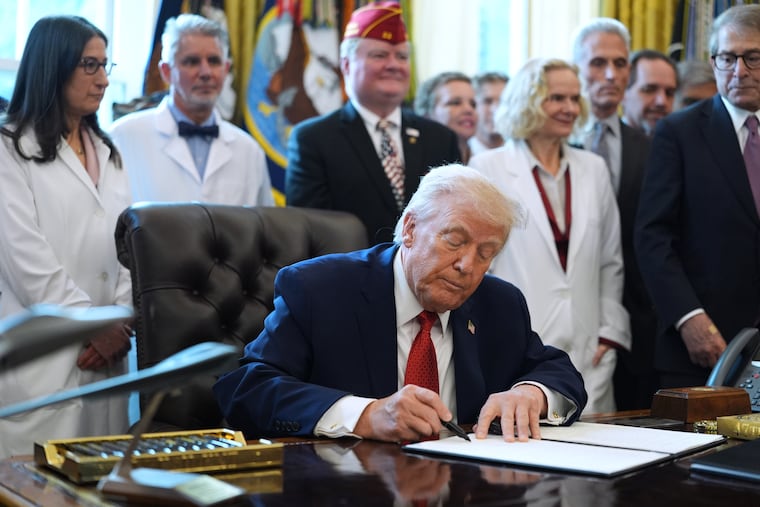
The White House has told federal agencies to prepare to imminently loosen restrictions on marijuana, rescheduling the drug from a Schedule I controlled substance to Schedule III.
Sources cautioned the Associated Press, however, that the administration’s plans are in flux and could change.
Rescheduling marijuana would open the doors for researchers to study the medical science behind cannabinoids such as THC and CBD, a regulatory push that has been brewing for decades, but gained momentum in the last two years of former President Joe Biden’s administration.
Rescheduling marijuana would not impact people incarcerated on marijuana charges, or fully legalize adult-use marijuana. This move specifically would allow medical research institutions to access marijuana for various studies.
What does reclassification of marijuana mean?
Marijuana has been a Schedule I controlled substance since the 1970 Controlled Substances Act, meaning the federal government considers marijuana to have no accepted medical use, with a high risk of abuse. Schedule I drugs, such as heroin, cocaine, and LSD, are illegal and strictly regulated, making medical research on them nearly impossible.
A reclassification would be the most significant reform on marijuana in more than half a century, opening the doors for medical research and bringing marijuana to the same level as prescription painkillers, said Marijuana Policy Project executive director Adam Smith.
“This is a historic shift and a recognition from the federal government that cannabis has medical uses that have been well known and accepted by humans for thousands of years,” Smith said.
Why hasn’t marijuana been rescheduled before?
President Donald Trump is picking up where the Biden White House — which pushed forward federal reviews that found marijuana to have accepted medical uses and planned to reschedule the substance — left off. But Biden’s plans stalled in bureaucratic limbo.
In December, Trump, alongside Health and Human Services Secretary Robert F. Kennedy Jr., directed the Drug Enforcement Administration to reschedule marijuana. The president does not have the direct authority to reschedule marijuana, but can direct agencies to do so.
Now, the DEA is following through on that order and the process of descheduling has begun.
What does this mean for Pennsylvania legalization?
Rescheduling marijuana on the federal level would not have an impact on state laws, which regulate medical and recreational marijuana.
Pennsylvania has a medical marijuana system, but efforts to fully legalize recreational marijuana for adults have not been successful.
“We are deeply hopeful that this helps open more medical research, which is needed, and that this can help the legal industry by normalizing federal regulation,” Smith said.
What does this mean for those incarcerated for cannabis-related offenses?
Smith said this is a monumental moment in marijuana, but there are still major reforms that need to be secured, especially the decriminalization of cannabis.
More than 200,00 Americans were arrested for cannabis related offenses last year, according to the Marijuana Policy Project. That’s a far cry from the more than 800,000 people arrested in 2007, but Smith said the federal government has more work to do.
“Rescheduling is a great step, but it does not solve all the problems,” Smith said. “But we have thousands of people whose lives were interrupted and upended by an arrest for possession of a plant.”
The Associated Press contributed to this article.