
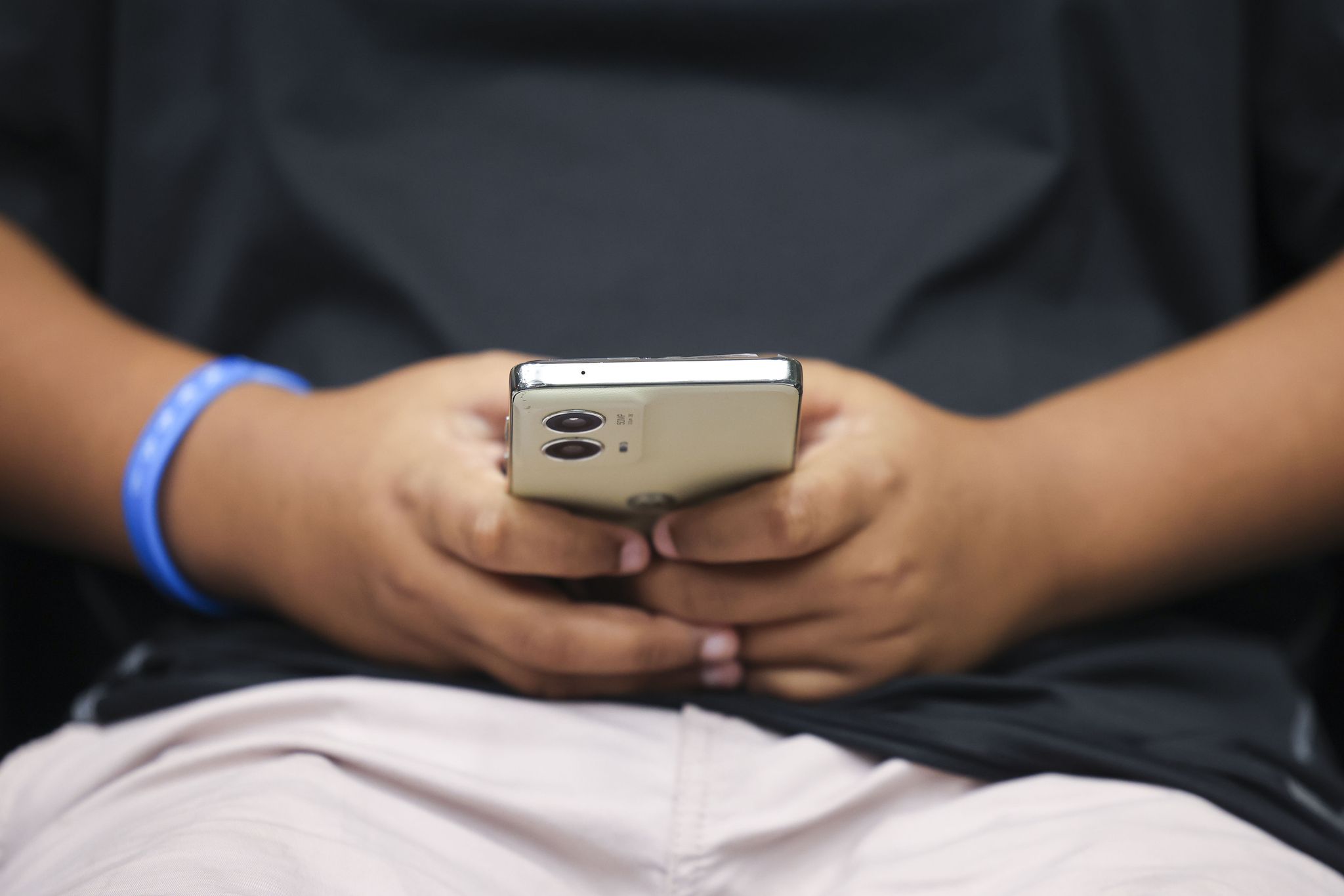
Schools across the U.S. have ramped up cell phone bans over the last few years. Now researchers are testing the effects, and the results are mixed.
Even the researchers, however, are warning schools not to pull the plug on the policy.
The school cell phone ban is one of the few policy agreements between Republicans and Democrats, and principals and teachers are big supporters. Texas shouldn’t waffle on the ban.
As reported by The New York Times, a study published this week by the National Bureau of Economic Research looked at schools nationwide that adopted Yondr, a magnetic pouch given to students to keep their phones locked during the school day. Researchers tracked outcomes over three years and found that, as you’d expect, cell phone use in school significantly decreased.
However, other findings were ambiguous. The study found that suspensions increased at the schools in the year immediately following the ban with the magnetic pouches — to the tune of 16%. But the effect on suspensions faded with the passage of time.
Researchers also pulled up standardized tests for the schools and discovered that the average effects on scores were “close to zero.” They also failed to identify sizable improvements for perceived online bullying.
One can read these results and feel deflated about the promise of the policy, which was to improve student outcomes all around. But the people looking at the data are optimistic. One of the authors of the study, Thomas S. Dee from Stanford University, told The Times that he found the study an “encouraging” early report on stringent cell phone bans in schools and warned administrators against bailing on the policy.
The researchers speculated about some of the reasons why the data looked the way it did. Regarding the jump and then dip in disciplinary actions, it’s possible that schools aggressively policed students soon after rolling out the cell phone ban. As for academic scores, many factors play a role in student performance, including their home lives.
And if you remove a distraction, like the cell phone, some kids will look for another one.
“Attention could also shift to digital distractions that are not blocked, such as accessing video or social media sites on laptops,” the researchers wrote.
The study doesn’t dive into these theories, which researchers say are speculative. But the research should prod schools to pause and consider whether school-issued Chromebooks and other devices are now substituting for cell phone intrusions in the classroom.
Researchers only looked at a three–year period. We welcome more data on the effects over a longer time period. But what we’ve seen so far in our own schools makes us happy: More kids talking to each other in the cafeteria instead of mindlessly scrolling. Better teacher retention. More students checking out books from their school library.
The more we replace screens with in-person learning and face-to-face interactions, the better off our kids will be.
Have thoughts about this? Send a letter to the editor using our letters form or email letters@dallasnews.com. Letters should be no more than 200 words and include the first and last name of the writer and city of residence.