
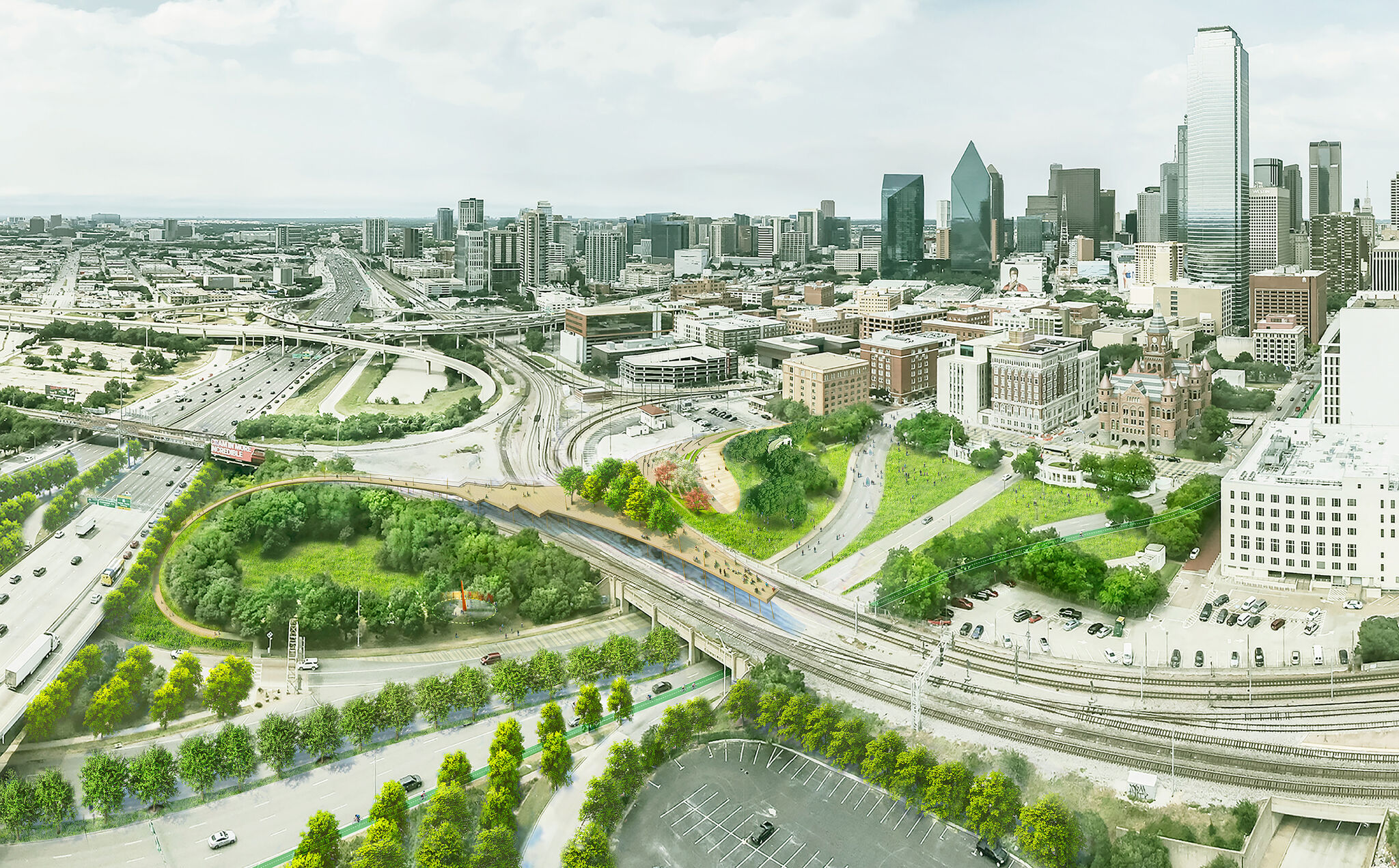
Dealey Plaza is best known as the site of President John F. Kennedy’s 1963 assassination, Dallas’ most traumatic and divisive moment. But Dallas Morning News architecture critic Mark Lamster has long argued that the plaza fails to reckon with that history, or with an earlier one: the antebellum lynching of three enslaved Black men on the same ground. He notes the plaza is a symbolic and functional mess. Spray-painted X’s lure visitors into a high-speed roadway. A nearby memorial to the lynching victims is virtually inaccessible. And the primary gateway to downtown Dallas offers nothing for cyclists and remains an obstacle course for pedestrians.
In 2022, Lamster assembled a design team including Harvard’s Chris Reed and Princeton’s Monica Ponce de León to envision a radical reinvention of the site as a place of civic memory, gathering and education, brought to life through detailed renderings and interactive elements. The resulting proposal, “Reinventing Dealey Plaza,” was published online and in the The News‘ Arts & Life Sunday section.
Last week, Time cited the proposal as one of 25 buildings and monuments that offer a portrait of America as the country approaches its 250th anniversary. As the magazine notes: “In a moment in which so many communities are divided, the project reflects America’s hope for a united future.”
The recognition comes weeks after Lamster was awarded the 2026 Pulitzer Prize for Criticism for a series of columns examining how past decisions have shaped downtown Dallas.