
Government for sale
The scale of the corruption in Washington would make even the world’s most notorious kleptocracies blush. The president thinks the U.S. Treasury is his treasury, and the money in the Treasury belongs to him. It’s his money. He can spend as much as he wants, on whatever he wants, for whatever reason he wants — and he doesn’t need approval from anyone. Neither Congress, taxpayers, nor the rule of law can stop him.
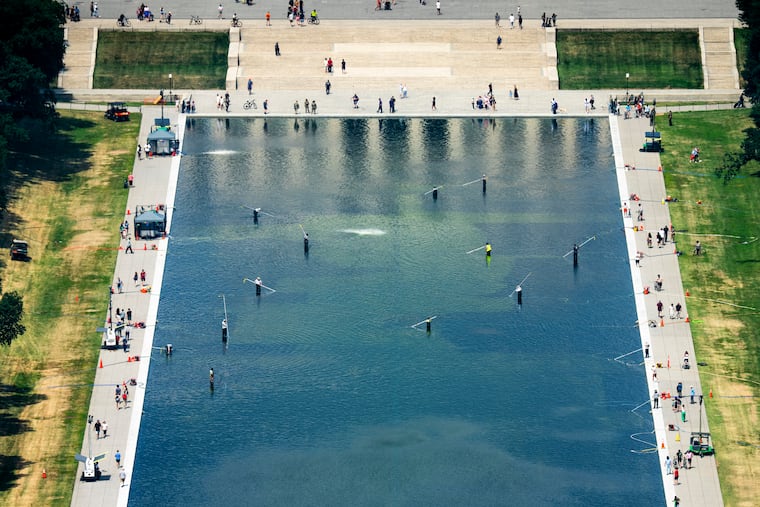
How about destroying public property? Donald Trump’s latest accusation is that “vandals” working in the “dark of night” destroyed public property, sabotaged his $16 million Lincoln Memorial Reflecting Pool renovation project, and should be locked up. How about Trump demolishing the East Wing of the White House?
How about $1 billion of taxpayer money for his ballroom? How about a $400 million airplane as a gift, plus another $1 billion of taxpayer money to retrofit the aircraft? How about the allegations of rampant insider trading in the White House? How about the Reflecting Pool no-bid contract? Or the pledge by the U.S. Department of Justice to never audit Trump or the Trump family or the Trump businesses, forever. I could go on, but you get the point.
Patrick Thompson, Media
Religious instruction
When John Quincy Adams became president in 1825, he swore the oath of office while resting his hand on a book containing the laws of the United States, not the Bible.
It was an unspoken way to assert his views on the separation of church and state.
Fast-forward to today. Religious “instruction” clubs — aimed at indoctrinating youngsters in the values of Christian nationalism — are making their way into our public schools. While supposedly promoting “religious instruction,” these programs disguise the corporate entities funding them.
This “wolf in sheep’s clothing” approach coerces children into accepting a political authoritarian value system under the guise of “God’s will.”
What would Adams say to us now?
Karen Fraley, Kimberton
Join the conversation: Send letters to letters@inquirer.com. Limit length to 150 words and include home address and day and evening phone number. Letters run in The Inquirer six days a week on the editorial pages and online.