
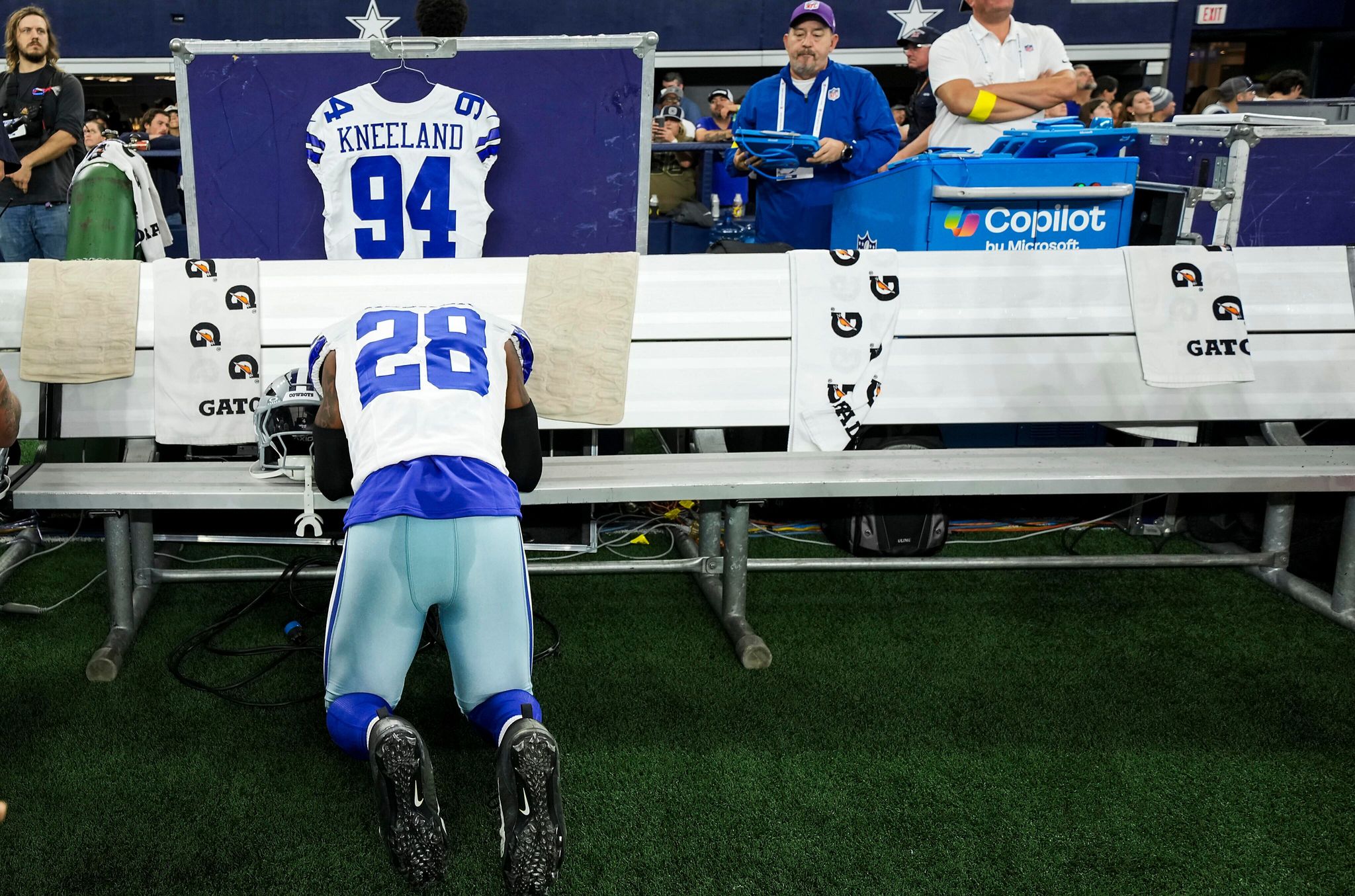
Dallas Cowboys fans were aghast and heartbroken in the days after defensive end Marshawn Kneeland’s death by suicide in November.
The 24-year-old, a star of his college football team, had scored his first NFL touchdown days before leading police on a car chase and texting his family goodbye. His girlfriend and college sweetheart was pregnant with their child. He was loved.
How could such a promising life end like this?
Suicide is complex, and we will likely never know why Kneeland died the way he did. But his family shared this week that he had been dealing with a neurodegenerative disease that afflicts too many football players. A post-mortem analysis of Kneeland’s brain found that he had an early stage of chronic traumatic encephalopathy, a condition that attacks brain tissue and that is linked to repeated head injuries.
We hope that Kneeland’s diagnosis will deepen commitments to make football safer and renew investments in studying the disease. An alarming number of football players who died young have been diagnosed with CTE. This case count is a warning for coaches and parents enrolling their kids in high-impact sports.
So much about CTE remains a mystery, but its marker is the same misshapen protein in Alzheimer’s. Possible symptoms include cognitive impairment, mood changes, impulsive behavior and motor problems. There is no cure, and its manifestation might look like other diseases. Part of what is so devastating about CTE is that it can be diagnosed only in death.
You’ve likely heard of CTE. Public awareness of it has grown in the past two decades with tragic headlines and the chilling findings of scientists. For instance, a 2017 study of the brains of deceased football players found that out of 111 NFL athletes, all but one had CTE.
But the disease can affect players at any level. Last year, a former high school football player killed four people in a Manhattan skyscraper and then himself, leaving a note asking for his brain to be studied and blaming the NFL for concealing CTE. The gunman never played professionally, but an autopsy confirmed he had the disease.
The NFL went from downplaying CTE to investing heavily to make football safer for its athletes. It pledged $100 million to study the disease. It also changed rules to reduce high-risk plays and introduced an extensive protocol before allowing players back on the field after a concussion.
Still, football remains a high-impact sport with a high potential for head trauma. Parents should be aware of the heightened risks to their children if they start such a sport too young. Experts say kids shouldn’t play sports that expose them to blows to the head before high school. Kneeland started playing tackle football at age 7.
We know more about CTE now than we did 20 or even 10 years ago. We can’t risk head injuries in our children.