
The Department of Homeland Security misused Federal Emergency Management Agency resources when it diverted dozens of staff to help with immigration enforcement, says a new report by a group of House Democrats shared first with the Washington Post. The lawmakers describe the deployments as an example of how the Trump administration has hindered FEMA’s ability to properly prepare for and respond to disasters.
Beginning last summer, the Trump administration reassigned FEMA personnel to immigration enforcement roles that were largely outside the scope of emergency and disaster work for long stretches of time when the agency was grappling with extensive cuts and leadership changes, according to the report from Democrats on the House Transportation subcommittee on economic development, public buildings, and emergency management. The probe was based on interviews with 15 current and former FEMA employees and disaster and immigration policy experts.
“Overall, the Administration’s sweeping immigration agenda has used FEMA resources and personnel to aid in carrying out large-scale immigration enforcement operations, distracting the agency from its statutorily required responsibilities, jeopardizing its workforce levels and expertise, and reducing its ability to respond to disasters and aid survivors,” the report said.
To assess the probe’s findings, the Post separately reviewed previously unreported documents from the Government Accountability Office related to the report, and spoke with two current FEMA employees with direct knowledge of the agency’s immigration deployments, as well as four former senior FEMA officials and two federal officials who specialize in homeland security.
Two current and former FEMA officials interviewed said some of the lawmakers’ findings were mischaracterized, because DHS has called on FEMA personnel and specialized teams to support immigration work in the past. They did, however, agree with the report’s conclusion that FEMA’s primary mission “has been measurably undermined by DHS’ policy goals surrounding border security.”
DHS and FEMA did not provide a comment to the Post by the time of publication.
The Post reported in August that DHS began to move dozens of FEMA staffers to help immigration agencies with vetting and onboarding new hires, as well as other administrative work. The lawmakers’ report, as well as separate interviews with six current and former federal officials and documents from GAO reviewed by the Post, reveal in greater detail how involved FEMA was with immigration initiatives for nearly a year.
At the time, some FEMA leaders raised concerns about the legality of using disaster-funded resources for this kind of work, according to one former senior official with direct knowledge of the situation who, like others interviewed for this story, spoke on the condition of anonymity because they were not authorized to speak publicly about FEMA’s immigration work.
But “they still were sent over,” the former official said.
FEMA employees worked in detention centers, including in Minneapolis, where protesters surrounded one staffer en route to an Immigration and Customs Enforcement facility, according to witness accounts summarized in the report. FEMA human resources staffers reviewed applications and issued job offers for the surge of new immigration enforcement officers, according to details the agency sent to GAO in connection to the probe and reviewed by the Post.
“ICE could not have done this work without FEMA,” a former agency official who specialized in national incident management and homeland security, and who had field experience at a Texas detention facility, told lawmakers for the report. “ICE is good at law enforcement, but operations, strategy, and the big picture — FEMA created that structure for them, building the plan and the operation toward the mission end-goal.”
The influx of immigration work consumed FEMA’s hiring and administration capacity and delayed its ability to process some work, even as disaster staffers were losing their contracts, according to the report. A current FEMA official with knowledge of the situation also described the strain on that department.
“Basically all human resourcing actions ground to a halt,” the official said. “We couldn’t process even simple things like annual salary adjustments for current staff on time.”
FEMA helped oversee a group of civilians who volunteered with the Defense Department for immigration enforcement, and whose duties included planning support for arrests, raids, and patrols, and “managing the physical flow of detained noncitizens from arrest to deportation,” according to one GAO document. The current FEMA official similarly described how staffers managed that workforce.
Because the agency can quickly coordinate resources and logistics, previous administrations have tapped FEMA to support or lead complex missions outside its usual scope. That has included processing the entry of refugees; helping shelter, transport, and provide medical support to migrants; or leading the nation’s coronavirus pandemic response.
Still, five current and former agency officials described a stark difference in how this administration has deployed FEMA — not for humanitarian work, as had happened in the past, but for coordinating and supporting mass immigration raids, arrests, and deportations across the United States. Former FEMA leaders said this administration’s use of the agency sets a new precedent.
“I’ve spent almost two decades in emergency management, including leading FEMA. The agency has always faced resource constraints and competing pressures. That’s not new,” said Pete Gaynor, who ran FEMA during President Donald Trump’s first term and oversaw the agency’s coronavirus operation. “What these findings describe, however, raises serious questions that deserve honest answers.”
Chris Currie, GAO’s director for emergency management issues, said that while FEMA has been asked to do a wide range of tasks outside disaster response and recovery, he was not aware of any previous situation in which FEMA personnel were reassigned to other agencies for the purpose of hiring employees for those agencies.
Other aspects of the reassignments also raised questions, he said.
“A valid question is to what extent were they making decisions in the hiring of those candidates? Were they involved in interviews? Were they making qualitative decisions about their ability to perform the function?” Currie asked. “But given the number of ICE officers hired in the last year, it’s clear that DHS needed additional help.”
The reassignments came as FEMA was mired in internal upheaval.
Since January 2025, FEMA has lost about 30% of its staff — about 5,000 people, according to the probe — a number higher than previously reported. The losses reflect cuts by the Trump administration, voluntary departures, and involuntary reassignments, the report notes. FEMA has also lacked a Senate-confirmed leader since Trump returned to office last year.
FEMA has long had a workforce problem, Currie said. Even before the latest Trump administration took over, numerous GAO reports over the years identified staffing issues that contributed to prolonged disaster recoveries, he said.
“So it’s concerning anytime I see resources redirected away from FEMA,” he said. “Because they have struggled for so long.”
In May, FEMA told Currie’s office that starting in August 2025, DHS reassigned about 125 people from its security and human resources offices. Earlier that year, 41 FEMA employees volunteered to help DHS at the southern border as part of an internal immigration enforcement mission.
DHS offered in some cases to renew the expiring contracts of disaster-specific workers if they raised their hands for immigration assignments, according to the lawmakers’ report. Some of these workers, known as CORE, or Cadre of On-Call Response/Recovery Employees, were dismissed en masse last winter, only to then be rehired months later when new FEMA leaders came in.
In response to questions from GAO, FEMA said DHS instructed the agency to permanently reassign two staffers to ICE. One person declined and chose to voluntarily transition out of DHS. The other initially accepted but resigned before their start date.
Many FEMA employees stayed in their immigration roles for periods “far exceeding prior administrative practice,” the report found, including for longer than 120 days, which former FEMA administrator Deanne Criswell said was a timeline the agency’s Office of Chief Counsel developed years ago. Some assignments lasted more than 200 days, which Criswell said is concerning because “these employees are hired under special hiring authority to be used to support disaster response and recovery.”
FEMA told GAO in writing that all details should have ended in May.
One current FEMA official with knowledge of the situation said that FEMA’s new leaders were winding down the agency’s involvement in immigration support “so we can pivot to our core mission and focus on hurricane season.”
The lawmakers’ investigation includes other examples of how the Trump administration has hindered FEMA’s ability to coordinate large-scale disaster response efforts.
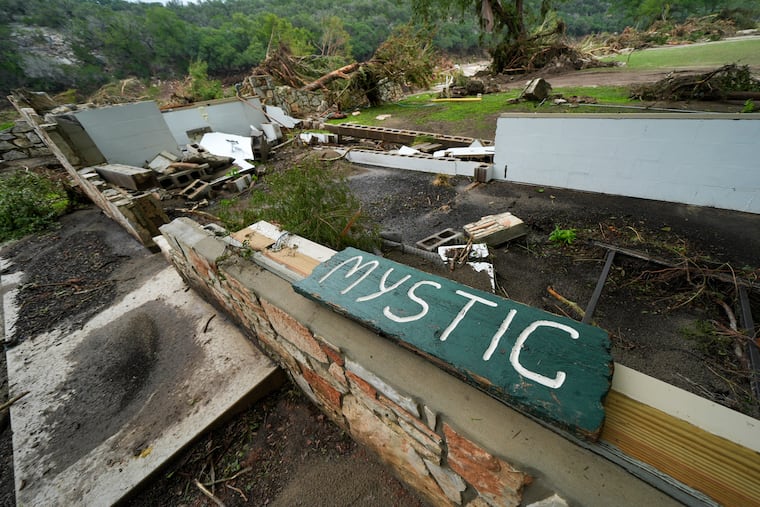
During the disastrous Texas floods that killed at least 137 people last July, internal documents included in the report note that lapsed contracts for call centers, which were not renewed by then-Homeland Security Secretary Kristi L. Noem, kept hundreds of disaster survivors waiting in exceptionally long call lines. Emails show how FEMA had warned about the lapse and was trying to work around it, all while processing 60,000 disaster survivor caseloads.
Rep. Greg Stanton (Ariz.), the subcommittee’s ranking Democrat who led the report, said in an interview that federal law put in place due to failures after Hurricane Katrina was meant to protect FEMA from “politics getting in the way of delivering disaster response.”
“I’m very angry about what I learned,” he said. “I think the American people will be pretty shocked and disappointed that the United States is not focused on natural disaster preparation and response, that a third of [FEMA] employees are gone, and some that are left are being used for other purposes, especially supporting an agency that has an ungodly amount of increased resources.”
The lawmakers lay out recommendations that call for strengthening the autonomy and oversight of FEMA. Those include a call to make FEMA an independent, Cabinet-level agency — which has previously been a bipartisan push — and a suggestion that DHS reimburse the disaster agency for its immigration work.