
A crew of Federal Emergency Management Agency staffers working on the response to Hurricane Milton in 2024 violated the law and agency policy by skipping nearly a dozen homes displaying signs supporting then-presidential candidate Donald Trump, a federal watchdog said Tuesday.
The new report by the Department of Homeland Security’s Office of Inspector General found that the decision by a crew with the agency’s Disaster Survivor Assistance program “eroded public trust in FEMA’s ability to treat everyone impartially, offer unbiased and consistent assistance, and ensure equal access to resources and tools.”
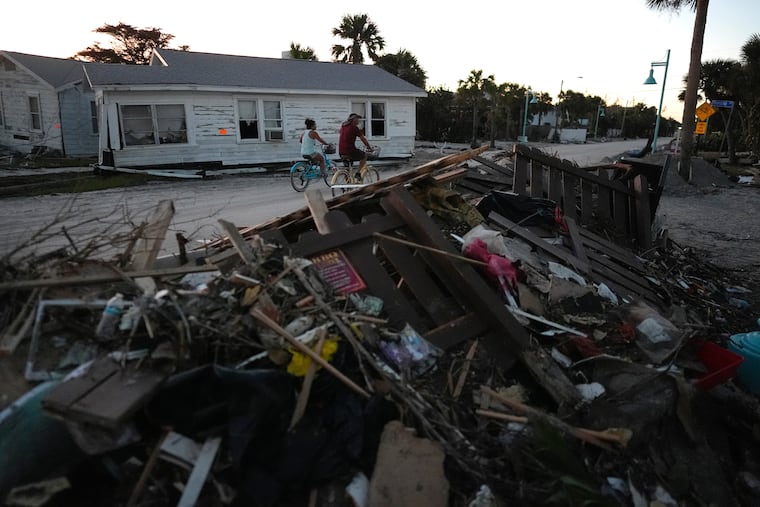
Back-to-back hurricanes hit Florida within two weeks of each other in late September and early October 2024, prompting emergency declarations and federal assistance. FEMA Disaster Survivor Assistance crews canvassed 744,288 homes and other sites in response, according the report, and did not contact “555,374 locations for reasons such as private property signs or safety concerns.”
During FEMA’s hurricane response, which was unfolding during the last few weeks of the pivotal election, a FEMA crew lead instructed team members to avoid homes with Trump signs due to safety concerns. The same crew bypassed those 11 homes in Florida, according to survey notes obtained by the inspector general’s office.
At the time, the crew leader did not feel safe given the heightened tension and “was looking for ways to define safety. People were not getting good guidance, so she made her own way,” said a former senior FEMA official with direct knowledge of the situation.
After several FEMA workers filed a complaint, the agency started its own investigation and officials referred the complaint to the Office of Special Counsel and DHS’ inspector general office. Gov. Ron DeSantis (R) blamed the Biden administration, writing online that it represented a “blatant weaponization of government by partisan activists in the federal bureaucracy.” FEMA quickly fired the crew leader and several other staffers involved in the incident.
The watchdog found that the incident highlighted weaknesses in “FEMA’s training, documentation, and oversight.” Those Disaster Survivor Assistance crews did “not receive ethics and Hatch Act training before deploying to disasters,” the report said, nor was there a policy that required “crews to explain why they skipped homes.”
Deanne Criswell, who headed FEMA during the Hurricane Milton response, said in a Signal message Tuesday that the report “validates the actions we took at FEMA when this incident was brought to our attention. Politics should never play a role in disaster response, and even one home skipped is unacceptable.”
Criswell said that after they learned that the crew had bypassed those homes, officials ensured the “neighborhoods were recanvassed.”
The agency did not have a formal system for reporting potential safety threats at the time, said the senior official, who spoke on the condition of anonymity because they were not authorized to speak publicly about the internal investigation. The inspector general report also identified this as a hole in the agency’s operations.
Criswell and the other former official noted that FEMA’s internal review found that the Hurricane Milton incident was isolated to that crew.
“FEMA personnel conducted more than 744,000 canvassing visits following Hurricanes Helene and Milton, and the Inspector General identified 11 homes skipped for political reasons by the same crew — findings that reinforce my confidence this was an isolated incident and not a systemic practice within FEMA,” Criswell said.
However, safety concerns during disaster response are common, the former senior official said, with most of the encounters that FEMA canvassers faced involving guns.
The inspector general report said that after FEMA learned of the crew skipping homes, it provided mandatory training to all disaster survivor teams, including those deployed in the field.
FEMA concurred with all of the inspector general recommendations. In a letter from July, the agency said that “when concerns were raised regarding adherence to law and policy in performance of this work — FEMA leadership acted swiftly to investigate, remediate, and strengthen training and oversight. As a result, FEMA increased mission readiness training and no longer conducts FEMA-led door-to-door outreach efforts. Staff now provide support to survivors from fixed locations determined by state and local officials through a data-informed approach.”