
A disturbing innovation of President Donald Trump’s deportation dragnet has replaced confrontational invasions of big cities like Minneapolis and Los Angeles with a quieter and, unfortunately, more effective crackdown in the nation’s least visible corners.
Pennsylvania’s coal country is among the unlikely targets of this latest wave of mass detentions, facilitated by the small-town police departments that are supposed to be keeping the region safe.
Too many law enforcement agencies in Schuylkill County are doing much the opposite, instead creating a climate of fear with apparently race-based immigration raids and checkpoints. As The Inquirer’s Will Bunch reported, a mountain of federal money has enticed the region’s police departments to serve as foot soldiers for the Trump administration’s roundup.
These Faustian bargains have made Pennsylvania the most prolific such collaborator outside the South.
» READ MORE: In Pa. coal country, local police join with ICE to bring arrests, fear | Will Bunch
It’s another form of the federal oppression that Americans in the Twin Cities and beyond have opposed at great risk. Gov. Josh Shapiro and the state’s lawmakers should also do everything in their power to counter an extraordinary assault on their constituents.
Under what’s known as the 287(g) program, U.S. Immigration and Customs Enforcement (ICE) has set aside about a quarter-billion dollars from an unprecedented congressional windfall to help it deputize state and local law enforcement agencies. Fourteen departments in Northeastern Pennsylvania’s Schuylkill County have collected more than $1.5 million of that for cars and equipment in exchange for their help arresting more than 100 people for detention and deportation.
As with the nationwide dragnet, and in contrast to the Trump campaign’s promise to target immigrants who commit serious crimes, the Pennsylvania arrests have largely affected people presenting no known danger to their communities. More than two-thirds of those arrested by the state’s law enforcement agencies under the federal program had no criminal record. And judging by the stories of natural-born citizens caught in the coal region surge, some of them didn’t have an immigration record, either. That’s also in keeping with ICE’s practice of sweeping up citizens and legal residents along with undocumented people based on little more than their complexions.
ICE arrests reached an administration peak of nearly 50,000 people nationwide in July, substantially more than were detained during the headline-grabbing clashes in Minneapolis last winter, when federal officers killed two protesters. The proportion of those arrested with no criminal record has steadily climbed to a majority during that period as the administration has canceled protections for hundreds of thousands of refugees and ramped up arrests of people with pending applications for legal status.
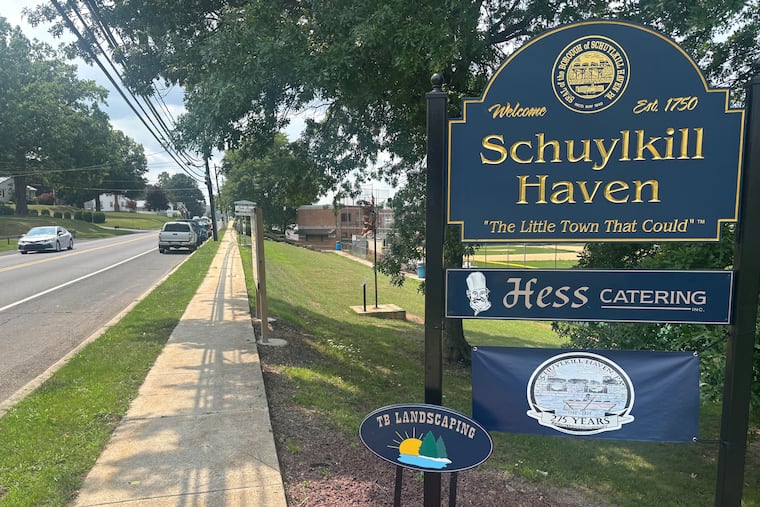
The 287(g) program has also swelled the number of arrests, particularly by law enforcement agencies in Southern states like Texas and Florida. Pennsylvania ranks fourth nationwide, with more than 1,200 such arrests this year, largely in small towns like Schuylkill Haven, a borough of just 5,000 that saw 59 immigration arrests in the span of a few months.
» READ MORE: Four people killed by ICE agents. A lawless administration. It won’t stop unless voters act. | Editorial
This is in stark contrast with neighboring New York and Maryland, both of which have outlawed such collaborations between ICE and their police departments. “In Maryland, we defend constitutional rights and constitutional policing,” Gov. Wes Moore said, “and we will not allow untrained, unqualified and unaccountable ICE agents to deputize our law enforcement officers.”
While Pennsylvania Democrats have proposed similar legislation, the state’s Republican-controlled Senate makes its enactment unlikely — though local cooperation with a deeply unpopular administration could motivate a few more voters to cast ballots for Democrats in the coming legislative elections. A Shapiro spokesperson emphasized that while his administration limits state police collaboration with ICE, police and sheriff’s policies “rest with local law enforcement agencies.”
Pennsylvania’s purple political cast certainly puts more limits on Shapiro than some of his blue-state counterparts have to contend with. But it’s worth noting that when the federal government tried to expand its capacity to lock up immigrants with new detention centers in Schuylkill and Berks Counties, Shapiro vowed to “use every tool” at his disposal to block them — and ultimately succeeded by denying the proposed facilities access to water and sewer services.
The governor and his legislative allies should be equally determined and resourceful in thwarting the policies that fill such prisons.