
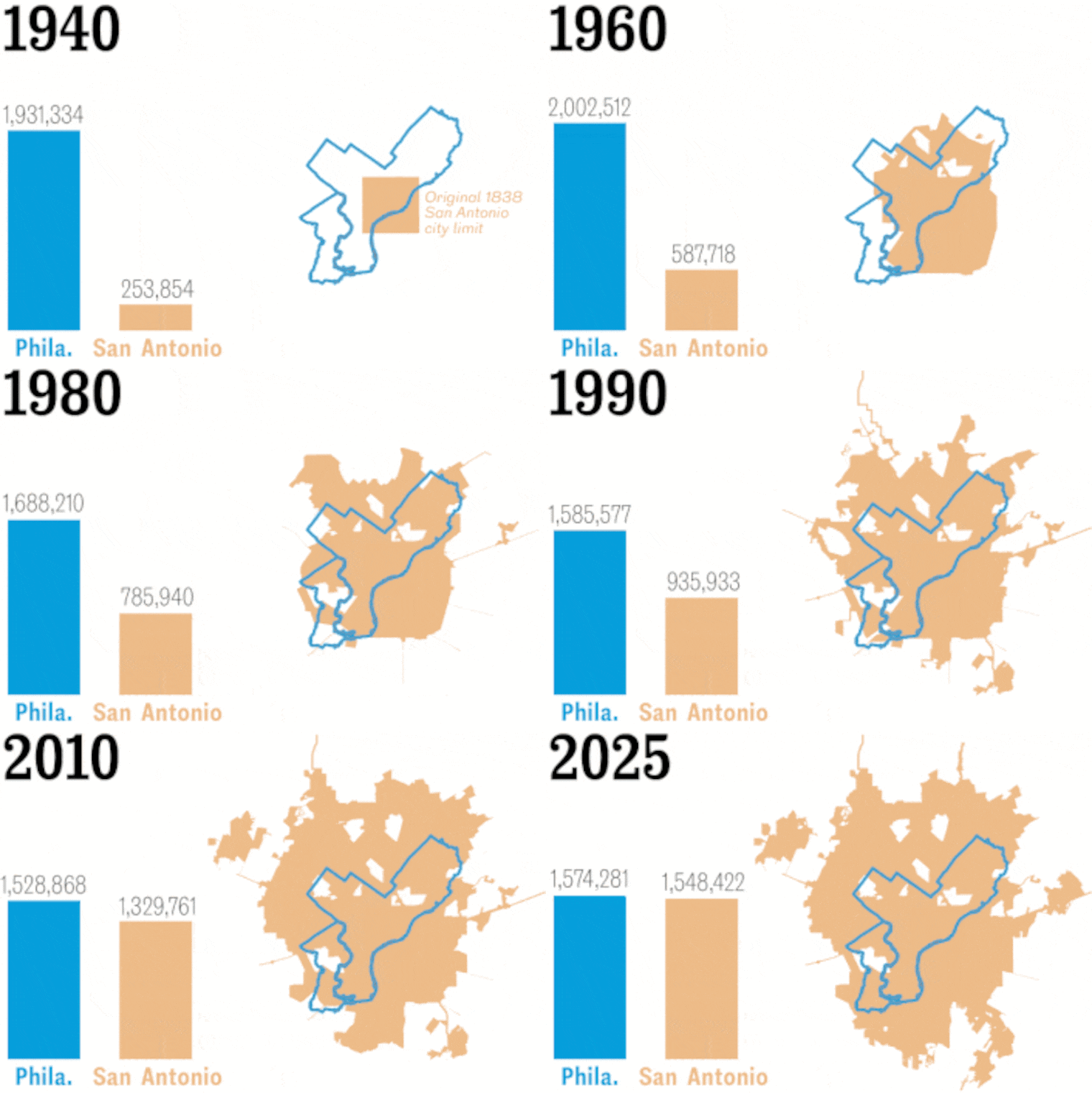
San Antonio is continuing to close in on Philadelphia’s spot as the nation’s sixth-largest city, according to new data from the U.S. Census Bureau.
But one of its methods for growth may seem … questionable.
While Philadelphia leverages its old-school charm (brick facades), striking good looks (public art), and alluring persona (locals known for their gruff exteriors but soft interiors) to attract new residents and keep existing ones sticking around, San Antonio has been incorporating the demographic equivalent of steroids — annexation. It has been expanding its geographic borders to encompass more and more land, which in turn helps grow the city’s population.
As of July 1, 2025, the Census Bureau estimated Philly’s population at 1,574,281 residents and San Antonio’s at 1,548,422. That’s a difference of only about 26,000 residents ― a difference that has been steadily narrowing in recent years. In 2020, Philadelphia had roughly 162,000 residents more than San Antonio.
San Antonio’s shifting boundaries are likely a driving force behind its growth trajectory outpacing Philly’s, said Katie Martin, who leads research at the Pew Charitable Trusts’ Philadelphia research and policy initiative.
“They’re increasing the square footage of the city over time, which does increase, often, the population,” Martin said. “Whereas, Philadelphia, we have been the city we have been for 150 years.”
That growth tactic is not unique to San Antonio, Martin said. Many cities in the South are expanding their boundaries, while cities in the Northeast, which tend to be older and more established, tend to not. Or, at least, they haven’t done it much in the last 150 years.
San Antonio was founded in 1718, according to the Texas State Historical Association. Philadelphia was founded in 1682, according to Pennsylvania Historical and Museum Commission documents. Philadelphia effectively settled on its present-day boundaries with the Consolidation Act of 1854 — the goal of which was primarily to unify policing efforts across a number of connected areas in Southeastern Pennsylvania, Martin said. (But, yes, a desire for metropolitan power played a role, too.)
Annexation, Martin said, is a choice that cities and jurisdictions make based on what they believe to be in their best interests.
Philly and San Antonio are both characteristic of demographic trends in their regions. Large cities in the Northeast are staying stable while their counterparts in the South are growing faster. Between 2024 and 2025, cities in the Northeast with more than 250,000 residents grew by an average of 0.2%, according to census estimates. Meanwhile, cities in the same size bracket located in the South grew an average of 0.5%, according to the estimates.
Some of this larger trend is because of the fixed nature of city boundaries in the Northeast vs. the fluid nature of those in the South, Martin said. But that is not the only reason the large southern cities are outpacing the growth of the northeastern ones.
Career opportunities, weather, affordability, and family are often primary reasons people choose to move to certain cities, she said.
“I mean, why do people move to any city? They’re looking for jobs. They’re looking for housing. They’re looking for places to raise their families, build a life for themselves,” Martin said.
Such factors, alongside a similar rapid annexation of land, likely contributed to Phoenix overtaking Philadelphia as the nation’s fifth-largest city in 2020.
No one can predict what year San Antonio will eclipse Philadelphia as the nation’s sixth-largest city, but, if current trends continue, it may rise above Philly in the rankings in just a few years.
And that change will have consequences — consequences beyond an ego blow that Rocky Balboa himself would have difficulty stomaching. Philly being demoted to the nation’s seventh-largest city could result in changes to the representation and resources afforded to the City of Brotherly Love, Martin said.
Population figures can influence how many congressional seats a state gets and where the electoral boundaries are drawn. They are also a consideration in how much federal funding is available to each city and state, Martin said.
While the ranking matters, what is more important is the health of the city’s population and a variety of amenities, said Gregory Diebold, senior planning data specialist with the Delaware Valley Regional Planning Commission.
“We have existing housing stock. We have good transit. We have a diverse economy,” Diebold said. “We’re stable.”
In the last few years, many important population and demographic indicators have appeared to be returning to pre-COVID-19 levels, he said. During the pandemic, the city was bleeding residents to other places around the United States. The trend line has started to turn around, with Philadelphia gaining residents the last two years, largely through immigration, though its population remains below its pre-pandemic figure.
“The fact that we’ve stabilized some of those trends post-COVID of large domestic losses — those seem to be heading in the right direction now — are more important for the city than … Philadelphia’s ranking,” he said.
For now, Philly is clinging to that sixth-place spot the best way it knows how — through grit, light bullying, a sneaky killer food scene, and endearing every visitor who comes through with a “hon” and a hoagie.