
In an Oak Cliff neighborhood that was once bustling — before a highway sliced through — its descendants are now working to cement its story as historic homes disappear.
The Tenth Street Historic District has been distinguished as one of the nation’s most intact freedman’s towns and one of the most endangered historic places. That’s where a new digital museum comes in.
The effort brought one woman who grew up in the area to tears.
“This history is not just important, it is cherished stories of humble and determined people and their families,” said 88-year-old Bessie Slider Moody. “It just gives me joy when I think about it. I get emotional. What this project has done is take those stories, our stories, and lift them to a place where they will never be forgotten.”
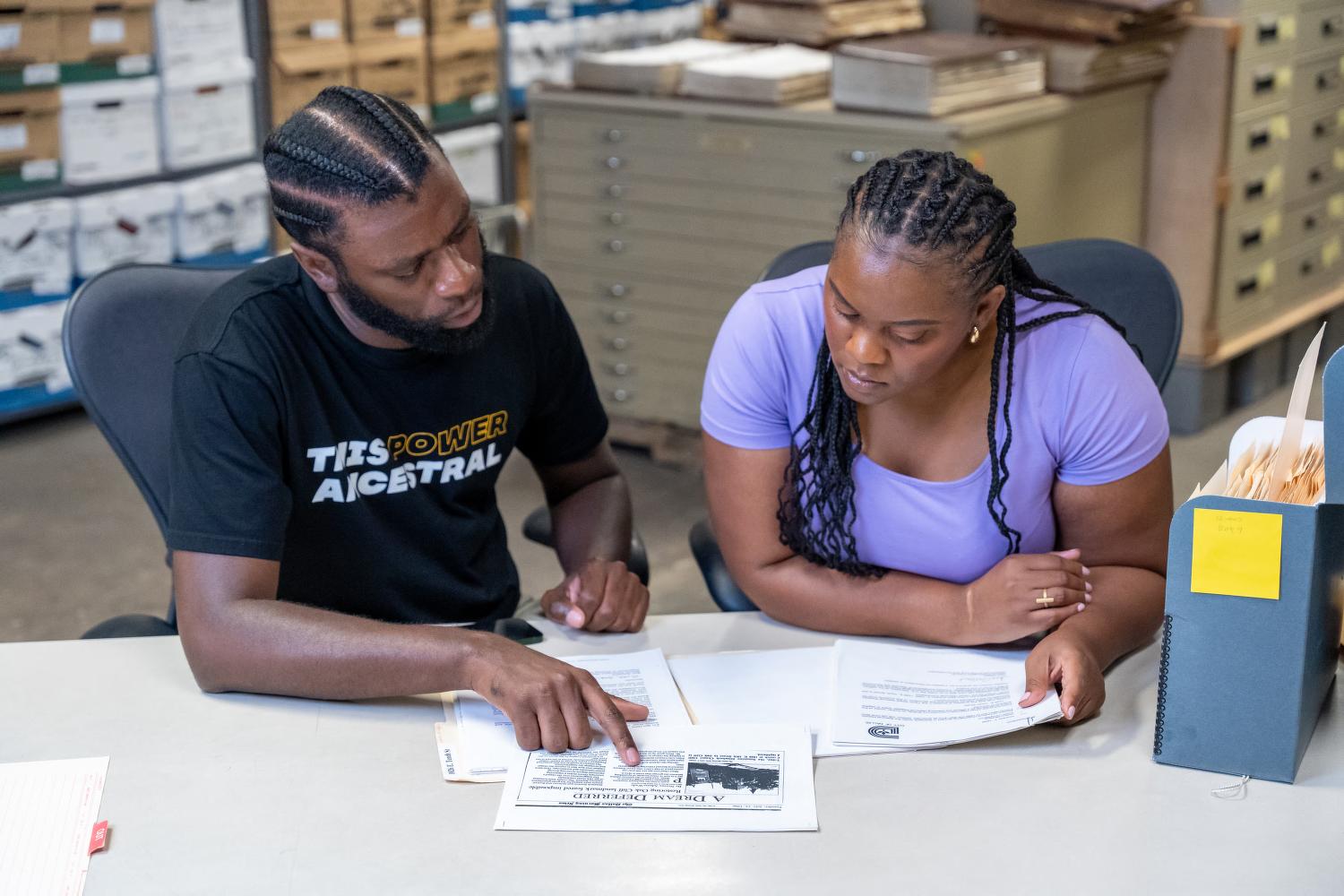
The Tenth Street Digital Museum launched in April. It uses a collection of stories in the Library of Congress, along with oral histories and updates, to tell the story of the neighborhood. Tameshia Rudd-Ridge launched the museum with her cousin Jourdan Brunson on a digital archive they founded for Black families, named kinkofa.
“We saw an opportunity to support and help develop the story out more,” said Rudd-Ridge, who said she has family history in the area.
Related: Historic church in Oak Cliff’s Tenth Street district is celebrating 140 years with a party
The museum maps the area’s timeline, names the visionaries who helped build the community, shows its successes and describes how it was changed over time — all from the perspective of oral histories and documents. It shows how Interstate 35E sliced through the heart community in the ‘50s and outlines community advocacy that it says led to a 1993 landmark designation from the city.
“The community was built by people who came out of bondage with faith and determination and dignity,” Moody said.
The area has seen its historic spaces shrink over time. Between 2006 and 2026, at least 75 structures in the district disappeared, according to the museum. In recent years, neighbors resisted rules that allowed small homes to be demolished.
Moody is now telling her story on the Library of Congress website, as part of a collection that stemmed from a project, If Tenth Street Could Talk. Moody is intertwined in Dallas’ history in other ways as well. As a teenager, she worked to desegregate the State Fair of Texas and was in a youth group under the guidance of the late civil rights leader Juanita Craft.
“To know that people, not just in Dallas but across the country, around the world, can now learn about Tenth Street, is something I never could have imagined, even when I was growing up and thinking about bigger things,” Moody said.
She’s just one of the people Rudd-Ridge and Brunson interviewed, and the work to tell Tenth Street’s story didn’t start with them. It stems from a project created by late historian George Keaton Jr., who founded Remembering Black Dallas, Rudd-Ridge said. She said she met Keaton on a bus tour in 2021 and told him about her family’s history. He challenged her and asked, “What are you going to do about it?”
Keaton was carrying on the work from Mamie McKnight, who grew up in the Tenth Street area and was director of Black Dallas Remembered. She died in 2018.
“We’re all from different generations,” Rudd-Ridge said, adding that they were all called to carry on the work of preserving their history.
Rudd-Ridge said the collection came together through collaboration with Remembering Black Dallas and the Tenth Street Residential Association.
Related: Tenth Street neighborhood, a treasure trove of Black history in Dallas, fights to remain intact
“It was really focused on collecting living memories that people have, and then we thought about different ways to share that,” Rudd-Ridge said.
But there were limitations. The collection is static, Rudd-Ridge said. With materials scattered across institutions, the museum serves as a connector, putting archival records in context. She noted that it can be updated.
“We get published in an article, and then someone will say, ‘Oh, my family lived there,’ and they have more stories to tell,” Rudd-Ridge said.
This reporting is part of the Future of North Texas, a community-funded journalism initiative supported by the Commit Partnership, Communities Foundation of Texas, The Dallas Foundation, the Dallas Mavericks, the Dallas Regional Chamber, Deedie Rose, Lisa and Charles Siegel, the McCune-Losinger Family Fund, The Meadows Foundation, the Perot Foundation, the United Way of Metropolitan Dallas and the University of Texas at Dallas. The News retains full editorial control of this coverage.