
I represent Texas House District 70, covering much of Plano and parts of Far North Dallas, Richardson and Allen.
It’s one of the few truly competitive districts left in Texas. In 2024, my race was decided by 4.44 percentage points, one of the closest Texas House races in the state. I do not see that as a political burden — I see it as a governing responsibility.
In a competitive district, you cannot take voters for granted. You cannot only talk to people who already agree with you. You have to show up in schools, chambers of commerce, neighborhood meetings, town halls, community events and living rooms. You have to listen to people who voted for you and people who did not. You have to explain your votes. You have to earn trust over and over again.
That is how representative government is supposed to work.
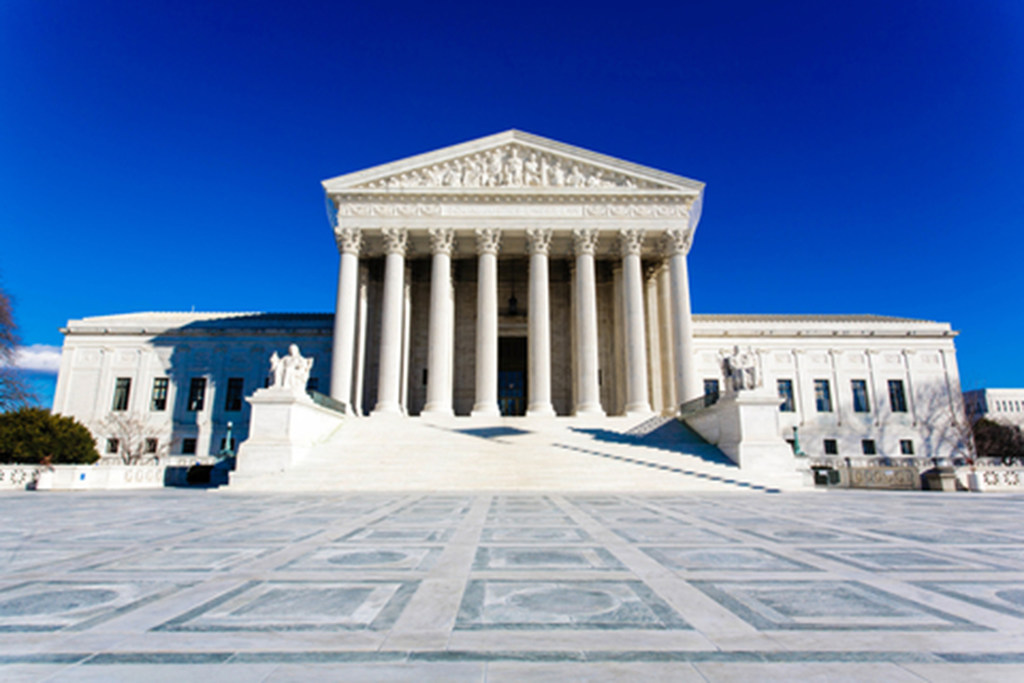
The Supreme Court’s decision in Louisiana v. Callais makes that harder. The court struck down Louisiana’s congressional map as an unconstitutional racial gerrymander and held that the Voting Rights Act did not require the state to create an additional majority-minority district. The ruling does not erase the Voting Rights Act, but it narrows one of the tools communities have used for generations to challenge discriminatory maps and demand fair representation.
Texans should care because redistricting decides more than the shape of a district. It decides whether lawmakers have to listen to the full community they represent, or whether they can hide inside districts drawn to protect them.
Texas has already seen what happens when competitive districts disappear. In 2024, only nine of 150 Texas House races were decided by less than 10 points. Most Texans now live in districts where the real political fight is not the general election. It is the primary. And when the primary becomes the only election that matters, the legislative process changes. Lawmakers stop asking, “What does my whole district need?” and start asking, “What will keep me safe from a primary challenge?”
We have also seen what a more balanced Legislature can look like. In 2001, Democrats held 77 seats in the Texas House and Republicans held 71. The Senate was almost evenly split, with 16 Republicans and 15 Democrats. Those chambers were not perfect, but the math forced members to govern differently. Coalitions mattered. Committees mattered. And it shouldn’t be surprising that the 2001 session produced work that actually mattered to Texans on public education, teacher retirement, school employee health insurance, higher education, telemedicine, long-term care, water infrastructure, banking, state agency oversight, and the state budget. That is a different kind of Capitol than one where most of my colleagues only worry about being punished in a primary.
Texas families cannot afford another session consumed by politicians trying to protect themselves. Working families are being squeezed by rising costs. Public schools need real funding. Texas is facing water challenges that will define our future if we do not act with urgency.
That is what elections should be about. The work. The people. The problems we were sent to Austin to solve.
Instead, the Supreme Court has now formally cleared Texas’ redrawn congressional map for the 2026 election cycle, a map pushed by President Donald Trump, signed by Gov. Greg Abbott and designed to benefit Republicans by as many as five U.S. House seats. Once politicians believe the courts will give them more room to manipulate representation, the pressure builds to go further. Congressional maps today. State House, State Senate, and State Board of Education may come tomorrow.
Texas House Democrats saw this coming. That is why, last summer, I broke quorum alongside my colleagues. Breaking quorum and going to Chicago to stop Abbott’s map was serious, and it was hard. It was an effort to stop maps designed to weaken Black and Latino voters before those maps could take hold.
Now, after Callais, the path forward is harder. But the responsibility is clearer. The 90th Legislature should not be another fight over how politicians can make their own reelections easier. It should be about the cost of living and doing business in Texas, educational and workforce development funding, child care for working families, water, health care, and whether our state is prepared for the growth already at our doorstep.
When voters have real choices, their voices are stronger. Their concerns matter more. Their representative has to be accountable to the people, not to a map, party leadership, or the loudest political machine.
Competitive districts are not a threat to Texas government. They make government better. They produce more responsive offices, stronger debate, and policies rooted in real community needs. They remind every elected official of something too many politicians forget: the seat does not belong to us. It belongs to the people.
Mihaela Plesa represents the 70th district in the Texas House of Representatives.