
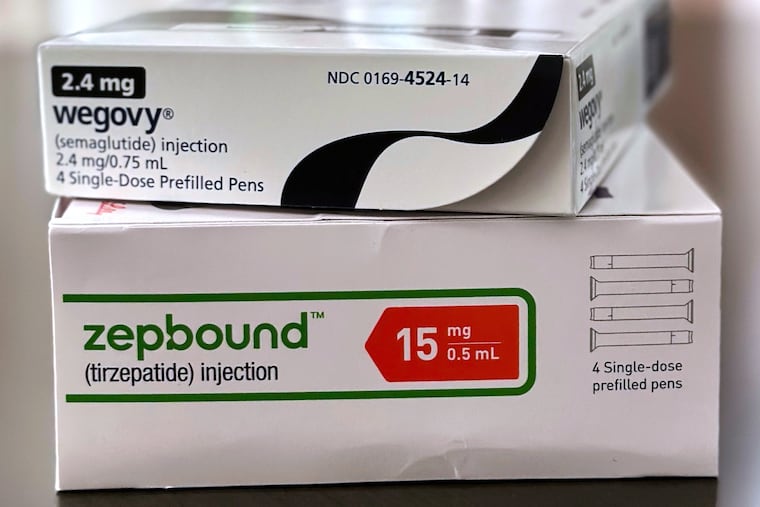
Beginning Wednesday, Medicare will cover GLP-1 drugs for weight loss for the first time, with patients responsible for a $50-a-month co-payment that makes it far cheaper than cash prices without insurance.
The move will unleash a surge in prescriptions for patients 65 and older and younger people with disabilities who are covered by the government health insurance program.
Generally, insurance coverage has been spotty for the revolutionary weight-loss drugs, largely because of the budget-busting impacts of high costs and huge demand. Coverage under Medicare, which covers 70 million Americans through the traditional insurance and privatized Medicare Advantage, will go a long way to plugging gaps.
But there are important considerations under the Trump administration’s initiative. The coverage is temporary, set to expire at the end of 2027. It is not known whether, or how, Medicare will continue coverage after its 18-month pilot, which is called the Bridge program.
“It’s certainly good news for Medicare beneficiaries who have been essentially shut out of the market for GLP-1s for weight loss if they wanted to use insurance coverage,” said Juliette Cubanski, vice president and director of Medicare policy at KFF, the nonprofit health care research organization. “However, it is a temporary program. It is not a permanent change in Medicare coverage.”
Unless the coverage is extended, millions of patients who are expected to benefit will face a choice beginning in January 2028 of paying higher cash prices for the drugs or stopping taking them ― which, based on the current GLP-1s, would probably cause their weight to rebound.
Additionally, coverage is not automatic. It is subject to preapproval under a process known as “prior authorization,” which can slow down access even for patients who qualify. The Centers for Medicare and Medicaid Services has outlined a process requiring multiple steps between providers and pharmacies and its insurance contractor for the project, Humana.
“I think that is going to cause a bit of friction in the process,” Cubanski said.
CMS said it expects preapprovals to take under 72 hours. Here are answers to essential questions about how the program will work.
What drugs will be covered?
Eli Lilly and Novo Nordisk, the manufacturers of brand-name GLP-1 drugs, are the suppliers through a deal with President Donald Trump’s administration. Eli Lilly’s weekly Zepbound injection and Foundayo daily tablet will be covered, as will Novo Nordisk’s Wegovy, both in weekly injection and daily pill form.
“These treatments are a major medical advancement, but too many seniors are currently unable to access them due to high cost,” CMS Administrator Mehmet Oz said, announcing the plan last month.
People taking Zepbound on average lost 21 percent of their body weight over 72 weeks in clinical trials. Wegovy injection patients lost 15 percent over 68 weeks, and Wegovy pill patients lost 13.4 percent after 64 weeks. Foundayo patients attained 11.1 percent weight loss over 72 weeks.
Who qualifies?
The government’s criteria for coverage is aimed at making sure beneficiaries whose health is at risk because of obesity get access through Medicare. Patients looking to lose weight for lifestyle or cosmetic reasons won’t qualify.
The criteria is based on an individual’s “body mass index,” which is a calculation that takes into account height and weight. People will qualify if their BMI is equal to or greater than 35.
Someone with a BMI of 30 or above will qualify if they also have one or more of these other health conditions that puts them at risk: heart failure, uncontrolled high blood pressure or kidney failure.
A person can qualify with a BMI as low as 27 — which is considered overweight, not obese — if they also have prediabetes, a history of heart attack, a previous stroke or symptomatic peripheral artery disease.
Crucially, even if someone’s BMI is below the threshold, if they started one of the weight-loss drugs before the CMS program started when they were within the qualifying range, they still will be covered.
For example, if patient had a BMI of 38 when they began taking Zepbound, but are now at 31, they will still qualify for the benefit.
Who handles prior authorization?
Winning coverage approval could prove to be an ordeal, and doctors are bracing for bottlenecks — especially with a huge volume of prescriptions flooding the system starting Wednesday.
“It’s going to be a lot all at once: the number of prescriptions, the paperwork, the prior authorizations, the work for the clinics, patients and pharmacies,” said Christopher Weber, medical director of bariatric services at Ascension Wisconsin and a board member of the Obesity Medicine Association.
CMS is expecting prior authorization requests to be approved within 24 to 72 hours.
“I would not be surprised if it’s substantially longer,” Weber said.
The 18-month pilot is being operated outside the Medicare Part D drug benefit, so the private health insurance companies that offer Part D plans are not involved. Instead, the Centers for Medicare and Medicaid Services has selected Humana to serve as the central processing point for deciding coverage. Humana declined to comment.
CMS said in response to questions that it is working to avoid delays.
“CMS has disseminated educational materials and will provide ongoing support to pharmacies and providers on the Medicare GLP-1 Bridge to ensure that clinicians and pharmacies have the resources that they need to engage with beneficiaries,” the agency said.
Why is this program temporary?
Federal law prohibits Medicare from covering weight-loss drugs, so the Trump administration is doing it under its authority to conduct a temporary “demonstration” project.
The relatively short-term nature of the benefit — called the Bridge program — is raising practical and policy questions.
“When it expires, it is unclear how beneficiaries will access GLP-1 medications at an affordable price,” Stacie B. Dusetzina, a health policy professor at Vanderbilt University wrote in a New England Journal of Medicine article published Saturday. That raises the prospect, she said, that patients will stop taking the drugs and regain weight, which will lead to “poor clinical outcomes.”
“The Bridge program could result in substantial additional governmental and beneficiary spending without providing longer-term health benefits,” she wrote.
Will the co-payment apply to my Part D deductible?
The $50-a-month co-payment cost will not count toward annual deductibles in Medicare Part D prescription drug plans, because the pilot program is separate from Part D. It also will not count toward the $2,100 Medicare out-of-pocket spending cap for drug coverage.
The Trump administration had planned another pilot where Part D plans would have managed the coverage, but not enough of the private plans expressed interest, because they were concerned about exposure to unknown costs with the anticipated burst of new prescriptions, Cubanski said.
“There is no evidence right now for making assumptions about how many additional beneficiaries will come into this market,” she said. “It left them with a lot of uncertainty.”
What if I was already getting the drug for diabetes under Medicare?
Patients who are already receiving Medicare coverage for one of the GLP-1 drugs for diabetes, cardiovascular disease and sleep apnea will continue to be covered by their Part D plan. They are not eligible to switch to the weight-loss pilot.
How much will covering these drugs cost taxpayers?
Eli Lilly and Novo Nordisk have agreed to sell the drugs to the government for $245 a month. That is in the middle of the range of what drug companies charge consumers without insurance, depending on dosage.
The Centers for Medicare and Medicaid Services has not released estimates of the total numbers of patients expected to take advantage of the program, or the expected spending.
Some clues are contained in a previous estimate released by the Biden administration, which proposed offering similar, long-term coverage in late 2024. It said the cost would be $25 billion over 10 years. That would equal $2.5 billion a year, which is likely to be a low estimate, given the explosion in national demand.
The Congressional Budget Office estimated it could cost $35 billion over eight years, with 12 million newly eligible people in 2026. That estimate has more generous criteria than what Medicare has adopted.
Medicare spending on the new breed of weight-loss drugs has been skyrocketing already, without weight-loss coverage, according to an analysis by KFF. It reached $27.5 billion in 2024, although that gross spending was reduced by up to 50 percent by manufacturer rebates.
Cubanski estimated that weight-loss coverage could add another $4 billion to $5 billion a year to Medicare’s tab. “It’s essentially all additional spending by the federal government,” she said.
Of course, the hope is that helping millions of Medicare beneficiaries lose weight will reduce diseases linked to obesity, ultimately lowering costs. But when those savings will be realized, and how large they might be, remains unknown. The CBO estimated the savings for a longer-term program at $1 billion a year by 2034, a small fraction of the new spending.