
I remember the four-month-old boy, unmoving in his hospital bed, who had suffered severe brain damage from a sleep accident. This four-month-old boy had slept on the couch with a parent. When morning came, he was lying between couch cushions and not breathing.
Paramedics revived the baby and took him to a hospital. The baby survived, but his brain went so long without oxygen that he would likely never grow up to walk or talk. He was the first of too many babies that I have seen who sustained severe injuries, or have died, from suffocation or Sudden Infant Death Syndrome (SIDS).
Parents visiting in pediatrician’s offices in the last 30 years have probably heard us talk about “safe sleep.” We see a lot of misinformation and confusion about sleep practices these days, with social media rife with images of sleeping babies in hazardous conditions. Serene captions misleadingly encourage improper positioning and unsafe environments.
Many people who get their health information online are unaware of what “safe sleep” means.
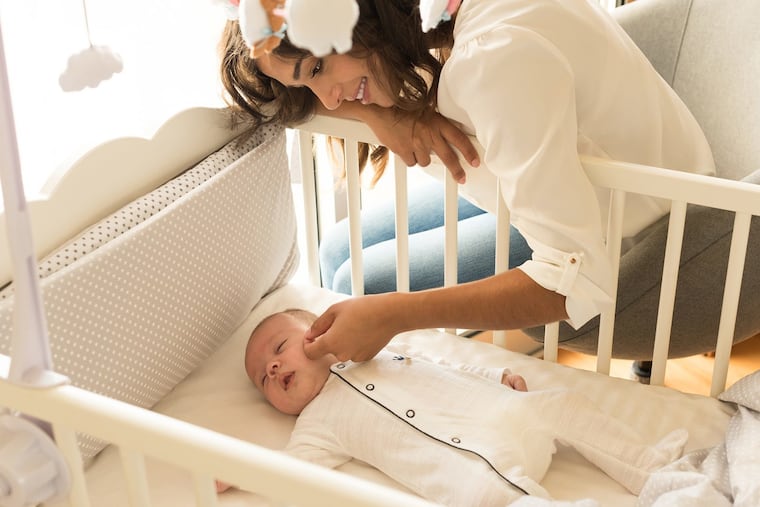
The American Academy of Pediatrics (AAP) defines safe sleep as having babies sleep solo on their backs on a firm, flat mattress. Loose blankets, pillows, toys, or other soft objects should be kept out of the sleep space. In pediatric clinics, we call these recommendations the “ABCs” of safe sleep: Alone, on their Back, in a Crib.
We know this advice saves lives. After the AAP recommended that babies be placed on their backs to sleep in 1992 rates of SIDS plummeted by over 50% in 10 years. Yet this progress has plateaued. SIDS remains the leading cause of death in children under 1.
As pediatricians, we still have work to do to prevent SIDS deaths. For starters, we must address persistent racial and ethnic disparities.
Black and American Indian/Alaska Native infants throughout the 2010s were more than double or triple as likely to die of SIDS, compared with white infants. The reasons are complex. Low socio-economic status, unemployment, and housing instability are associated with higher risk for SIDS. These issues often stem from systemic racism.
We can’t trace how many SIDS deaths result from online misinformation. That makes me all the more committed to talking about the importance of safe sleep practices.
At my primary care clinic in South Philadelphia, I see patients from a wide range of cultural and ethnic backgrounds. I often hear questions about babies sleeping from families flooded with conflicting information from social media or their peers.
Here are some common concerns, and what I share to educate families:
“I’m worried that if they’re not next to me, I won’t notice if something is wrong.”
Avoiding bedsharing doesn’t mean your baby can’t be near you. The AAP recommends sleeping in the same room as your baby for at least the first six months. This means you can keep an eye on them and comfort them easily, but they still have their own space where they can sleep safely.
“Our babies have always slept in bed with us. It’s part of our culture.”
It is true that cultures have different sleep practices. But the sleep environment can also be different in many countries — including bedding/mattresses, the house, environmental exposures, and other factors. Here in the U.S., we know from decades of research that following the ABCs is what’s safest for your baby.
“My baby will only sleep in my arms. They won’t sleep when I put them in the crib.”
Babies are constantly learning new skills, such as rolling, eating, and babbling. They can learn to sleep on a new surface. It’s all about establishing a routine. You can still comfort and hold your baby until they fall asleep, then move them to their own sleep surface. If you must share a bed with your baby — or worry that you may fall asleep while your baby is in your bed — make sure to remove any pillows, sheets, blankets, or any objects that could cover your baby’s face.
Your pediatrician is not judging you by asking how your baby is sleeping. We know how challenging sleep is with infants. We want your baby to be safe and to minimize harm from confusing or misleading advice.
Discuss questions about safe sleep with your pediatrician. You can also visit CHOP’s Pediatric Health Chat for more information on safe sleep and children’s health.
The views expressed in this article are those of the authors and not necessarily those of CHOP. This information is not intended to provide medical advice, diagnosis, or treatment. Always consult a qualified healthcare professional regarding any health or medical concerns.
Francis Avila-Soto is a physician in her second year of residency training at the Children’s Hospital of Philadelphia, with a focus on leadership development in issues involving equity, advocacy, and policy.