
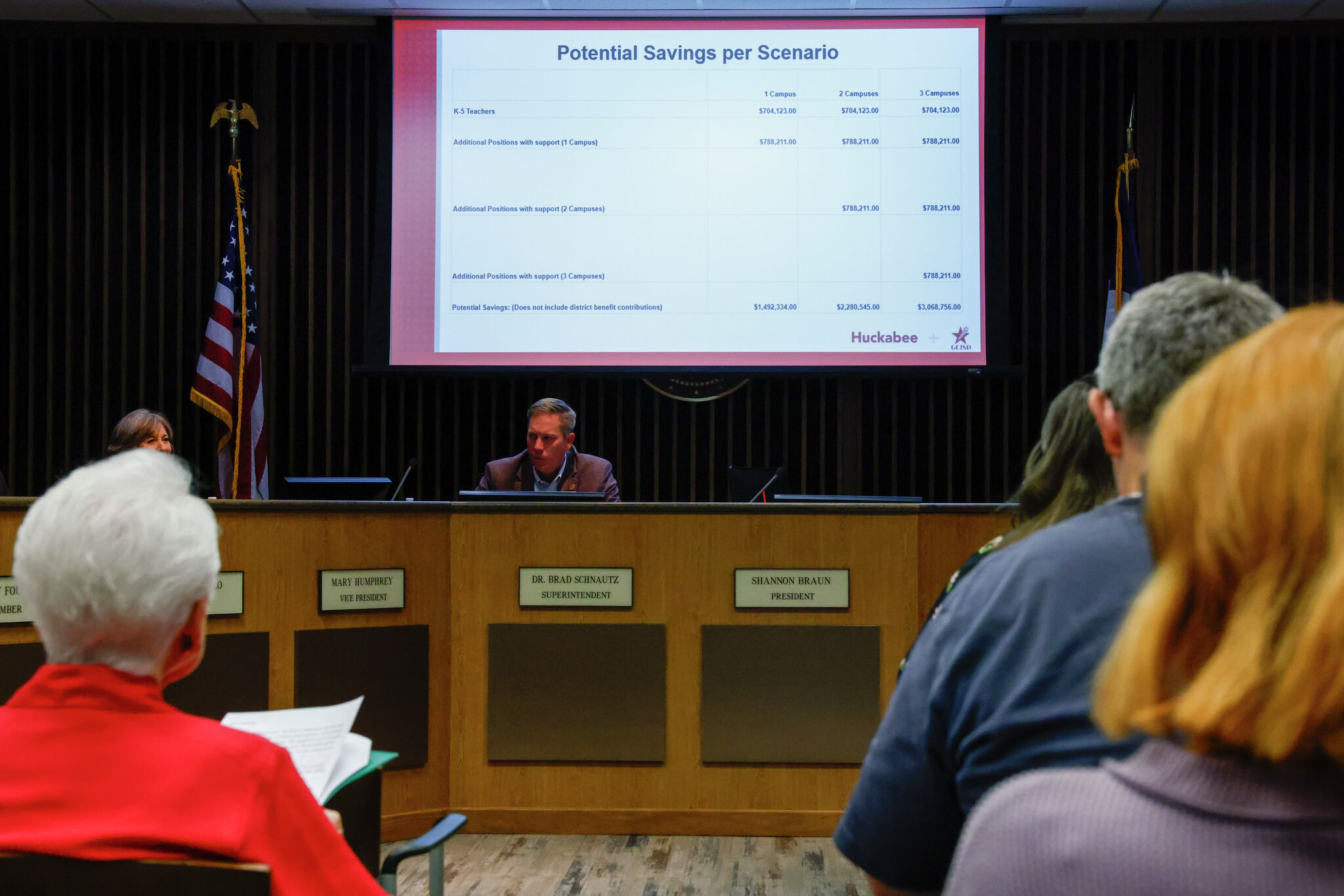
Voters in the Grapevine-Colleyville Independent School District sent three incumbents packing in the May 3rd school board election. Newcomers Matthew White, Lindsey Sheguit and Darrell Brown bested one-term trustees A.J. Pontillo, Dianna Sager and Mary Humphrey, all of whom were elected in 2023. The results signaled that parents are tired of political preening from trustees they believe neglected education, families and trust.
The winning GCISD candidates I spoke with, White and Brown, shared a focus on teacher retention, finding a first-rate superintendent, rebuilding community trust and making GCISD the first choice for more families.
“As a district, we need to be innovating and adapting with programs and practices that meet the needs of the families in this community, and we need a community response to the issues we are facing,” said White. “I want to see us start by forming working committees that function in both an advisory and volunteer capacity. Working together to support our schools not only builds stronger schools, it also builds a stronger, more resilient community in the process. We need more people involved.”
The election was less a backlash against conservative candidates than a correction against elected officials whose politics appeared better aligned with outside groups than with local trust. School boards exist to govern schools, not stage factional combat. Enough voters came to believe the board’s incentives had shifted away from students, families and district stability. That made the incumbents vulnerable.
Since the COVID-19 pandemic, school districts have operated under a spotlight. Much of that scrutiny was justified. But over time, legitimate concern hardened into campaigns against teachers, administrators and board members accused of advancing “woke” ideology. Outside activists converted that frustration into political sorting, turning school governance into a fight over identity rather than performance.
The approach worked until voters saw the cost: experienced educators pushed out, board meetings turned into performance venues, trustees rewarded for ideological posture over institutional competence.
The model was always going to hit a limit. In 2022, I told a close friend that conservative identification alone would soon stop being enough in North Texas school board and city council races. Candidates were incentivized to signal allegiance, collect endorsements and perform anti-woke seriousness while governance receded. That arrangement could hold only until voters asked a basic question: Are the schools better?
They were not. Too many districts lost strong teachers and administrators to ideological witch hunts that punished the very people schools depend on to improve. Then board energy shifted from student outcomes and community trust to political identity. Candidates would have to show a serious commitment to education, transparency and parental input, with ideas beyond removing DEI and proving tribal loyalty.
The prediction no longer looks premature.
In 2025, all three Mansfield ISD trustees backed by Patriot Mobile Action — a Christian nationalist PAC funded by a cellphone company — and endorsed by the Tarrant County GOP lost reelection. Julie Short, the party’s choice for Mansfield mayor, also failed to unseat incumbent Michael Evans. Conservatives also suffered school board losses in Arlington and Keller.
The lazy partisan excuse is to blame the losses on energized liberals and apathetic conservatives. Malarkey. Candidates today face a harsh reality: being conservative may help them get elected, but it will not protect them from parents’ expectations about their children’s education.
“The Board of Trustees should serve the community and seek input from the community,” Brown said. “It should not manage the community.”
“We must work to rebuild trust and reclaim students that we have lost,” he said.
White warned against treating online sentiment as proof of a divided community.
“The incumbents and their supporters care about our schools just as much as I do, and I don’t think having differences of opinion means we are a divided district,” he said. “GCISD belongs to all of us, and our strength comes from a healthy balance of differing views.”
GCISD voters did more than replace three trustees. They signaled that outside political validation cannot substitute for local trust. Throughout North Texas, parents will tolerate hard choices when they believe those decisions serve students, families and the district. They will not long tolerate leaders who treat the label as the work.
Have thoughts about this? Send a letter to the editor using our letters form or email letters@dallasnews.com. Letters should be no more than 200 words and include the first and last name of the writer and city of residence.