
The timing, the technology, and, above all, the high cost does not justify this investment.
Consider the optics: Floating a project as ambitious as this one at a moment when the city is announcing spending cuts to address a roughly $34 million budget gap is unwise. Granted, city officials were quick to mention that the project is still in its early stages and would not rely on Dallas’ general fund, but that does not make the project any cheaper.
Council member Adam Bazaldua told our newsroom that the city is expecting millions from the new Dallas Area Rapid Transit agreement. Dallas expects to receive $211 million as a sales tax refund over the next six years to pay for eligible transportation programs.
Bazaldua insists this project is not a pipe dream. We beg to differ.
According to our newsroom, the infrastructure cost could be about $10 million to $15 million per mile of streetcar track, but this number is conservative if compared with similar projects nationally.
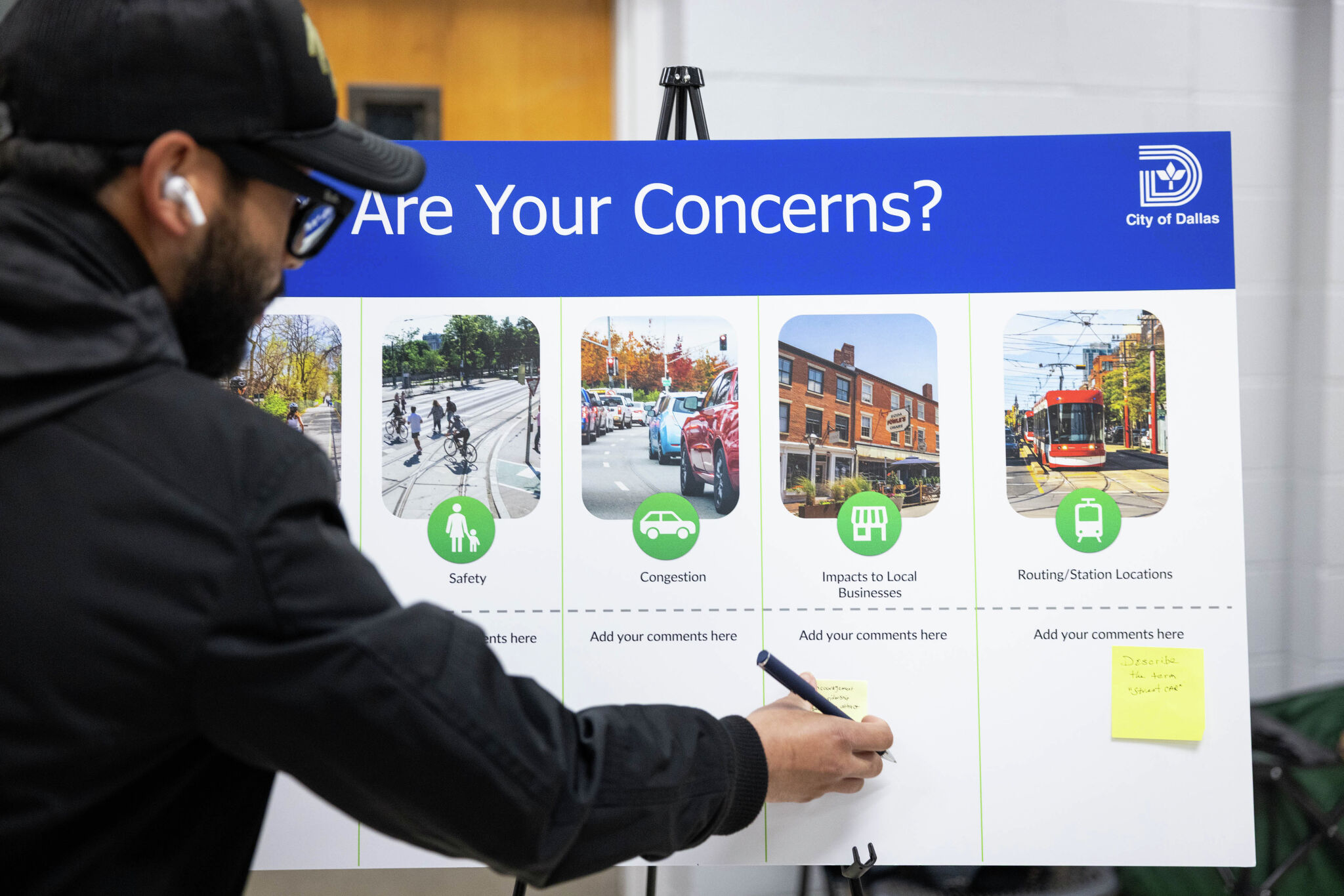
The project is in its early stages and is currently gathering community feedback through May 6. Something that is still missing — and should come early in any infrastructure project — is a cost-benefit analysis for the taxpayer.
Which leads to our second question: Why do we need a streetcar between Fair Park and downtown? In our view, this streetcar would create a duplicative service, since DART already connects downtown with Fair Park through light rail.
There is a valid argument to improve last-mile connections in South Dallas neighborhoods, but there are more affordable options that can provide mobility. One example is Circuit, a free rideshare service in West Dallas, backed by Toyota and DART. The service connects residents with Eddie Bernice Johnson Union Station, Trinity Groves and other neighborhoods.
The city can also rely on available data that can identify transit deserts, where last-mile connections would be helpful for residents.
A major rail investment would be a huge mistake for the city at a time when technology is redefining transit. As autonomous vehicle technology advances, the way urban spaces are built will change as well, creating opportunities to redesign cities with pedestrians as the central focus, according to a recent Brookings Institution analysis.
Putting forward a project of this magnitude when city officials should be looking for smart ways to save money fails to read the moment. This streetcar project should be shelved.
Have thoughts about this? Send a letter to the editor using our letters form or email letters@dallasnews.com. Letters should be no more than 200 words and include the first and last name of the writer and city of residence.