
The Trump administration will be overhauling the SNAP program in two major steps, forcing Pennsylvania to pay more for the federal food program and jeopardizing those in need, according to Gov. Josh Shapiro’s office.
The first phase begins Oct. 1, when states will have to pay for 75% of the expense of administering the Supplemental Nutrition Assistance Program, an end to the 50-50 cost-sharing relationship between the federal government and the states that existed for decades.
The second and more dramatic change is scheduled to commence a year from now, when the Trump administration demands that states pay for a portion of SNAP benefits — an unprecedented arrangement that could put Pennsylvania on the hook for as much as $400 million of the approximately $4 billion the state receives in SNAP benefits annually.
That’s a price the state is not ready to pay.
“Pennsylvania’s state budget cannot make up for huge cuts to federal SNAP funding that will shift these costs onto states,” Shapiro spokesperson Rosie Lapowsky said in a statement. “And those cuts risk leaving hungry Pennsylvanians without food assistance.”
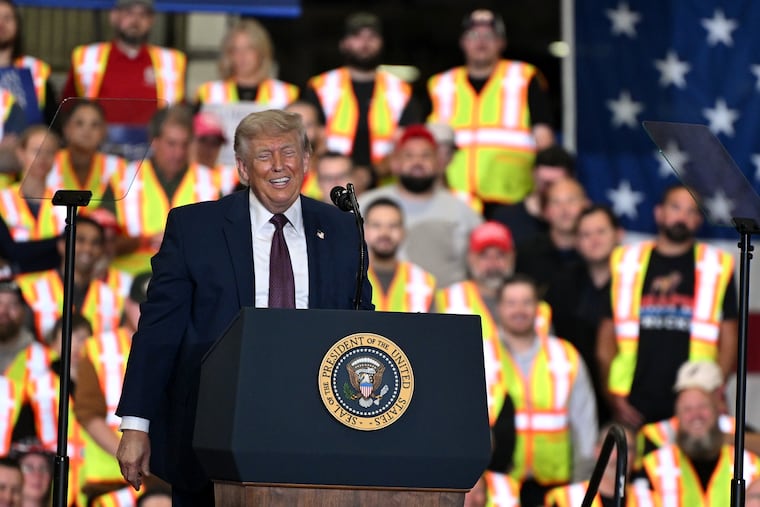
The Trump administration plan, part of President Donald Trump’s One Big Beautiful Bill Act, is roiling Democrats and SNAP advocates who view it as an effort to weaken the food benefits program by saddling Pennsylvania and other states with the responsibility of paying for something they cannot afford.
In anticipation of the first new rule going into effect in two weeks, Shapiro earmarked $87 million in the state budget to administer the SNAP program in the state, which includes paying for operating expenses.
Burdening states with increased financial demands is “catastrophic,” said St. Joseph’s University sociologist Maria Kefalas.
Kefalas said it will force states to make drastic moves to make up for lost dollars, including making eligibility rules harder and shrinking benefits.
“The pressure on states to push people off SNAP will be tremendous,” she said. “The Trump act was written to shift blame for cuts to safety-net programs from the federal government to the states. Now, the states will be seen as the bad guys.”
The original even split for administrative costs had the state and the federal government each paying $250 million in SNAP administrative costs, according to the Pennsylvania Independent Fiscal Office (IFO), a nonpartisan legislative agency that analyzes budgetary issues. But after Sept. 30, the state could be looking at as much as a $125 million increase in payments annually, IFO figures show.
Shapiro’s $87 million budget infusion covers that increase for a portion of the state fiscal year, said Brandon Cwalina, press secretary for the Pennsylvania Department of Human Services, which oversees SNAP.
The Trump administration says that by forcing states to put skin in the game, it is incentivizing them to cut waste, fraud, and abuse in the program.
“President Trump is strengthening SNAP for the Americans who need it by ensuring these programs are sustainable for future generations,” White House spokesperson Anna Kelly said in a statement.
She added that the One Big Beautiful Bill Act implements “reasonable” cost-sharing measures with states.
Kelly also said that by signing the bill into law, Trump is “uplifting every American’s financial situation by passing the largest tax cut in history.”
But concern is growing that by compensating for SNAP shortfalls, states will pull funds from other sources.
“Does this mean money will be taken from police, courts, and other critical functions to pay for SNAP?” asked State Sen. Art Haywood, the top Democrat on the Health and Human Services Committee, who represents part of Philadelphia and Montgomery County.
Error rates
How much the state will have to pay in SNAP benefits in October 2027 depends on its payment error rate, a measure of overpayments and underpayments of benefits.
Error rates are largely unintentional and are not fraud, according to the Food and Nutrition Administration of the U.S. Department of Agriculture, which runs the SNAP program.
“It’s like doing your taxes and accidentally switching numbers,” said Ann Sanders, director of public benefits policy and programs for Just Harvest, a Pittsburgh-based anti-hunger nonprofit. “Not a crime, just a mistake.”
In fiscal 2025, Pennsylvania’s error rate was 9.2%, mostly representing overpayments, said IFO director Matt Knittel.
Even though it is below the national error rate of 10.6%, if the 9.2% level holds, Pennsylvania could be made to pay as much as $400 million a year when the new rule takes effect, IFO figures show.
“These are costs Gov. Shapiro has made clear we cannot backfill,” Cwalina said. The Shapiro administration, which has had some success lowering error rates, has introduced new technology that helps flag potential errors before incorrect payments are made.
The reorganization of SNAP’s functions and financing comes during an ongoing affordability crisis, said George Matysik, executive director of the Share Food Program, which supplies many food pantries in the Philadelphia area.
“Instead of the federal government helping to solve it, it’s just passing the buck onto the consumer,” he said. “Prices are going up, while Washington punches down on the working class.”
While the new changes have yet to kick in, Trump’s One Big Beautiful Bill Act has already altered SNAP to help pay for his tax cut.
The administration has expanded work and documentation requirements for SNAP recipients, resulting in millions of people seeing their benefits lowered or eliminated.
Nationwide, between July 2025 and May, SNAP rolls have decreased by more than 5 million people, or 12%, according to the Center on Budget and Policy Priorities, a left-leaning Washington-based think tank.
As of July, the latest Pennsylvania DHS estimates show that 94,200 people have lost benefits since Trump’s law took effect.
The changing contours of the SNAP program worry legislators accustomed to its normally steady rhythms.
“There was a 60-year-long partnership between the federal government and the states on SNAP, without problems,” Haywood said.
“SNAP worked well since it got its start in 1964. But now, unfortunately, the current administration is dramatically changing it.”